THE ADVENTURE COLLECTIVE® · Independent discovery and booking for outdoor travel

Swap Hanoi’s bustle for misty mountain air on a compact, culturally rich 3-day trek to Sapa. Hike terraced rice fields, stay a night with a Tay family in Ta Van, and explore Cat Cat village before an easy return to town.
Swap Hanoi’s bustle for misty mountain air on a compact, culturally rich 3-day trek to Sapa. Hike terraced rice fields, stay a night with a Tay family in Ta Van, and explore Cat Cat village before an easy return to town.
You leave Hanoi before dawn, the city lights fading as a sleeper bus climbs toward the Hoang Lien Son range. By mid-afternoon you step from dust and diesel into cool mountain air: terraced rice folds away like green steps, and the Muong Hoa stream threads the valley below. The first day’s route traces old footpaths from Y Linh Ho to Lao Chai and on to Ta Van, ending in a homestay where wood smoke and simple hospitality set the evening’s pace.
Verified experiences and guided adventures in the surrounding area.
Operated by Chat Tourist · Sapa, Lao Cai
You leave Hanoi before dawn, the city lights fading as a sleeper bus climbs toward the Hoang Lien Son range. By mid-afternoon you step from dust and diesel into cool mountain air: terraced rice folds away like green steps, and the Muong Hoa stream threads the valley below. The first day’s route traces old footpaths from Y Linh Ho to Lao Chai and on to Ta Van, ending in a homestay where wood smoke and simple hospitality set the evening’s pace.
Sapa sits on the southern edge of the Himalaya foothills; its steep, granitic ridges have been sculpted by centuries of upland farming. Ethnic minorities—Black H’mong, Red Dzao, Tay—maintain distinctive textiles and communal rice-terrace systems that shape both landscape and livelihood. Cat Cat village bears a layer of colonial history too: a small French-built hydraulic station and a waterfall that travelers still photograph.
Practically, expect a mix of dirt paths, stone steps and narrow village tracks. Day one covers roughly 9 km with gentle but persistent climbs and 3–4 hours on foot; day two is shorter—about 4–6 km across bamboo groves and rice paddies. Temperatures drop after sunset; rain is frequent in monsoon months. Bring layered clothing, sturdy boots and enough water for the day sections. Pack cash for small village purchases and be prepared to remove shoes at homestay entry; modest gifts (useful household items) are appreciated over trinkets.
The route rewards steady walkers with wide valley views, close cultural exchange, and the simple rhythm of mountain life—an experience that balances accessible trekking with genuine community contact.
moderate.
3 days.
Suitable for reasonably fit travelers who can walk 3–5 hours a day on uneven trails; good cardiovascular fitness helps with higher elevations.
Yes — the tour includes door-to-door round-trip transfers from hotels in Hanoi’s Old Quarter via a sleeper bus.
The tour includes two nights’ accommodation (one homestay, one hotel) and seven meals as outlined in the itinerary.
Trekking is rated moderate: mostly village trails and terraces with short steep sections; no technical climbing required.
Bring cash (VND) for market purchases and small village expenses—ATMs are limited outside Sapa Town.
Sapa’s upland communities developed terraced agriculture over centuries; the area also shows early 20th-century French colonial infrastructure like small hydro stations.
Increased tourism stresses water and waste systems—stick to marked paths, take your trash, and favor local homestays to support community-based tourism.
Chat Tourist operates guided outdoor trips and adventures with an emphasis on safety, stewardship, and memorable experiences.
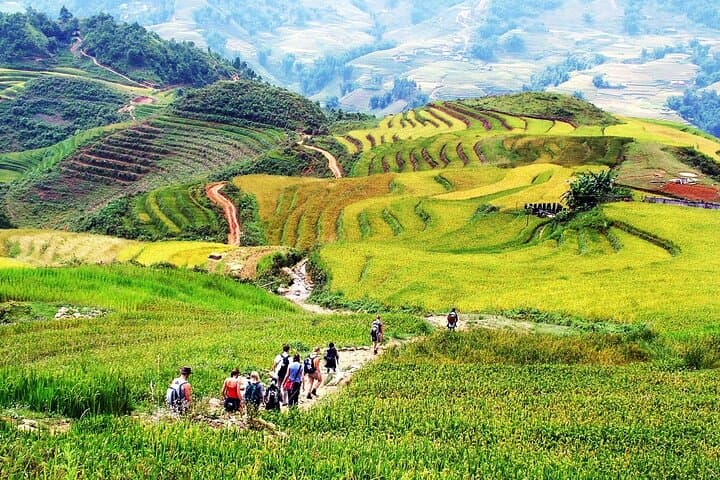



You leave Hanoi before dawn, the city lights fading as a sleeper bus climbs toward the Hoang Lien Son range. By mid-afternoon you step from dust and diesel into cool mountain air: terraced rice folds away like green steps, and the Muong Hoa stream threads the valley below. The first day’s route traces old footpaths from Y Linh Ho to Lao Chai and on to Ta Van, ending in a homestay where wood smoke and simple hospitality set the evening’s pace.
You leave Hanoi before dawn, the city lights fading as a sleeper bus climbs toward the Hoang Lien Son range. By mid-afternoon you step from dust and diesel into cool mountain air: terraced rice folds away like green steps, and the Muong Hoa stream threads the valley below. The first day’s route traces old footpaths from Y Linh Ho to Lao Chai and on to Ta Van, ending in a homestay where wood smoke and simple hospitality set the evening’s pace.
Sapa sits on the southern edge of the Himalaya foothills; its steep, granitic ridges have been sculpted by centuries of upland farming. Ethnic minorities—Black H’mong, Red Dzao, Tay—maintain distinctive textiles and communal rice-terrace systems that shape both landscape and livelihood. Cat Cat village bears a layer of colonial history too: a small French-built hydraulic station and a waterfall that travelers still photograph.
Practically, expect a mix of dirt paths, stone steps and narrow village tracks. Day one covers roughly 9 km with gentle but persistent climbs and 3–4 hours on foot; day two is shorter—about 4–6 km across bamboo groves and rice paddies. Temperatures drop after sunset; rain is frequent in monsoon months. Bring layered clothing, sturdy boots and enough water for the day sections. Pack cash for small village purchases and be prepared to remove shoes at homestay entry; modest gifts (useful household items) are appreciated over trinkets.
The route rewards steady walkers with wide valley views, close cultural exchange, and the simple rhythm of mountain life—an experience that balances accessible trekking with genuine community contact.