THE ADVENTURE COLLECTIVE® · Independent discovery and booking for outdoor travel

Three days of rice terraces, highland markets and a cable-car ride to Fansipan peak—this guided Sapa loop combines cultural markets and mountain air while staying in town hotels. Read on for what to expect, what to pack, and how to make the most of short trekking days.
Three days of rice terraces, highland markets and a cable-car ride to Fansipan peak—this guided Sapa loop combines cultural markets and mountain air while staying in town hotels. Read on for what to expect, what to pack, and how to make the most of short trekking days.
Mornings in Sapa begin with mist unspooling over stepped rice fields; terraces catch light like scales on a slow-moving dragon. On this three-day loop you move from town streets lined with market stalls to highland trails where the cloud forest breathes cold and damp against your jacket. The cable car to Fansipan’s ridge lifts you above a green sea; on foot the trail rewards hikers with raw rock, rhododendron thickets and panoramic ridgelines that dare you to keep climbing.
Verified experiences and guided adventures in the surrounding area.
Mornings in Sapa begin with mist unspooling over stepped rice fields; terraces catch light like scales on a slow-moving dragon. On this three-day loop you move from town streets lined with market stalls to highland trails where the cloud forest breathes cold and damp against your jacket. The cable car to Fansipan’s ridge lifts you above a green sea; on foot the trail rewards hikers with raw rock, rhododendron thickets and panoramic ridgelines that dare you to keep climbing.
The Hoàng Liên Sơn range is young and rugged—granite uplifted against monsoon weather—while the valley below holds centuries of Hmong and Dao agricultural practice, visible in stone walls and herders’ paths. French-era villas in Sapa Town echo a brief colonial history; village markets still trade indigo cloth and handwoven goods, cultural threads that connect past and present.
Expect a mix of paved village tracks, dirt footpaths, and steeper mountain sections. Weather shifts fast—sun, drizzle, and fog are normal in a single day—so plan for layers and shorter daylight windows at higher elevation. Acclimatize gradually if you plan to trek beyond the cable car stations; altitude is moderate but noticeable.
Practical: pack sturdy, broken-in boots, waterproofs, and a warm midlayer; keep water and snacks handy on longer stretches. Book a local guide for village navigation and to support community-based tourism. Aim to travel outside monsoon peaks for clearer views, and respect trails and terraces to minimize erosion—Sapa rewards patient, prepared travelers with unforgettable highland scenery.
moderate.
3 days.
Moderate fitness—comfortable walking for several hours a day with some uphill sections; short steep climbs possible.
The cable car removes the longest ascent for many visitors; sections on foot can be steep and uneven—overall difficulty is moderate and manageable with basic fitness.
A local guide is recommended for village routes and cultural context; guides also reduce environmental impact by keeping groups on established paths.
Pack layered clothing, a waterproof shell, warm midlayer, and quick-dry base layers—rain and fog are common even in the same day.
Sapa’s elevations are moderate but some travelers feel mild symptoms; hydrate, avoid overexertion on day one, and inform guides if you feel unwell.
Sapa grew into a hill-station under French colonial rule in the early 20th century and has long been a cultural crossroads for Hmong, Dao, and Tay communities.
Heavy foot traffic and terrace erosion are ongoing concerns; stick to trails, hire local guides, and favor homestays or community-run services to support sustainable tourism.
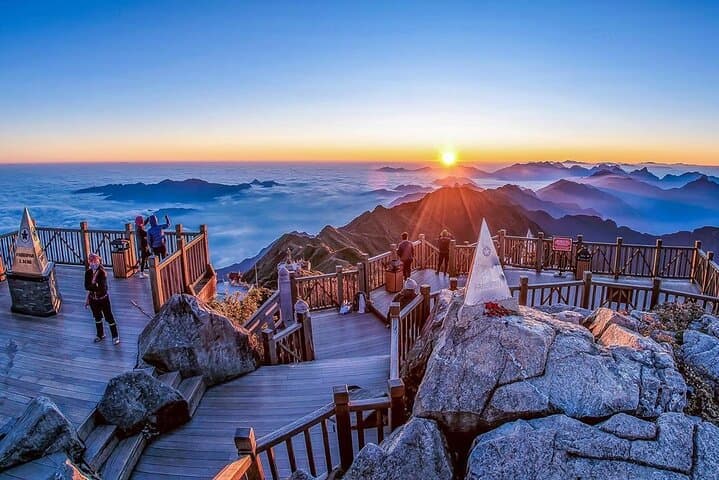
Mornings in Sapa begin with mist unspooling over stepped rice fields; terraces catch light like scales on a slow-moving dragon. On this three-day loop you move from town streets lined with market stalls to highland trails where the cloud forest breathes cold and damp against your jacket. The cable car to Fansipan’s ridge lifts you above a green sea; on foot the trail rewards hikers with raw rock, rhododendron thickets and panoramic ridgelines that dare you to keep climbing.
Mornings in Sapa begin with mist unspooling over stepped rice fields; terraces catch light like scales on a slow-moving dragon. On this three-day loop you move from town streets lined with market stalls to highland trails where the cloud forest breathes cold and damp against your jacket. The cable car to Fansipan’s ridge lifts you above a green sea; on foot the trail rewards hikers with raw rock, rhododendron thickets and panoramic ridgelines that dare you to keep climbing.
The Hoàng Liên Sơn range is young and rugged—granite uplifted against monsoon weather—while the valley below holds centuries of Hmong and Dao agricultural practice, visible in stone walls and herders’ paths. French-era villas in Sapa Town echo a brief colonial history; village markets still trade indigo cloth and handwoven goods, cultural threads that connect past and present.
Expect a mix of paved village tracks, dirt footpaths, and steeper mountain sections. Weather shifts fast—sun, drizzle, and fog are normal in a single day—so plan for layers and shorter daylight windows at higher elevation. Acclimatize gradually if you plan to trek beyond the cable car stations; altitude is moderate but noticeable.
Practical: pack sturdy, broken-in boots, waterproofs, and a warm midlayer; keep water and snacks handy on longer stretches. Book a local guide for village navigation and to support community-based tourism. Aim to travel outside monsoon peaks for clearer views, and respect trails and terraces to minimize erosion—Sapa rewards patient, prepared travelers with unforgettable highland scenery.