THE ADVENTURE COLLECTIVE® · Independent discovery and booking for outdoor travel

Leave Hanoi at dawn for two days of terraced rice fields, river-carved valleys and village trails around Sapa. This accessible trek visits Cat Cat, Y Linh Ho, Lao Chai and Ta Van with a night in town and local meals included.
Leave Hanoi at dawn for two days of terraced rice fields, river-carved valleys and village trails around Sapa. This accessible trek visits Cat Cat, Y Linh Ho, Lao Chai and Ta Van with a night in town and local meals included.
A mist-softened road opens before you as the minibus climbs out of Hanoi at dawn, windows framing lowland rice paddies shrinking into the high valleys. By early afternoon the air has thinned and the town of Sapa sits cool and blue at roughly 1,500 m, its church spire a reminder of French-era occupation and mountain trade.
Verified experiences and guided adventures in the surrounding area.
Operated by Vietnam Top Travel · Sapa, Lao Cai
A mist-softened road opens before you as the minibus climbs out of Hanoi at dawn, windows framing lowland rice paddies shrinking into the high valleys. By early afternoon the air has thinned and the town of Sapa sits cool and blue at roughly 1,500 m, its church spire a reminder of French-era occupation and mountain trade.
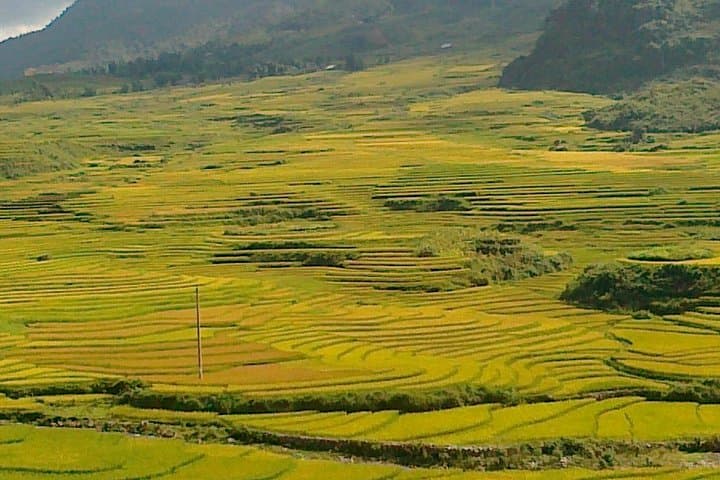
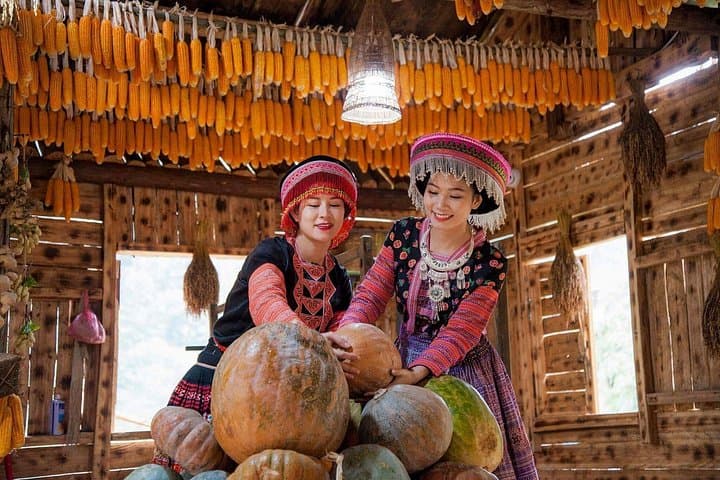
This two-day itinerary guides you from Hanoi to the ethnically diverse villages around Muong Hoa Valley: Cat Cat, Y Linh Ho, Lao Chai and Ta Van. The landscape is carved in terraces—young rice blades reflecting light like folded mirrors—and river corridors that push and braid through villages where H’Mong, Dao, Tay and Zay communities still practice traditional crafts and farming. Geologically, the valley follows uplifted limestone and metamorphic beds that create steep ridgelines and fast-draining soils; expect stepped trails and occasional stone staircases.
Culturally, village life centers on communal houses, woven indigo textiles and seasonal markets; Sapa’s stone church (c.1895) and weekend Love Market are local touchstones. Practically, the program involves roughly 8–10 km of walking through farm tracks and village lanes, modest elevation changes, and around 5–6 hours’ driving each direction. Overnight lodging is a 3-star hotel in Sapa; meals are traditional set menus.
Bring layered, water-resistant clothing, sturdy trail shoes, and cash for village purchases. Start early to avoid afternoon showers, respect local customs when photographing people, and hydrate—mountain air and steady uphill sections demand it. For travelers seeking close cultural contact and accessible trekking, this tour balances scenery with straightforward logistics.
moderate.
2 days.
Moderate fitness—able to manage 8–10 km of mixed-terrain walking with short uphill and downhill sections
Expect roughly 5–6 hours each way by car or limousine, including comfort breaks; schedule varies with traffic.
Yes—paths are village tracks and terraces with modest elevation change, but you should be comfortable walking 8–10 km and on uneven ground.
Yes—two lunches, one dinner and one night in a 3-star hotel in Sapa are included, as noted in the itinerary.
The standard offering is an English-speaking guide; other languages may be available on request but should be confirmed in advance.
Sapa developed as a colonial hill station in the late 19th century and evolved into a market hub where highland ethnic groups traded textiles and crops with lowland merchants.
Tourism can stress village resources and trails—stick to marked paths, avoid single-use plastics, and buy locally made goods to support community economies.
Vietnam Top Travel operates guided outdoor trips and adventures with an emphasis on safety, stewardship, and memorable experiences.

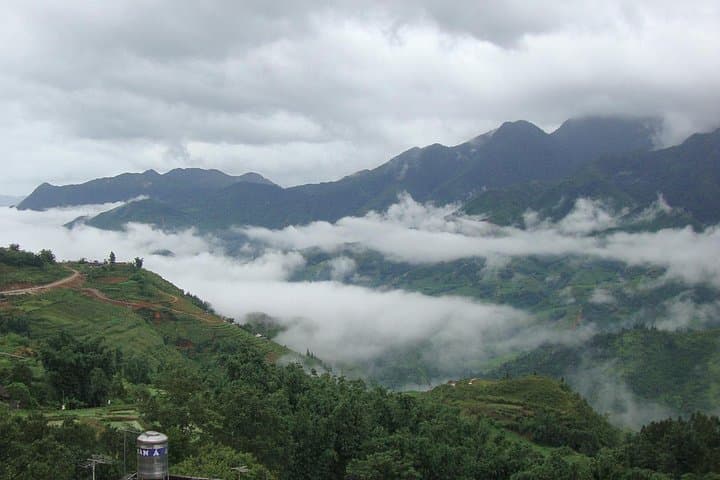
A mist-softened road opens before you as the minibus climbs out of Hanoi at dawn, windows framing lowland rice paddies shrinking into the high valleys. By early afternoon the air has thinned and the town of Sapa sits cool and blue at roughly 1,500 m, its church spire a reminder of French-era occupation and mountain trade.
A mist-softened road opens before you as the minibus climbs out of Hanoi at dawn, windows framing lowland rice paddies shrinking into the high valleys. By early afternoon the air has thinned and the town of Sapa sits cool and blue at roughly 1,500 m, its church spire a reminder of French-era occupation and mountain trade.
This two-day itinerary guides you from Hanoi to the ethnically diverse villages around Muong Hoa Valley: Cat Cat, Y Linh Ho, Lao Chai and Ta Van. The landscape is carved in terraces—young rice blades reflecting light like folded mirrors—and river corridors that push and braid through villages where H’Mong, Dao, Tay and Zay communities still practice traditional crafts and farming. Geologically, the valley follows uplifted limestone and metamorphic beds that create steep ridgelines and fast-draining soils; expect stepped trails and occasional stone staircases.
Culturally, village life centers on communal houses, woven indigo textiles and seasonal markets; Sapa’s stone church (c.1895) and weekend Love Market are local touchstones. Practically, the program involves roughly 8–10 km of walking through farm tracks and village lanes, modest elevation changes, and around 5–6 hours’ driving each direction. Overnight lodging is a 3-star hotel in Sapa; meals are traditional set menus.
Bring layered, water-resistant clothing, sturdy trail shoes, and cash for village purchases. Start early to avoid afternoon showers, respect local customs when photographing people, and hydrate—mountain air and steady uphill sections demand it. For travelers seeking close cultural contact and accessible trekking, this tour balances scenery with straightforward logistics.