
Sapa 2-Day Trek Through Hmong Villages and Rice Terraces — Homestay Experience
Two days of stepped rice terraces, village life and homestay hospitality outside Sapa. Trek across Mường Hoa Valley, meet Black H’mong and Red Dao communities, and sleep in a family home for a compact cultural and landscape immersion.
An Adventure In Sapa.
Two days of stepped rice terraces, village life and homestay hospitality outside Sapa. Trek across Mường Hoa Valley, meet Black H’mong and Red Dao communities, and sleep in a family home for a compact cultural and landscape immersion.
Read the full experience
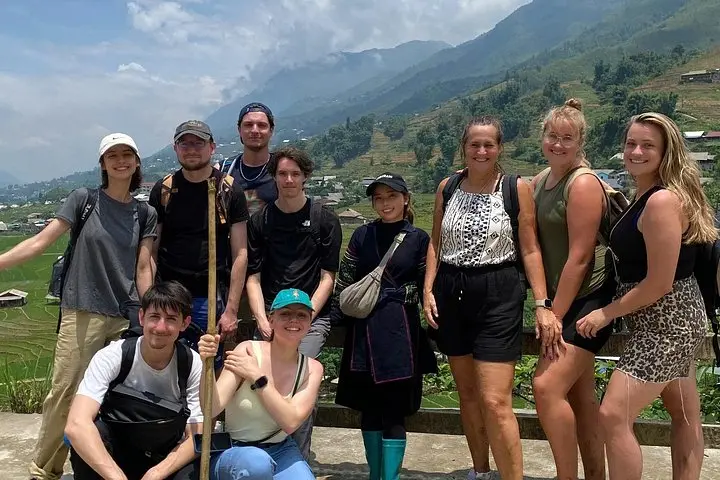
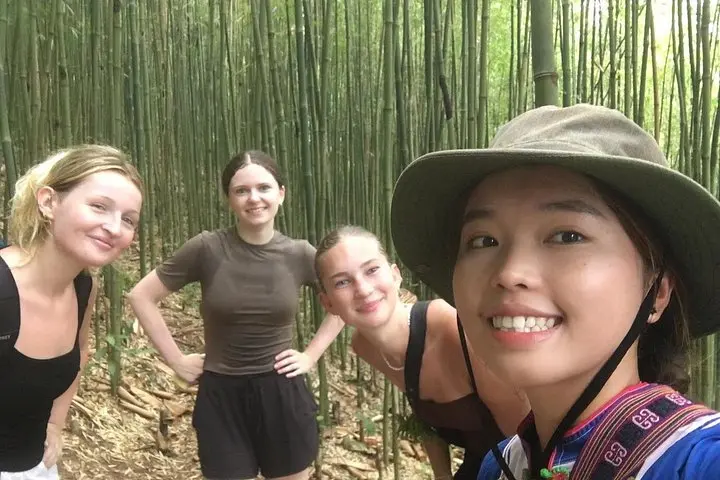
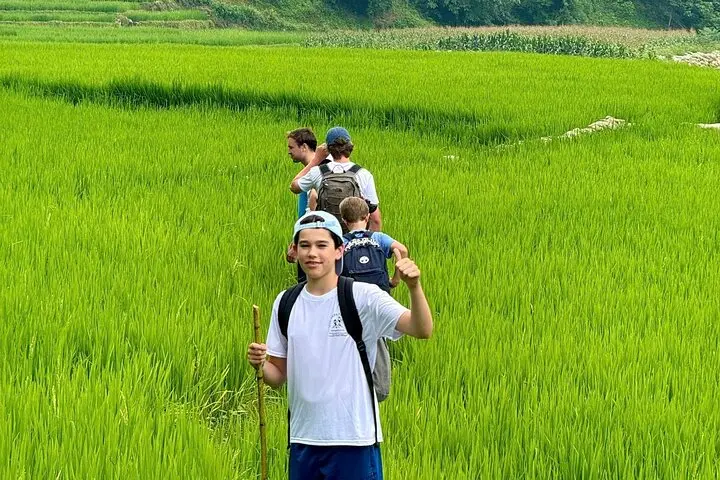
Morning mist strips the valley to gray and green, and the first rhythm of the day belongs to the terraces: terraces that push like carved steps up the mountainside, streams daring you to follow them. On this two-day trek out of Sapa town, hikers move from Y Linh Ho through Lao Chai to Ta Van, then return past Giang Ta Chai — roughly 18 km of paths, suspension bridges and frequent short climbs across bamboo groves and rice contours.
Morning mist strips the valley to gray and green, and the first rhythm of the day belongs to the terraces: terraces that push like carved steps up the mountainside, streams daring you to follow them. On this two-day trek out of Sapa town, hikers move from Y Linh Ho through Lao Chai to Ta Van, then return past Giang Ta Chai — roughly 18 km of paths, suspension bridges and frequent short climbs across bamboo groves and rice contours.
The trails run through Mường Hoa Valley, carved into metamorphic slopes and alluvial benches by centuries of hand-built irrigation; you pass both Black H’mong wooden houses and Red Dao hamlets where herbal-bath tradition and textile weaving remain part of daily life. The region’s geology yields steep, terraced fields and sudden waterfalls; the culture is equally direct — families who cook over wood stoves and open their homes for homestays offer practical lessons in local life.
Expect uneven, sometimes muddy trails, a total of 5–6 hours of walking on Day 1 and 3–4 hours on Day 2, and rooms with shared bathrooms in homestays. Bring waterproof layers, sturdy hiking shoes with grip, and insect protection; plan arrivals in daylight to negotiate suspension bridges and village tracks. Hydrate frequently: altitudes around 1,500–1,600 m mean weather shifts quickly. Respect homestay routines: ask before photographing people, accept shared meals, and pay the local balance as agreed after the tour. With a moderate level of fitness, this trek pairs active walking with direct cultural exchange — the landscape pushes; the villages answer back.
Frequently asked questions
The trek is rated moderate: Day 1 is longer (about 12 km, 5–6 hrs) with steady climbs; Day 2 is shorter. Basic fitness and comfortable walking experience are recommended.
Homestays typically offer a private room with a shared bathroom, simple meals prepared by the family, and communal living spaces — bring a small towel and modest sleeping comfort expectations.
Most operators meet travelers in Sapa town and provide local transfers to trailhead start points; confirm pickup times when booking and plan to arrive in Sapa the day before departure.
Cash in Vietnamese dong (VND) is accepted everywhere; small denominations are useful. The tour’s payment structure requires a local payment after completion — bring enough cash for that balance and small purchases.
About This Experience
"Northern Vietnam Adventure: Sapa, Ha Giang, Cao Bang & Cat Ba" operates guided outdoor trips and adventures with an emphasis on safety, stewardship, and memorable experiences.
Adventure tips
Recommended gear
- Sturdy hiking shoes: Good traction and ankle support are vital for wet terraces and rocky paths.
- Light waterproof jacket: Frequent mist and sudden rain in the highlands make a breathable rain shell indispensable in spring.
- Headlamp or small flashlight: Useful in homestays with limited lighting and for early starts or late returns.
- Reusable water bottle with filter: Carry at least 1–2 liters and a simple filter or purification tablets for remote stretches.
Photos of the experience
Related adventures & guides
Read the full experience
Morning mist strips the valley to gray and green, and the first rhythm of the day belongs to the terraces: terraces that push like carved steps up the mountainside, streams daring you to follow them. On this two-day trek out of Sapa town, hikers move from Y Linh Ho through Lao Chai to Ta Van, then return past Giang Ta Chai — roughly 18 km of paths, suspension bridges and frequent short climbs across bamboo groves and rice contours.
Morning mist strips the valley to gray and green, and the first rhythm of the day belongs to the terraces: terraces that push like carved steps up the mountainside, streams daring you to follow them. On this two-day trek out of Sapa town, hikers move from Y Linh Ho through Lao Chai to Ta Van, then return past Giang Ta Chai — roughly 18 km of paths, suspension bridges and frequent short climbs across bamboo groves and rice contours.
The trails run through Mường Hoa Valley, carved into metamorphic slopes and alluvial benches by centuries of hand-built irrigation; you pass both Black H’mong wooden houses and Red Dao hamlets where herbal-bath tradition and textile weaving remain part of daily life. The region’s geology yields steep, terraced fields and sudden waterfalls; the culture is equally direct — families who cook over wood stoves and open their homes for homestays offer practical lessons in local life.
Expect uneven, sometimes muddy trails, a total of 5–6 hours of walking on Day 1 and 3–4 hours on Day 2, and rooms with shared bathrooms in homestays. Bring waterproof layers, sturdy hiking shoes with grip, and insect protection; plan arrivals in daylight to negotiate suspension bridges and village tracks. Hydrate frequently: altitudes around 1,500–1,600 m mean weather shifts quickly. Respect homestay routines: ask before photographing people, accept shared meals, and pay the local balance as agreed after the tour. With a moderate level of fitness, this trek pairs active walking with direct cultural exchange — the landscape pushes; the villages answer back.
Make a day of it nearby.
Verified experiences and guided adventures in the surrounding area.