THE ADVENTURE COLLECTIVE® · Independent discovery and booking for outdoor travel

Two days of guided trekking through Muong Hoa Valley, staying overnight in a local homestay in Ta Van. Hike across rice terraces, visit Black H’mong and Red Dao villages, and return to Sapa with intimate cultural exchanges and dramatic mountain views.
Two days of guided trekking through Muong Hoa Valley, staying overnight in a local homestay in Ta Van. Hike across rice terraces, visit Black H’mong and Red Dao villages, and return to Sapa with intimate cultural exchanges and dramatic mountain views.
Morning mist lifts off the rice terraces as you step from Sapa town onto the narrow trail toward Muong Hoa Valley. The stream ahead seems to pull you forward, pulling the rhythm of your pace across stone steps and bamboo bridges. Over two days you follow water and terraces, meet Black H’mong stitchworkers and Red Dao elders, and sleep in a local Dzay homestay where lantern light replaces the town’s neon.
Verified experiences and guided adventures in the surrounding area.
Operated by LOCAL TOURS VIETNAM · Sapa, Lao Cai
Morning mist lifts off the rice terraces as you step from Sapa town onto the narrow trail toward Muong Hoa Valley. The stream ahead seems to pull you forward, pulling the rhythm of your pace across stone steps and bamboo bridges. Over two days you follow water and terraces, meet Black H’mong stitchworkers and Red Dao elders, and sleep in a local Dzay homestay where lantern light replaces the town’s neon.
This landscape began shaping under millennia of hill farming; the valley’s stepped terraces cut into ancient metamorphic bedrock and fed by seasonal streams. Sapa itself was reworked as a French hill station in the early 20th century, but the villages you visit preserve distinctive cultures and handcrafts—Black H’mong indigo garments, Red Dao embroidery, and Dzay woodwork.
Expect trail surfaces of packed dirt, occasional slippery stone near the streams, and stretches of steep but short elevation changes rather than long alpine climbs. The itinerary covers roughly 12 km of trekking on day one through Y Linh Ho, Lao Chai and Ta Van, then about 8 km on day two to Giang Ta Chai and Su Pan before a drive back to Sapa.
Practical guidance: hike with sturdy footwear, layer for sudden weather shifts, and carry water and snacks—guides handle logistics and meals but trail readiness matters. Homestay stays are simple but authentic; bring a small towel and modest gifts for hosts. Start hikes mid-morning to avoid dawn fog and check for seasonal rains—trails get slick. Respect private land, stay on paths, and tip guides who mediate language and culture for a responsible, memorable two-day trek.
moderate.
2 days (~30 hours total).
Moderate fitness: able to walk 8–12 km over uneven terrain with short steep sections; suitable for most active travelers.
Yes — the operator rates the trek 5/10; routes are guided with manageable distances and short elevation changes, making it accessible to most active beginners.
Homestays are simple, family-run houses with shared bathrooms or basic private rooms; expect local meals, limited hot water, and communal living.
Day 1 is about 12 km across terraces and village trails; Day 2 is roughly 8 km before a vehicle return to Sapa.
No special trekking permits are generally required for these villages, but carry your passport and follow guidance from your local guide.
Sapa was developed by the French as a hill station in the early 1900s; the valley has long been inhabited by H’mong, Tay, Red Dao and Dzay communities who farm the terraces and preserve distinct textile traditions.
Stick to established trails and avoid stepping on terraces; choose homestays that practice waste minimization and support local economies to reduce tourism impact.
LOCAL TOURS VIETNAM operates guided outdoor trips and adventures with an emphasis on safety, stewardship, and memorable experiences.

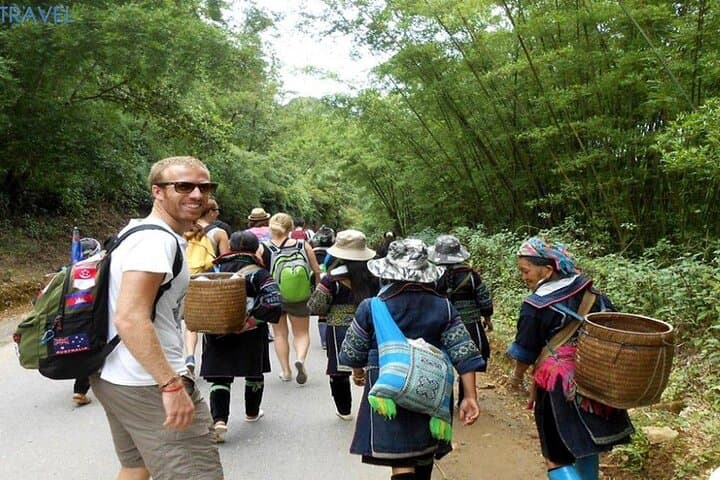


Morning mist lifts off the rice terraces as you step from Sapa town onto the narrow trail toward Muong Hoa Valley. The stream ahead seems to pull you forward, pulling the rhythm of your pace across stone steps and bamboo bridges. Over two days you follow water and terraces, meet Black H’mong stitchworkers and Red Dao elders, and sleep in a local Dzay homestay where lantern light replaces the town’s neon.
Morning mist lifts off the rice terraces as you step from Sapa town onto the narrow trail toward Muong Hoa Valley. The stream ahead seems to pull you forward, pulling the rhythm of your pace across stone steps and bamboo bridges. Over two days you follow water and terraces, meet Black H’mong stitchworkers and Red Dao elders, and sleep in a local Dzay homestay where lantern light replaces the town’s neon.
This landscape began shaping under millennia of hill farming; the valley’s stepped terraces cut into ancient metamorphic bedrock and fed by seasonal streams. Sapa itself was reworked as a French hill station in the early 20th century, but the villages you visit preserve distinctive cultures and handcrafts—Black H’mong indigo garments, Red Dao embroidery, and Dzay woodwork.
Expect trail surfaces of packed dirt, occasional slippery stone near the streams, and stretches of steep but short elevation changes rather than long alpine climbs. The itinerary covers roughly 12 km of trekking on day one through Y Linh Ho, Lao Chai and Ta Van, then about 8 km on day two to Giang Ta Chai and Su Pan before a drive back to Sapa.
Practical guidance: hike with sturdy footwear, layer for sudden weather shifts, and carry water and snacks—guides handle logistics and meals but trail readiness matters. Homestay stays are simple but authentic; bring a small towel and modest gifts for hosts. Start hikes mid-morning to avoid dawn fog and check for seasonal rains—trails get slick. Respect private land, stay on paths, and tip guides who mediate language and culture for a responsible, memorable two-day trek.