THE ADVENTURE COLLECTIVE® · Independent discovery and booking for outdoor travel

Walk the Muong Hoa valley over two days, sleeping in a Ta Van homestay and hiking through rice terraces and minority villages. This guided trek is a compact introduction to Sapa’s landscape, people, and trails.
Walk the Muong Hoa valley over two days, sleeping in a Ta Van homestay and hiking through rice terraces and minority villages. This guided trek is a compact introduction to Sapa’s landscape, people, and trails.
Morning light breaks over high-ridge paddy steps and the first cabin bus eases out of Hanoi toward the Hoang Lien Son range. By early afternoon trekkers find themselves stepping off a dusty trail into Y Linh Ho, where a stream dares you to follow its braided course and terraces unfold like a working map of mountain agriculture.
Verified experiences and guided adventures in the surrounding area.
Operated by Local Tours SAPA · Sa Pa, Lào Cai
Morning light breaks over high-ridge paddy steps and the first cabin bus eases out of Hanoi toward the Hoang Lien Son range. By early afternoon trekkers find themselves stepping off a dusty trail into Y Linh Ho, where a stream dares you to follow its braided course and terraces unfold like a working map of mountain agriculture.
This two-day loop threads through Lao Chai and Ta Van, villages of Black Hmong and Tay peoples whose traditional costumes and timber homes reflect generations of upland rice farming. Sa Pa sits around 1,500 m elevation, carved from uplifted limestone and granite; Muong Hoa valley’s terraces are hand-cut into steep slopes and fed by seasonal mountain runoff. The area also bears the imprint of French hill-station development from the colonial era and a living mosaic of ethnic minority culture today.
Expect pragmatic trekking: day one covers ~9 km (roughly 3 hours of walking) along packed soil paths and stone steps beside the Muong Hoa stream; day two adds ~4 km (about 2 hours) through bamboo patches to Giang Ta Chai and back to Sapa town. Trails can be slippery after rain and shade thin where terraces open to wind.
Practical guidance: pack a waterproof layer, sturdy shoes, and small cash for homestay purchases. Overnighting in a bungalow-style homestay gives direct cultural exchange and hearty local meals; be ready for simple facilities and warm hospitality. Start early to avoid afternoon clouds, respect private fields, and keep waste packed out—this route rewards steady pacing with big views and close-up encounters with daily mountain life.
moderate.
2 days (approx. 8–10 hours walking total).
Suitable for people in regular walking shape; expect uneven trails and short steep sections.
Moderate fitness is sufficient—walks are short (3 hrs and 2 hrs) but include uneven terrain and some climbs; regular walkers should manage comfortably.
Homestays offer simple bungalow rooms with private or shared bathrooms depending on the booking—expect basic hot water and local meals prepared by the host family.
Sa Pa sits around 1,500 m—most visitors do not experience severe altitude effects, but take it steady if you’re sensitive to altitude or have respiratory concerns.
Many providers offer roundtrip transfer and luggage handling; confirm in advance if you need bulk luggage stored in Hanoi or at a Sapa drop-off point.
The Hoang Lien Son area hosts several ethnic groups, notably Black Hmong and Tay, and developed as a French-era hill station that shaped Sa Pa’s modern visitor history.
Terraced rice farming is fragile; stick to marked paths, avoid stepping on cultivated plots, and carry out all waste to minimize erosion and impact.
Local Tours SAPA operates guided outdoor trips and adventures with an emphasis on safety, stewardship, and memorable experiences.
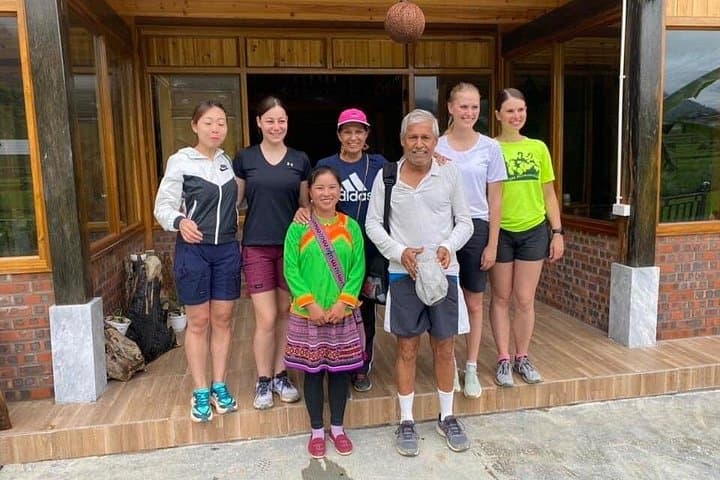



Morning light breaks over high-ridge paddy steps and the first cabin bus eases out of Hanoi toward the Hoang Lien Son range. By early afternoon trekkers find themselves stepping off a dusty trail into Y Linh Ho, where a stream dares you to follow its braided course and terraces unfold like a working map of mountain agriculture.
Morning light breaks over high-ridge paddy steps and the first cabin bus eases out of Hanoi toward the Hoang Lien Son range. By early afternoon trekkers find themselves stepping off a dusty trail into Y Linh Ho, where a stream dares you to follow its braided course and terraces unfold like a working map of mountain agriculture.
This two-day loop threads through Lao Chai and Ta Van, villages of Black Hmong and Tay peoples whose traditional costumes and timber homes reflect generations of upland rice farming. Sa Pa sits around 1,500 m elevation, carved from uplifted limestone and granite; Muong Hoa valley’s terraces are hand-cut into steep slopes and fed by seasonal mountain runoff. The area also bears the imprint of French hill-station development from the colonial era and a living mosaic of ethnic minority culture today.
Expect pragmatic trekking: day one covers ~9 km (roughly 3 hours of walking) along packed soil paths and stone steps beside the Muong Hoa stream; day two adds ~4 km (about 2 hours) through bamboo patches to Giang Ta Chai and back to Sapa town. Trails can be slippery after rain and shade thin where terraces open to wind.
Practical guidance: pack a waterproof layer, sturdy shoes, and small cash for homestay purchases. Overnighting in a bungalow-style homestay gives direct cultural exchange and hearty local meals; be ready for simple facilities and warm hospitality. Start early to avoid afternoon clouds, respect private fields, and keep waste packed out—this route rewards steady pacing with big views and close-up encounters with daily mountain life.