THE ADVENTURE COLLECTIVE® · Independent discovery and booking for outdoor travel

Board an express coach from Hanoi and cross into the Hoang Lien highlands for two days of village trekking, terraced rice views, and cultural encounters with Black Hmong and Dzay communities. This compact overnight tour pairs accessible trails with local meals and one night’s accommodation in Sapa.
Board an express coach from Hanoi and cross into the Hoang Lien highlands for two days of village trekking, terraced rice views, and cultural encounters with Black Hmong and Dzay communities. This compact overnight tour pairs accessible trails with local meals and one night’s accommodation in Sapa.
A chill morning on the highway dissolves into a highland mist as the coach pulls into Sapa, where terraced slopes step down like carved stairs toward the valley. You leave the town’s compact grid and follow a guide along sloping trails to Cat Cat — narrow lanes, wooden houses, and water-worn stone steps guiding you through Black Hmong villages. The river murmurs beside rattan bridges; mountains press close and demand your attention.
Verified experiences and guided adventures in the surrounding area.
Operated by Paradise Indochina Travel · Sapa, Lao Cai Province
A chill morning on the highway dissolves into a highland mist as the coach pulls into Sapa, where terraced slopes step down like carved stairs toward the valley. You leave the town’s compact grid and follow a guide along sloping trails to Cat Cat — narrow lanes, wooden houses, and water-worn stone steps guiding you through Black Hmong villages. The river murmurs beside rattan bridges; mountains press close and demand your attention.
This region sits on the Hoang Lien Range, where uplifted limestone and shale create steep ridges and fertile benches that local communities have terraced for centuries. Sapa’s cultural landscape is dominated by Black Hmong and Dzay groups, whose embroidery, house styles, and seasonal festivals reflect a long mountain agrarian tradition shaped under French colonial mapping in the late 19th century.
Expect 3–4 hours of easy-to-moderate walking each day across packed earth and stone steps, punctuated by rice terraces and small hamlets. Trails can be slippery after rain and visibility drops in fog; footwear with grip and layered clothing make the difference between discomfort and enjoyment. Meals are typically local Vietnamese dishes served in town and on the trail; accommodation is a comfortable 3-star hotel or simple homestay depending on booking.
Practical tips: start early to catch clearer light on the terraces, hydrate frequently at altitude, and carry small change for village purchases. The return coach to Hanoi runs in the evening — a good time to rest and reflect on the mountains you walked through.
easy.
2 days (approx. 48 hours).
Suitable for most people comfortable with several hours of walking on uneven ground; basic stamina required.
The express coach takes about 5.5–7 hours depending on traffic and stops; the itinerary plans an early departure and evening return to Hanoi on day two.
Yes; the tour is classified as easy with guided walks of a few hours each day on defined paths, but participants should be able to walk on uneven terrain for several hours.
Accommodation is a comfortable 3-star hotel in Sapa town per the booking; some similar tours offer homestays but this itinerary lists hotel lodging.
Sapa sits around 1,500 meters (4,900 ft); most visitors adapt quickly, but take it easy on arrival, stay hydrated, and mention any health concerns to your guide.
Sapa became a hill station in the French colonial era and later developed as a center for ethnic minority agriculture; terracing methods reflect centuries of local land management.
Pressure from tourism and changing farming practices affects terraces and village life; support local guides and vendors, stick to trails, and avoid single-use plastics where possible.
Paradise Indochina Travel operates guided outdoor trips and adventures with an emphasis on safety, stewardship, and memorable experiences.


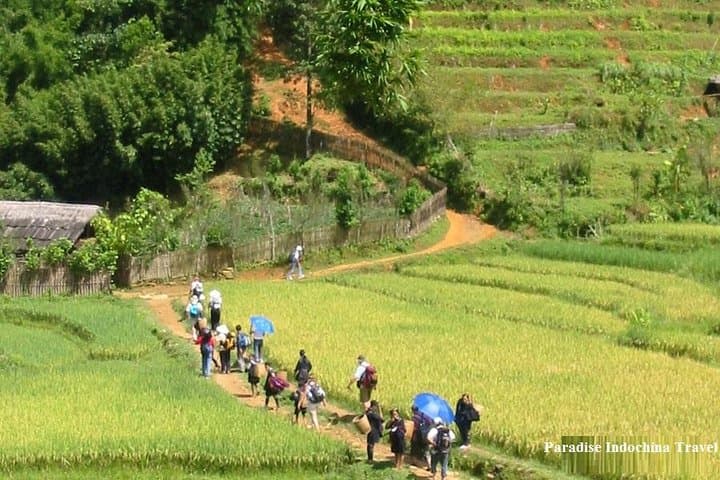
A chill morning on the highway dissolves into a highland mist as the coach pulls into Sapa, where terraced slopes step down like carved stairs toward the valley. You leave the town’s compact grid and follow a guide along sloping trails to Cat Cat — narrow lanes, wooden houses, and water-worn stone steps guiding you through Black Hmong villages. The river murmurs beside rattan bridges; mountains press close and demand your attention.
A chill morning on the highway dissolves into a highland mist as the coach pulls into Sapa, where terraced slopes step down like carved stairs toward the valley. You leave the town’s compact grid and follow a guide along sloping trails to Cat Cat — narrow lanes, wooden houses, and water-worn stone steps guiding you through Black Hmong villages. The river murmurs beside rattan bridges; mountains press close and demand your attention.
This region sits on the Hoang Lien Range, where uplifted limestone and shale create steep ridges and fertile benches that local communities have terraced for centuries. Sapa’s cultural landscape is dominated by Black Hmong and Dzay groups, whose embroidery, house styles, and seasonal festivals reflect a long mountain agrarian tradition shaped under French colonial mapping in the late 19th century.
Expect 3–4 hours of easy-to-moderate walking each day across packed earth and stone steps, punctuated by rice terraces and small hamlets. Trails can be slippery after rain and visibility drops in fog; footwear with grip and layered clothing make the difference between discomfort and enjoyment. Meals are typically local Vietnamese dishes served in town and on the trail; accommodation is a comfortable 3-star hotel or simple homestay depending on booking.
Practical tips: start early to catch clearer light on the terraces, hydrate frequently at altitude, and carry small change for village purchases. The return coach to Hanoi runs in the evening — a good time to rest and reflect on the mountains you walked through.