THE ADVENTURE COLLECTIVE® · Independent discovery and booking for outdoor travel

Two days of mountain trails, rice-terrace panoramas and village visits around Sapa, with comfortable limousine transfers from Hanoi and an overnight in a 4-star hotel. Ideal for travelers seeking cultural contact and a moderate trek through the Muong Hoa valley.
Two days of mountain trails, rice-terrace panoramas and village visits around Sapa, with comfortable limousine transfers from Hanoi and an overnight in a 4-star hotel. Ideal for travelers seeking cultural contact and a moderate trek through the Muong Hoa valley.
Fog lifts off the Hoàng Liên Son as the limousine eases into Sapa town; terraces cut the valley into steps and women in indigo skirts move like color through the fields. On day one a short, steep trail drops to Cat Cat village where a French-built hydraulic station crouches by the waterfall, then climbs back to the town for a hotel evening. Day two stretches the legs — Y Linh Ho, Lao Chai and Ta Van unfold as a long sling of rice terraces beside the Muong Hoa stream.
Verified experiences and guided adventures in the surrounding area.
Operated by Local Tours ASIA · Sapa, Lao Cai
Fog lifts off the Hoàng Liên Son as the limousine eases into Sapa town; terraces cut the valley into steps and women in indigo skirts move like color through the fields. On day one a short, steep trail drops to Cat Cat village where a French-built hydraulic station crouches by the waterfall, then climbs back to the town for a hotel evening. Day two stretches the legs — Y Linh Ho, Lao Chai and Ta Van unfold as a long sling of rice terraces beside the Muong Hoa stream.
The range itself is young geology: folded metamorphic rock uplifted by the same tectonics that raised Fansipan, Vietnam’s highest peak. The area’s cultural landscape is older and lived-in — Black Hmong and Red Dzao villages maintain weaving and silverwork traditions you’ll see up close. Local guides translate more than language: they read the season in terraces and know which bridges still hold.
Expect mixed terrain: stone steps, muddy paths, well-worn village lanes and several short, steep descents and ascents (about 3.5 km on day one; roughly 12 km and 4–5 hours of trekking on day two). Weather can flip quickly — sun, mist and sudden rain — so pack layers and a rain shell.
Practical rhythm: leave Hanoi early by limousine, overnight in a 4-star Sapa hotel, trek light the second morning, and return to Hanoi the same evening. Carry local currency for crafts, tip guides where service is strong, and give extra time for photos — the valley rewards patience.
moderate.
2 days (approx. 8–10 hours walking total).
Should be comfortable walking on uneven ground for several hours and able to handle short steep sections.
Trails are moderate: short steep sections and uneven terrain with about 3.5 km on day one and ~12 km on day two; reasonable fitness and steady footing are needed.
The itinerary includes limousine transfers from Hanoi, one night at a 4-star hotel in Sapa, local guide, entrance fees, and meals listed (2 lunches, 1 dinner, 1 breakfast).
Sapa sits around 1,400–1,600 m — most travelers adapt quickly, but take it easy the first morning if you’re sensitive to elevation.
Yes — the tour provides limousine pick-up/drop-off in Hanoi Old Quarter and returns the same evening of day two.
Sapa grew under French colonial influence as a hill station; the valley’s cultural landscape is shaped by the Black Hmong, Red Dzao and other ethnic groups who farm steep terraces and produce traditional handicrafts.
Terraced rice fields are fragile — stick to marked trails, avoid trampling young paddies, and support local businesses rather than taking artifacts that damage craft traditions.
Local Tours ASIA operates guided outdoor trips and adventures with an emphasis on safety, stewardship, and memorable experiences.
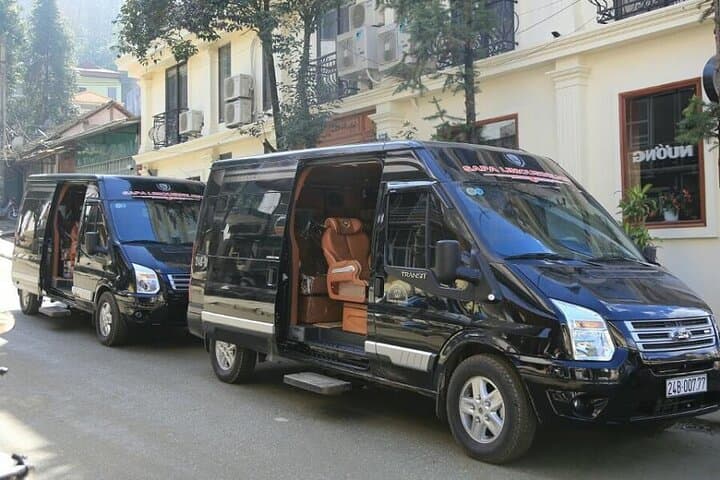



Fog lifts off the Hoàng Liên Son as the limousine eases into Sapa town; terraces cut the valley into steps and women in indigo skirts move like color through the fields. On day one a short, steep trail drops to Cat Cat village where a French-built hydraulic station crouches by the waterfall, then climbs back to the town for a hotel evening. Day two stretches the legs — Y Linh Ho, Lao Chai and Ta Van unfold as a long sling of rice terraces beside the Muong Hoa stream.
Fog lifts off the Hoàng Liên Son as the limousine eases into Sapa town; terraces cut the valley into steps and women in indigo skirts move like color through the fields. On day one a short, steep trail drops to Cat Cat village where a French-built hydraulic station crouches by the waterfall, then climbs back to the town for a hotel evening. Day two stretches the legs — Y Linh Ho, Lao Chai and Ta Van unfold as a long sling of rice terraces beside the Muong Hoa stream.
The range itself is young geology: folded metamorphic rock uplifted by the same tectonics that raised Fansipan, Vietnam’s highest peak. The area’s cultural landscape is older and lived-in — Black Hmong and Red Dzao villages maintain weaving and silverwork traditions you’ll see up close. Local guides translate more than language: they read the season in terraces and know which bridges still hold.
Expect mixed terrain: stone steps, muddy paths, well-worn village lanes and several short, steep descents and ascents (about 3.5 km on day one; roughly 12 km and 4–5 hours of trekking on day two). Weather can flip quickly — sun, mist and sudden rain — so pack layers and a rain shell.
Practical rhythm: leave Hanoi early by limousine, overnight in a 4-star Sapa hotel, trek light the second morning, and return to Hanoi the same evening. Carry local currency for crafts, tip guides where service is strong, and give extra time for photos — the valley rewards patience.