THE ADVENTURE COLLECTIVE® · Independent discovery and booking for outdoor travel

Two days in the Hoàng Liên range pair the valley rhythms of Cat Cat village with the aerial approach to Fansipan. This compact trek mixes cultural encounters, stepped rice terraces and a cable-car ascent to high alpine views.
Two days in the Hoàng Liên range pair the valley rhythms of Cat Cat village with the aerial approach to Fansipan. This compact trek mixes cultural encounters, stepped rice terraces and a cable-car ascent to high alpine views.
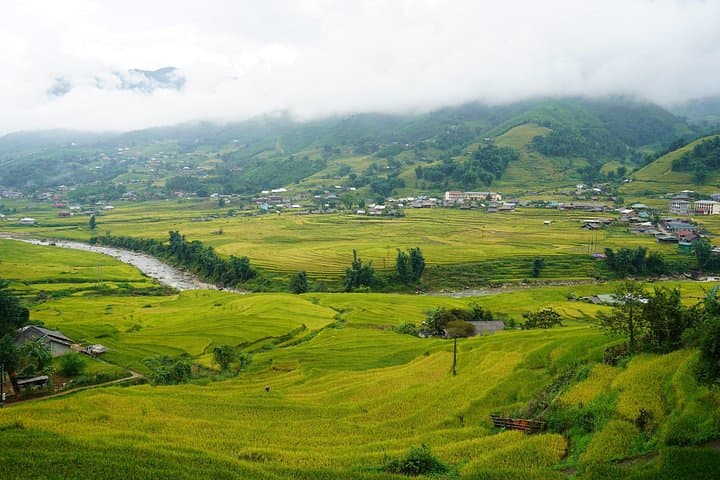
A damp morning in Sapa opens with drifts of cloud sliding down terraced ridges and the distant rumble of a river daring you into the valley. Travelers disembark into market sounds and colorful traditional dress; cold air sharpens the smell of wet earth and wood smoke as porters and small vendors move between stalls.
Verified experiences and guided adventures in the surrounding area.
Operated by Vietnam Wonder Travel · Sapa, Lào Cai
A damp morning in Sapa opens with drifts of cloud sliding down terraced ridges and the distant rumble of a river daring you into the valley. Travelers disembark into market sounds and colorful traditional dress; cold air sharpens the smell of wet earth and wood smoke as porters and small vendors move between stalls.
This short itinerary threads two very different faces of the Hoàng Liên range: the living terraces and ethnic villages of the valley, and the high granite spine crowned by Fansipan, the Roof of Indochina. Cat Cat village reflects a colonial-era layer—old hydroelectric works and a stone bridge—beside centuries-old H’Mong traditions. Geologically, the Hoàng Liên massif is a mix of metamorphic schists and granites uplifted by tectonic collision, creating steep valleys and abrupt elevation gain that rain, rivers, and rice terraces have carved into dense, stepped landscapes.
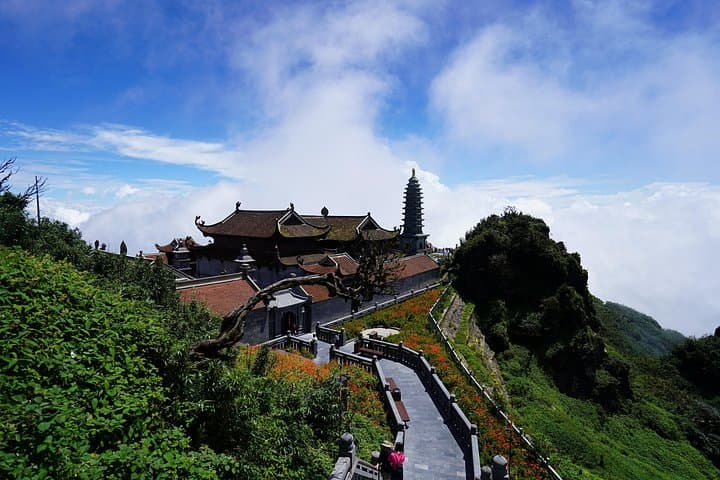
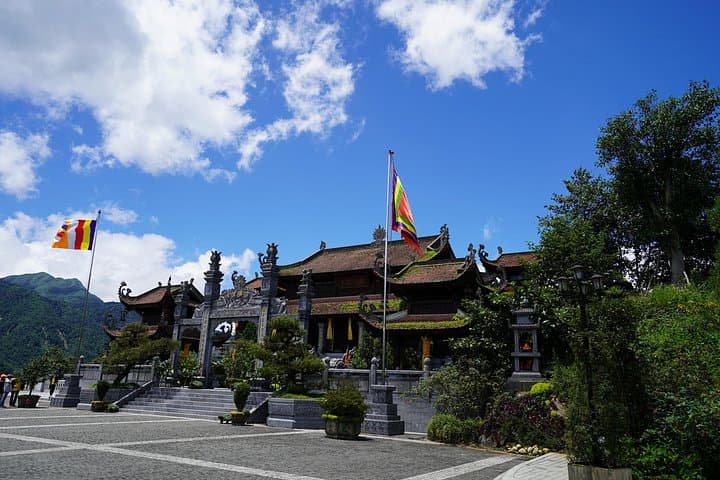
Expect compact, walkable sections: a 2.5 km descent to Cat Cat waterfall on worn stone and dirt paths, plus a cable-car approach to Fansipan, followed by roughly 600 carved steps to the summit complex. Cultural notes: H’Mong and Dao communities still farm the terraces and sell handicrafts in town markets.
Practical guidance: bring layered clothing for rapid weather shifts, waterproof footwear for muddy, uneven trails, and a daypack with water and snacks. Allow time for acclimation—the cable car reduces technical climbing but the ridge sits near 2,800 m. Travel early to beat crowds at viewpoints, and support local guides and businesses to keep trails and cultural sites sustainable.
moderate.
2 days, 1 night.
Good baseline fitness for walking on uneven terrain and climbing stairs at altitude; comfortable with stair and hill climbs.
The Cat Cat section is a 2.5 km descent and return on uneven paths that takes about 2 hours—moderate effort with some steep sections and stairs.
No—most travelers use the cable car to 2,800 m and then climb approximately 600 steps to the summit complex; it’s steep but short, and can be paced to ability.
A local guide is included for village visits in this tour and recommended for cultural context, though short walks in town can be done independently if comfortable navigating.
Yes—this package includes two lunches, dinner, breakfast, and a 3-star double/twin hotel room for one night as described in the itinerary.
Sapa’s valleys have been farmed by H’Mong, Dao and Tay communities for centuries; French colonial works, including a small hydroelectric station, are visible at Cat Cat.
Rising visitor numbers stress trails and terraces—stick to marked paths, avoid single-use plastics, and hire local guides to ensure tourism benefits communities.
Vietnam Wonder Travel operates guided outdoor trips and adventures with an emphasis on safety, stewardship, and memorable experiences.

A damp morning in Sapa opens with drifts of cloud sliding down terraced ridges and the distant rumble of a river daring you into the valley. Travelers disembark into market sounds and colorful traditional dress; cold air sharpens the smell of wet earth and wood smoke as porters and small vendors move between stalls.
A damp morning in Sapa opens with drifts of cloud sliding down terraced ridges and the distant rumble of a river daring you into the valley. Travelers disembark into market sounds and colorful traditional dress; cold air sharpens the smell of wet earth and wood smoke as porters and small vendors move between stalls.
This short itinerary threads two very different faces of the Hoàng Liên range: the living terraces and ethnic villages of the valley, and the high granite spine crowned by Fansipan, the Roof of Indochina. Cat Cat village reflects a colonial-era layer—old hydroelectric works and a stone bridge—beside centuries-old H’Mong traditions. Geologically, the Hoàng Liên massif is a mix of metamorphic schists and granites uplifted by tectonic collision, creating steep valleys and abrupt elevation gain that rain, rivers, and rice terraces have carved into dense, stepped landscapes.
Expect compact, walkable sections: a 2.5 km descent to Cat Cat waterfall on worn stone and dirt paths, plus a cable-car approach to Fansipan, followed by roughly 600 carved steps to the summit complex. Cultural notes: H’Mong and Dao communities still farm the terraces and sell handicrafts in town markets.
Practical guidance: bring layered clothing for rapid weather shifts, waterproof footwear for muddy, uneven trails, and a daypack with water and snacks. Allow time for acclimation—the cable car reduces technical climbing but the ridge sits near 2,800 m. Travel early to beat crowds at viewpoints, and support local guides and businesses to keep trails and cultural sites sustainable.