THE ADVENTURE COLLECTIVE® · Independent discovery and booking for outdoor travel

A compact 2‑day trek from Hanoi to Sapa that pairs rice‑terrace hiking with an overnight bungalow homestay. Covering roughly 13 km across two days, it’s a cultural and scenic intro to Vietnam’s highlands.
A compact 2‑day trek from Hanoi to Sapa that pairs rice‑terrace hiking with an overnight bungalow homestay. Covering roughly 13 km across two days, it’s a cultural and scenic intro to Vietnam’s highlands.
Mist slips down the mountainside as the sleeper bus unwinds north from Hanoi, and by midafternoon the hikers step onto a trail that threads rice terraces like a living staircase. On this 2‑day loop the landscape does the talking: rushing streams, carved paddies, bamboo stands and the distant, ragged silhouette of the Hoang Lien Son range.
Verified experiences and guided adventures in the surrounding area.
Operated by Sapa Trekking Tours · Sapa, Lao Cai
Mist slips down the mountainside as the sleeper bus unwinds north from Hanoi, and by midafternoon the hikers step onto a trail that threads rice terraces like a living staircase. On this 2‑day loop the landscape does the talking: rushing streams, carved paddies, bamboo stands and the distant, ragged silhouette of the Hoang Lien Son range.
The region has long been home to H’Mong, Red Dao and Giay communities who built the terraces generations ago and continue traditional weaving, farming and music. Geologically the Hoang Lien Son massif—whose highest summit is Fansipan—creates steep gradients, quick microclimates and deeply incised valleys that make every viewpoint feel earned.
Day 1 covers about 9 km (≈3.5 hours) from Y Linh Ho through Lao Chai to Ta Van, following the Muong Hoa stream and terraces, ending at a bungalow homestay around 1,200–1,600 m elevation. Day 2 is a shorter 4 km (≈2 hours) stretch through bamboo and rice paddies to Giang Ta Chai and a pickup back to Sapa town. Terrain is mixed: packed earth, stone steps, occasional slippery sections after rain.
Expect simple local meals, an evening of village life, and basic bungalow facilities. Practical notes: bring sturdy footwear, layered clothing for chilly nights, cash for market purchases, and a small daypack with water and rain protection. Aim to trek in morning light for the best photos and cooler air. This short overnight trek pairs cultural contact with manageable hiking distances—ideal for travelers who want a concentrated taste of northern Vietnam’s mountains without technical climbing.
moderate.
2 days.
Moderate fitness required—able to walk 3–4 hours with uphill sections and carry a light daypack.
Day 1 is about 9 km with steady uphill/downhill sections (~3.5 hours); Day 2 is easier at ~4 km (~2 hours). Trails are non‑technical but can be tiring.
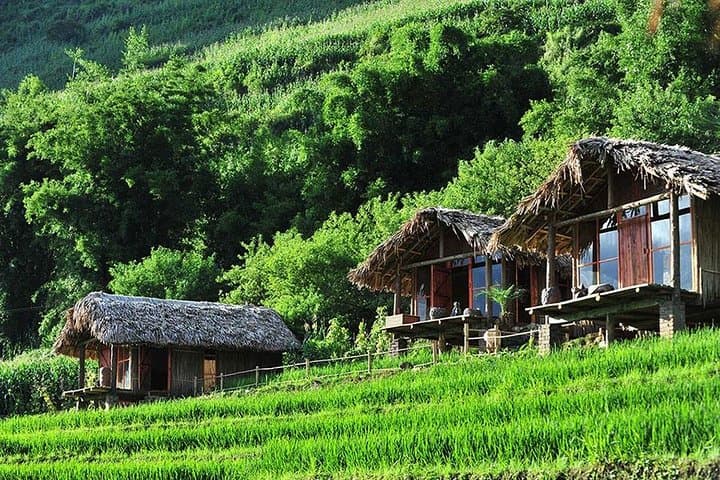
An overnight bungalow/homestay with basic facilities is provided; expect locally prepared meals and communal spaces.
Yes—roundtrip air‑conditioned bus transport from Hanoi with onboard restrooms and at least two comfort breaks is included.
Sapa sits around 1,200–1,600 m—most travelers acclimatize easily, but stay hydrated and move at a steady pace if you feel unwell.
The terraces reflect centuries of upland rice cultivation by H’Mong, Dao and Giay communities; Sapa grew as a hill station during French colonial times and later a trekking hub.
Stick to marked trails and avoid feeding wildlife; local tourism supports homestays, but pack out non‑biodegradable waste to protect terraces and streams.
Sapa Trekking Tours operates guided outdoor trips and adventures with an emphasis on safety, stewardship, and memorable experiences.
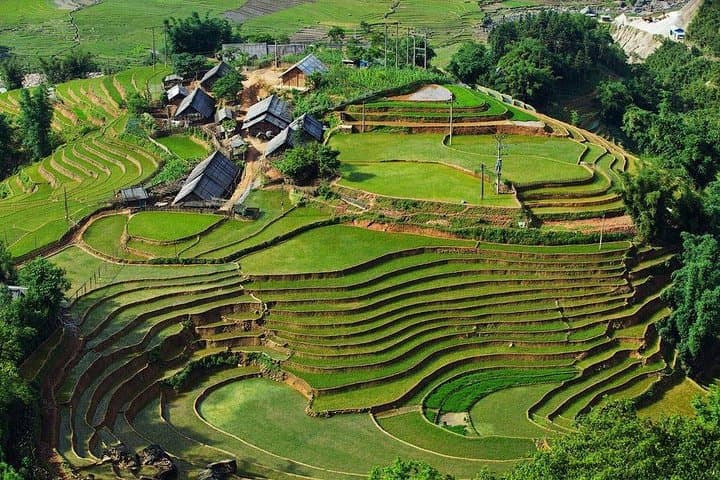
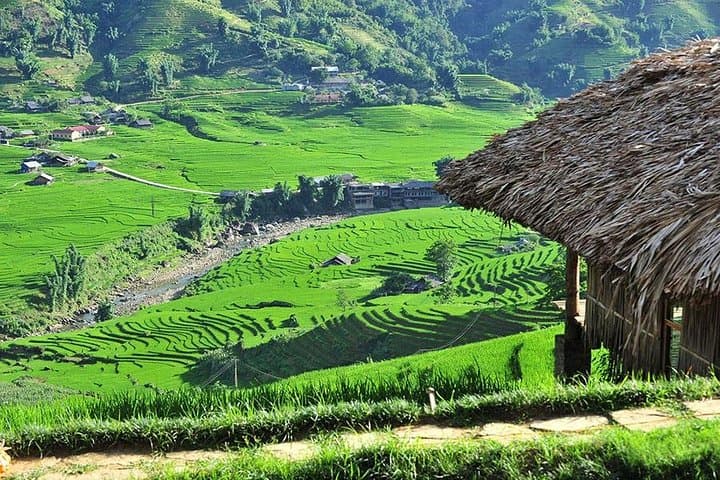
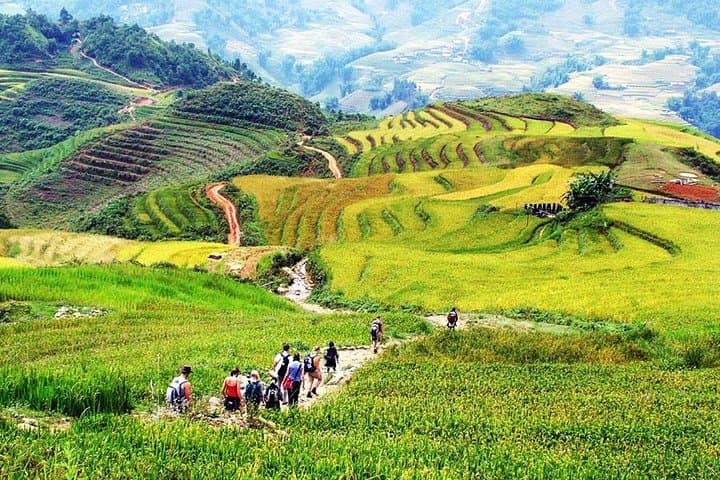
Mist slips down the mountainside as the sleeper bus unwinds north from Hanoi, and by midafternoon the hikers step onto a trail that threads rice terraces like a living staircase. On this 2‑day loop the landscape does the talking: rushing streams, carved paddies, bamboo stands and the distant, ragged silhouette of the Hoang Lien Son range.
Mist slips down the mountainside as the sleeper bus unwinds north from Hanoi, and by midafternoon the hikers step onto a trail that threads rice terraces like a living staircase. On this 2‑day loop the landscape does the talking: rushing streams, carved paddies, bamboo stands and the distant, ragged silhouette of the Hoang Lien Son range.
The region has long been home to H’Mong, Red Dao and Giay communities who built the terraces generations ago and continue traditional weaving, farming and music. Geologically the Hoang Lien Son massif—whose highest summit is Fansipan—creates steep gradients, quick microclimates and deeply incised valleys that make every viewpoint feel earned.
Day 1 covers about 9 km (≈3.5 hours) from Y Linh Ho through Lao Chai to Ta Van, following the Muong Hoa stream and terraces, ending at a bungalow homestay around 1,200–1,600 m elevation. Day 2 is a shorter 4 km (≈2 hours) stretch through bamboo and rice paddies to Giang Ta Chai and a pickup back to Sapa town. Terrain is mixed: packed earth, stone steps, occasional slippery sections after rain.
Expect simple local meals, an evening of village life, and basic bungalow facilities. Practical notes: bring sturdy footwear, layered clothing for chilly nights, cash for market purchases, and a small daypack with water and rain protection. Aim to trek in morning light for the best photos and cooler air. This short overnight trek pairs cultural contact with manageable hiking distances—ideal for travelers who want a concentrated taste of northern Vietnam’s mountains without technical climbing.