THE ADVENTURE COLLECTIVE® · Independent discovery and booking for outdoor travel

A compact two-day trek from Sapa that threads rice terraces, streams and village life, with an authentic homestay night in Ta Van. This route balances accessible hiking with meaningful cultural encounters.
A compact two-day trek from Sapa that threads rice terraces, streams and village life, with an authentic homestay night in Ta Van. This route balances accessible hiking with meaningful cultural encounters.
Before sunrise the coach eases out of Hanoi and the flat delta gives way to folding ridgelines; by early afternoon you step off into a highland town where cloud fingers slip through pines and terraces step down the valley.
Verified experiences and guided adventures in the surrounding area.
Operated by Asia Group Tour · Sapa, Lào Cai Province
Before sunrise the coach eases out of Hanoi and the flat delta gives way to folding ridgelines; by early afternoon you step off into a highland town where cloud fingers slip through pines and terraces step down the valley.
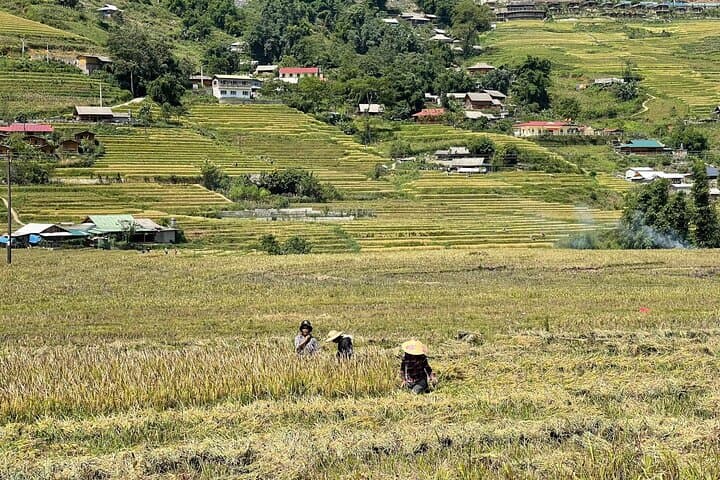
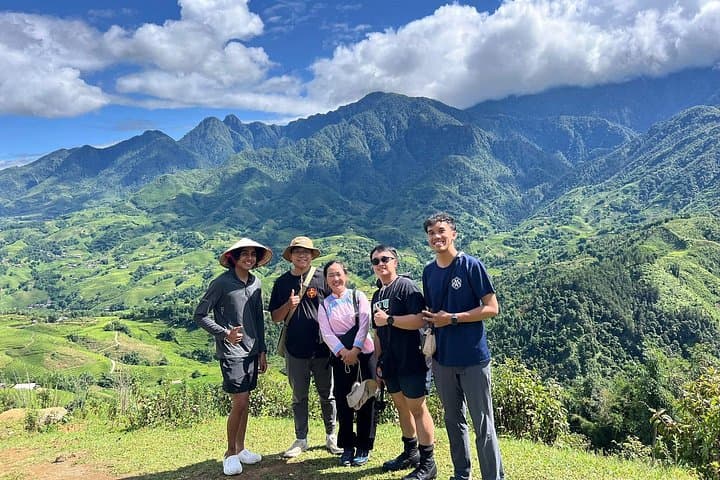
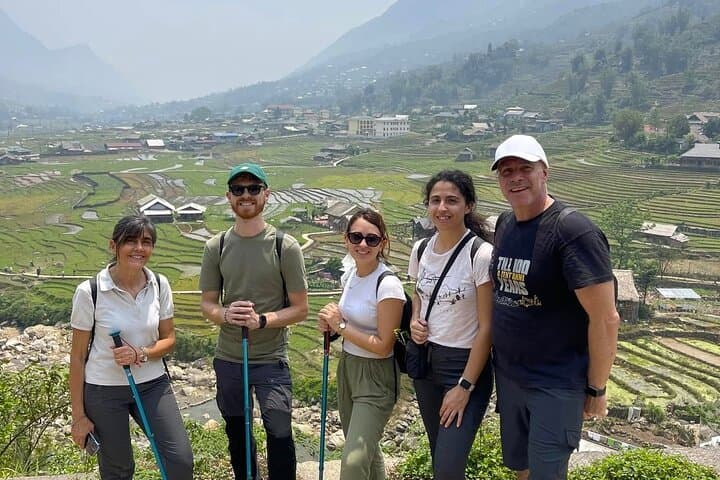
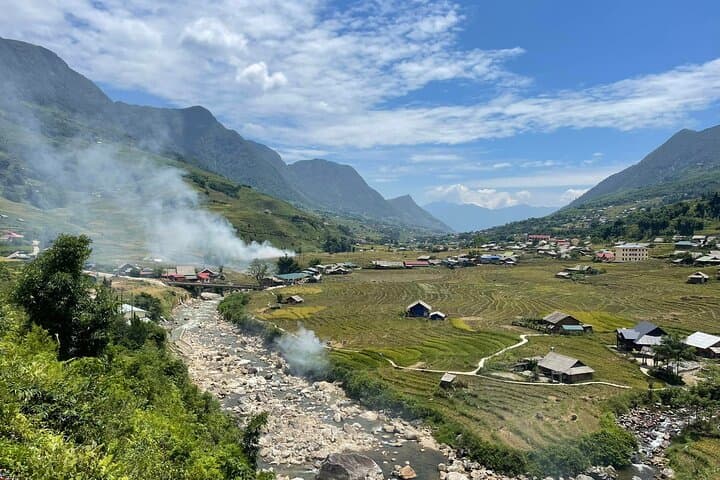
The two-day route follows the Muong Hoa stream past Y Linh Ho and Lao Chai villages, then down to Ta Van for an overnight in a local homestay. Hoàng Liên Sơn looms to the west—this range contains Fansipan, Indochina’s highest peak—its uplifted slopes forming the steep terraces you walk. The area’s soils and irrigation have shaped rice terraces for generations; stone paths and carved steps trace centuries of mountain agriculture.
Culture here is immediate: Hmong, Red Dao and Tay families continue seasonal planting, wear embroidered garments, and welcome guests into shared meals of sticky rice and stewed pork. Evenings at the homestay are practical and social—exchange stories while lanterns move smoke through the kitchen.
Expect 9 km of walking on day one (about 3½ hours) with mixed ascents and descents on dirt and stone, and roughly 8 km on day two through Giang Ta Chai (about 2–3 hours). Trails can be muddy after rain and gain a few hundred meters cumulatively; basic fitness and steady shoes are required. Bring layered clothing for fast-changing mountain weather, a refillable water bottle, and small cash for village purchases. Plan your timing to avoid midday rain and budget for quiet, respectful interaction with homestay hosts—this is an immersive route where terrain, people, and rice terraces shape the pace.
moderate.
2 days.
Suitable for hikers in moderate shape who can walk 8–10 km per day with some elevation change; expect uneven surfaces and short steep sections.
Homestays are basic but clean—expect shared facilities, simple mattresses and family-cooked meals; it’s an authentic rural stay rather than a hotel.
Sapa is around 1,500–1,600 m; most travelers adjust quickly, but if you have cardiovascular issues consult a doctor—symptoms of altitude sickness are uncommon at this elevation.
Sturdy, grippy, quick-drying hiking shoes are ideal; avoid sandals or new shoes that can rub on long walks.
Yes—the tour includes an English-speaking guide and bus pickup from Hanoi; confirm your pickup point when booking and bring full names for reservations.
The Hoàng Liên Sơn highlands have long been home to Hmong, Tay and Red Dao communities; Sapa was also developed by the French in the early 20th century as a hill station.
Stick to marked paths to protect fragile terrace walls and crops; support local economies by buying from village vendors and minimizing single-use plastics.
Asia Group Tour operates guided outdoor trips and adventures with an emphasis on safety, stewardship, and memorable experiences.
Before sunrise the coach eases out of Hanoi and the flat delta gives way to folding ridgelines; by early afternoon you step off into a highland town where cloud fingers slip through pines and terraces step down the valley.
Before sunrise the coach eases out of Hanoi and the flat delta gives way to folding ridgelines; by early afternoon you step off into a highland town where cloud fingers slip through pines and terraces step down the valley.
The two-day route follows the Muong Hoa stream past Y Linh Ho and Lao Chai villages, then down to Ta Van for an overnight in a local homestay. Hoàng Liên Sơn looms to the west—this range contains Fansipan, Indochina’s highest peak—its uplifted slopes forming the steep terraces you walk. The area’s soils and irrigation have shaped rice terraces for generations; stone paths and carved steps trace centuries of mountain agriculture.
Culture here is immediate: Hmong, Red Dao and Tay families continue seasonal planting, wear embroidered garments, and welcome guests into shared meals of sticky rice and stewed pork. Evenings at the homestay are practical and social—exchange stories while lanterns move smoke through the kitchen.
Expect 9 km of walking on day one (about 3½ hours) with mixed ascents and descents on dirt and stone, and roughly 8 km on day two through Giang Ta Chai (about 2–3 hours). Trails can be muddy after rain and gain a few hundred meters cumulatively; basic fitness and steady shoes are required. Bring layered clothing for fast-changing mountain weather, a refillable water bottle, and small cash for village purchases. Plan your timing to avoid midday rain and budget for quiet, respectful interaction with homestay hosts—this is an immersive route where terrain, people, and rice terraces shape the pace.