THE ADVENTURE COLLECTIVE® · Independent discovery and booking for outdoor travel

Walk terraces, visit Hmong and Red Dao villages, and sleep in a Ta Van homestay on this shared 2-day trek from Sapa. Practical route notes, culture, and what to bring for muddy trails and mountain weather.
Walk terraces, visit Hmong and Red Dao villages, and sleep in a Ta Van homestay on this shared 2-day trek from Sapa. Practical route notes, culture, and what to bring for muddy trails and mountain weather.
Morning fog peels off the Hoàng Liên Sơn ridges as the sleeping bus rolls out of Hanoi and the mountains start to claim the horizon.
Verified experiences and guided adventures in the surrounding area.
Operated by Under2 · Sapa, Lao Cai
Morning fog peels off the Hoàng Liên Sơn ridges as the sleeping bus rolls out of Hanoi and the mountains start to claim the horizon.
By early afternoon you step onto the trail above Muong Hoa Valley—first a steady ridgewalk, then descending into a pattern of terraces and streams. The route follows local paths: about 6 km southeast to Y Linh Ho, another 3 km to Lao Chai, finishing Day 1 with the last switchbacks into Ta Van village where a homestay and a communal dinner await.
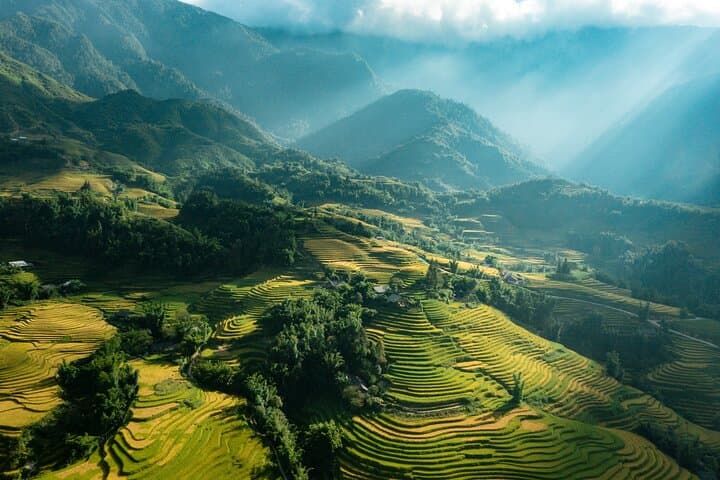
This landscape sits beneath Fansipan, Indochina’s highest peak, carved by tectonic uplift and river incision into steep, terraced slopes that local ethnic groups have farmed for generations. Hmong, Red Dao and Tay communities shape both the culture and the fields you cross; expect wooden stiles, small bamboo bridges and stone-faced rice benches.
Day 2 opens with an 8 km walk through Red Dao villages—Giang Ta Chai is known for its embroidered dress and herbal baths—before a midafternoon transfer back to Sapa and the evening bus to Hanoi.
Practical guide: the walking is uneven underfoot—muddy trails after rain, stone steps and narrow village lanes—total hiking distance roughly 17 km over two days at elevations around 1,500–1,600 m. Pack a waterproof layer, sturdy hiking shoes, cash for small purchases, and modest clothing to respect local customs. Water and snacks are essential between village stops; the homestay includes one night, dinner and breakfast, and local guiding. The trip is culturally rich, low-technical, and best for travelers who can handle multiple hours of walking with occasional steep sections.
moderate.
2 days (24–30 hours).
Suitable for people who can walk 3–5 hours with elevation changes; basic cardiovascular fitness recommended.
Expect about 5–6 hours by sleeping bus depending on traffic; pickup in Hanoi is early morning (around 06:00–06:30).
The itinerary includes one night at a local Ta Van homestay with shared facilities, local dinner and breakfast—amenities are simple and rustic.
Yes—no technical skills are required, but you should be comfortable walking several hours on uneven terrain over two days.
Lunches, breakfast and dinner listed in the itinerary and standard entrance fees are included; check dietary needs when booking.
Sapa grew as a French colonial hill station in the late 19th century; the Hoàng Liên Sơn valleys have long been home to Hmong, Red Dao and Tay communities who maintain terraced rice farming and handicraft traditions.
Stick to trails, avoid single-use plastics, and support homestays and local guides to keep tourism benefits within communities and reduce environmental impact.
Under2 operates guided outdoor trips and adventures with an emphasis on safety, stewardship, and memorable experiences.



Morning fog peels off the Hoàng Liên Sơn ridges as the sleeping bus rolls out of Hanoi and the mountains start to claim the horizon.
Morning fog peels off the Hoàng Liên Sơn ridges as the sleeping bus rolls out of Hanoi and the mountains start to claim the horizon.
By early afternoon you step onto the trail above Muong Hoa Valley—first a steady ridgewalk, then descending into a pattern of terraces and streams. The route follows local paths: about 6 km southeast to Y Linh Ho, another 3 km to Lao Chai, finishing Day 1 with the last switchbacks into Ta Van village where a homestay and a communal dinner await.
This landscape sits beneath Fansipan, Indochina’s highest peak, carved by tectonic uplift and river incision into steep, terraced slopes that local ethnic groups have farmed for generations. Hmong, Red Dao and Tay communities shape both the culture and the fields you cross; expect wooden stiles, small bamboo bridges and stone-faced rice benches.
Day 2 opens with an 8 km walk through Red Dao villages—Giang Ta Chai is known for its embroidered dress and herbal baths—before a midafternoon transfer back to Sapa and the evening bus to Hanoi.
Practical guide: the walking is uneven underfoot—muddy trails after rain, stone steps and narrow village lanes—total hiking distance roughly 17 km over two days at elevations around 1,500–1,600 m. Pack a waterproof layer, sturdy hiking shoes, cash for small purchases, and modest clothing to respect local customs. Water and snacks are essential between village stops; the homestay includes one night, dinner and breakfast, and local guiding. The trip is culturally rich, low-technical, and best for travelers who can handle multiple hours of walking with occasional steep sections.