THE ADVENTURE COLLECTIVE® · Independent discovery and booking for outdoor travel

Spend a full day exploring Saona Island’s reefs, sandbars, and palm-fringed beaches with parasailing, snorkeling, and a beach buffet. This practical guide outlines what to expect—logistics, wildlife, and tips to make the most of the 8–9 hour excursion.
Spend a full day exploring Saona Island’s reefs, sandbars, and palm-fringed beaches with parasailing, snorkeling, and a beach buffet. This practical guide outlines what to expect—logistics, wildlife, and tips to make the most of the 8–9 hour excursion.
Morning light breaks over Punta Cana as a speedboat skims turquoise water toward Saona Island, reef edges dark beneath the surface like a map of hidden passageways. On this full-day run, the ocean alternates between a daring, wind-driven playground—where parasails lift you over glassy swells—and quieter stretches where the boat slows for snorkeling among coral gardens.
Verified experiences and guided adventures in the surrounding area.
Morning light breaks over Punta Cana as a speedboat skims turquoise water toward Saona Island, reef edges dark beneath the surface like a map of hidden passageways. On this full-day run, the ocean alternates between a daring, wind-driven playground—where parasails lift you over glassy swells—and quieter stretches where the boat slows for snorkeling among coral gardens.
Geology and history intersect here: Saona is part of the protected Cotubanamá National Park, a low-lying limestone island ringed by sandy beaches and coral fringing reefs formed over millennia. Taíno fishermen once used these shores; today local crews, many descended from those coastal communities, run the tours and serve beach lunches under palms.
Expect marine life in shallow clarity—parrotfish, rays, and bright reef fish—and distinct features like natural sandbars and small mangrove pockets that shelter juvenile fish. Culture on the island is casual and rooted in fishing and tourism; villages like Mano Juan retain a small-village pace.
Practically: the day runs 8–9 hours with round-trip transport typically included. Bring reef-safe sunscreen, a hat, and motion-sickness remedies if you’re prone to it. Wear sturdy sandals or water shoes for rocky landings; many boats provide snorkeling gear but a personal mask fits better.
Timing matters: morning departures are calmer for parasailing and clearer for snorkeling; late morning and early afternoon bring more crowds but warmer water for swimming. Respect the park—don’t step on coral or remove wildlife—and plan for a long, sun-forward day with spectacular beach time and straightforward logistics.
moderate.
8–9 hours.
Moderate fitness recommended—able to climb boat ladders, swim short distances, and spend hours on your feet or in the sun.
Basic swimming skills are recommended for snorkeling and optional sea swims; life jackets are provided for non-swimmers during boat and snorkeling segments.
Parasailing is included on this itinerary—operators use experienced staff and safety briefings, but passengers should disclose medical conditions and follow crew instructions.
Most tours supply snorkeling gear, but bringing a personal mask can improve comfort and fit; fins are often provided but check the tour details.
Free time varies but typically includes 1–2 hours on the island; lunch is usually a buffet with local seafood, rice, beans, salads, and tropical fruit.
Saona lies within Cotubanamá National Park and sits on limestone foundations once used by the Taíno people; the island’s beaches and reefs have long been central to local fishing communities.
Saona is part of a national park—respect zoning rules, avoid touching coral or removing shells, and use reef-safe sunscreens to limit impact.
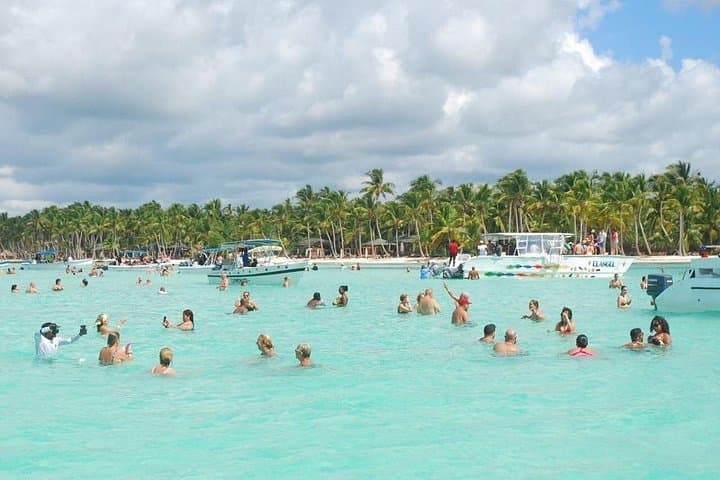
Morning light breaks over Punta Cana as a speedboat skims turquoise water toward Saona Island, reef edges dark beneath the surface like a map of hidden passageways. On this full-day run, the ocean alternates between a daring, wind-driven playground—where parasails lift you over glassy swells—and quieter stretches where the boat slows for snorkeling among coral gardens.
Morning light breaks over Punta Cana as a speedboat skims turquoise water toward Saona Island, reef edges dark beneath the surface like a map of hidden passageways. On this full-day run, the ocean alternates between a daring, wind-driven playground—where parasails lift you over glassy swells—and quieter stretches where the boat slows for snorkeling among coral gardens.
Geology and history intersect here: Saona is part of the protected Cotubanamá National Park, a low-lying limestone island ringed by sandy beaches and coral fringing reefs formed over millennia. Taíno fishermen once used these shores; today local crews, many descended from those coastal communities, run the tours and serve beach lunches under palms.
Expect marine life in shallow clarity—parrotfish, rays, and bright reef fish—and distinct features like natural sandbars and small mangrove pockets that shelter juvenile fish. Culture on the island is casual and rooted in fishing and tourism; villages like Mano Juan retain a small-village pace.
Practically: the day runs 8–9 hours with round-trip transport typically included. Bring reef-safe sunscreen, a hat, and motion-sickness remedies if you’re prone to it. Wear sturdy sandals or water shoes for rocky landings; many boats provide snorkeling gear but a personal mask fits better.
Timing matters: morning departures are calmer for parasailing and clearer for snorkeling; late morning and early afternoon bring more crowds but warmer water for swimming. Respect the park—don’t step on coral or remove wildlife—and plan for a long, sun-forward day with spectacular beach time and straightforward logistics.