THE ADVENTURE COLLECTIVE® · Independent discovery and booking for outdoor travel

Sail from Punta Cana to Saona Island for an eight-hour escape to powder sand, a famous natural pool of starfish, and a small fishing village with conservation projects. This day trip mixes snorkeling, beach time, and local culture—best for travelers who want a straightforward tropical adventure.
Sail from Punta Cana to Saona Island for an eight-hour escape to powder sand, a famous natural pool of starfish, and a small fishing village with conservation projects. This day trip mixes snorkeling, beach time, and local culture—best for travelers who want a straightforward tropical adventure.
You step off the boat and the Caribbean reaches for your ankles—warm, clear, and insistently turquoise. Wind combs the palms while white sand presses cool and fine beneath bare feet. The island breathes slowly here: the surf sighs against a broad beach, and the mangroves mutter at the lagoon’s edge.
Verified experiences and guided adventures in the surrounding area.
Operated by CoroTour Punta Cana · Bayahibe, La Romana
You step off the boat and the Caribbean reaches for your ankles—warm, clear, and insistently turquoise. Wind combs the palms while white sand presses cool and fine beneath bare feet. The island breathes slowly here: the surf sighs against a broad beach, and the mangroves mutter at the lagoon’s edge.
Saona sits inside Cotubanamá National Park; its coastline tells a simple geological story of reef growth, sand deposition and coastal lagoons carved by tides. Mano Juan, the island’s working village, was once a remote penal outpost before fishermen turned it into a tight-knit community that now welcomes visitors and runs local conservation efforts for sea turtles.
Expect a full-day rhythm: a 50–60 minute speedboat or catamaran crossing from the mainland, a stop at a shallow natural pool where starfish dot the sand, time to snorkel gardens of seagrass and coral, and a relaxed lunch under palms. The Catuano Channel’s currents shape the seascape—clear water suddenly deepens, cliffs fall away, and birds wheel over mangroves that shelter juvenile fish.
Practical guidance: leave early to avoid midday crowds and the harshest sun; bring reef-safe sunscreen, a hat, and a waterproof pouch for your phone. If you get seasick, take medication before boarding and choose a seat near the bow. Respect local rules—don’t remove starfish or touch coral, and carry small bills for crafts in Mano Juan. Plan for an eight-hour outing with basic walking and shallow-water swimming; the island rewards a relaxed pace and simple preparation.
easy.
8 hours.
Minimal fitness required—short walks, standing on the boat, and swimming in shallow water; suitable for most travelers.
Most crossings take about 50–60 minutes by speedboat or longer by catamaran depending on the departure point and sea conditions.
You can wade and view starfish in the shallow natural pool, but do not remove or handle them—observe from the water without disturbing marine life.
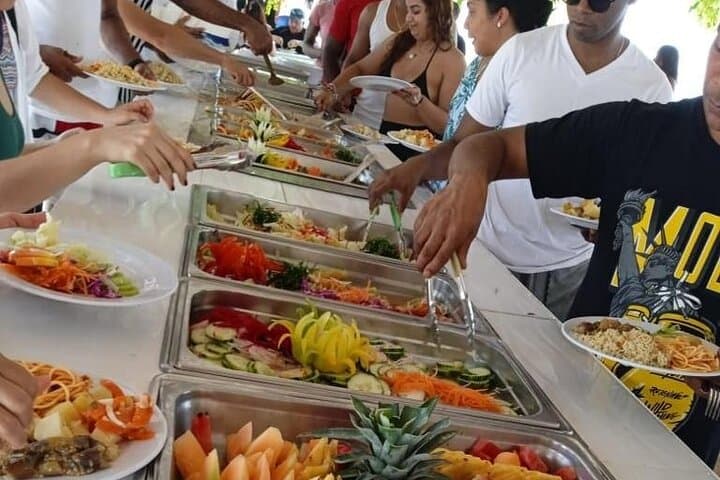
Tours typically include a Dominican buffet lunch and non-alcoholic drinks; alcoholic beverages may be provided depending on the operator—check the listing details.
Operators often advise against travel for very young children (under 5) and pregnant travelers; always check medical recommendations and the tour’s age restrictions before booking.
Mano Juan was once used as a remote penal site before mid-20th-century fishermen settled the island and developed a communal fishing culture.
Cotubanamá National Park protects Saona’s reefs and mangroves—visitors should avoid touching coral, use reef-safe sunscreen, and support local conservation initiatives.
CoroTour Punta Cana operates guided outdoor trips and adventures with an emphasis on safety, stewardship, and memorable experiences.



You step off the boat and the Caribbean reaches for your ankles—warm, clear, and insistently turquoise. Wind combs the palms while white sand presses cool and fine beneath bare feet. The island breathes slowly here: the surf sighs against a broad beach, and the mangroves mutter at the lagoon’s edge.
You step off the boat and the Caribbean reaches for your ankles—warm, clear, and insistently turquoise. Wind combs the palms while white sand presses cool and fine beneath bare feet. The island breathes slowly here: the surf sighs against a broad beach, and the mangroves mutter at the lagoon’s edge.
Saona sits inside Cotubanamá National Park; its coastline tells a simple geological story of reef growth, sand deposition and coastal lagoons carved by tides. Mano Juan, the island’s working village, was once a remote penal outpost before fishermen turned it into a tight-knit community that now welcomes visitors and runs local conservation efforts for sea turtles.
Expect a full-day rhythm: a 50–60 minute speedboat or catamaran crossing from the mainland, a stop at a shallow natural pool where starfish dot the sand, time to snorkel gardens of seagrass and coral, and a relaxed lunch under palms. The Catuano Channel’s currents shape the seascape—clear water suddenly deepens, cliffs fall away, and birds wheel over mangroves that shelter juvenile fish.
Practical guidance: leave early to avoid midday crowds and the harshest sun; bring reef-safe sunscreen, a hat, and a waterproof pouch for your phone. If you get seasick, take medication before boarding and choose a seat near the bow. Respect local rules—don’t remove starfish or touch coral, and carry small bills for crafts in Mano Juan. Plan for an eight-hour outing with basic walking and shallow-water swimming; the island rewards a relaxed pace and simple preparation.