THE ADVENTURE COLLECTIVE® · Independent discovery and booking for outdoor travel

Follow a two-day coffee route into São Tomé’s highlands to visit Trindade, Roça Monte Café’s Arabica plantation, the Batepá historical square and Cascata São Nicolau. This practical guide outlines what to expect on roads, trails and cultural stops.
Follow a two-day coffee route into São Tomé’s highlands to visit Trindade, Roça Monte Café’s Arabica plantation, the Batepá historical square and Cascata São Nicolau. This practical guide outlines what to expect on roads, trails and cultural stops.
You leave the coast and climb into the island’s green spine, the road narrowing as the air cools and the scent of wet soil and coffee cherries rises. At 600 meters above sea level near Trindade the landscape tightens into steep ridges and terraces where centuries of cultivation have shaped the slopes; waterfalls push the valley air like a quiet insistence.
Verified experiences and guided adventures in the surrounding area.
Operated by Délcio dos Santos · São Tomé, Mé-Zóchi
You leave the coast and climb into the island’s green spine, the road narrowing as the air cools and the scent of wet soil and coffee cherries rises. At 600 meters above sea level near Trindade the landscape tightens into steep ridges and terraces where centuries of cultivation have shaped the slopes; waterfalls push the valley air like a quiet insistence.
The route traces São Tomé’s colonial agricultural past — the Roças — and the political memory recorded in Batepá square, scene of the 1953 massacre that altered local history. Geologically, the island is volcanic: volcanic soils and high rainfall create rich black earth ideal for Arabica, the variety preserved at Roça Monte Café. Culture here is braiding: Portuguese colonial architecture, Creole farm life and the legacy of labor movements meet in small village markets and the coffee museum where drying beds and old pulpers are displayed.
Expect botanical variety in the Jardim Botânico and a brisk walk to Cascata São Nicolau where water throws itself down rock faces that look older than the trees. At Roça Saudade, a traditional two-course lunch without drinks gives a taste of local cooking and a chance to meet hosts who keep roça traditions alive.
Practical notes: this is a multi-day, low-impact itinerary with mostly dirt and paved roads, short site walks and modest altitude change. Wear grippy shoes for muddy trails, bring layers for mist at elevation, insect repellent and cash for small purchases. Start early to avoid afternoon rains and allow time for museum visits and unscheduled photo stops.
easy.
2 days (approx. 8 hours/day).
Suitable for most visitors with basic mobility; able to handle short walks on uneven ground and some steps.
Each day covers about 6–8 hours of activity including transport between sites, with stops for visits, museum time and lunch.
Museum visits at Roça Monte Café are included as part of the itinerary, giving an overview of coffee processing stages.
A typical local lunch is provided on the roça (drinks not included); additional snacks or beverages should be purchased separately.
Yes—this is rated easy with modest walking; however, those with limited mobility should notify the operator for appropriate pickup and pacing.
The route follows sites tied to colonial-era roças and the 1953 Batepá massacre, a key event in São Tomé’s modern political history.
São Tomé’s montane forests host many endemics; stay on trails, avoid single-use plastics and support local roça initiatives that practice shade-grown coffee.
Délcio dos Santos operates guided outdoor trips and adventures with an emphasis on safety, stewardship, and memorable experiences.
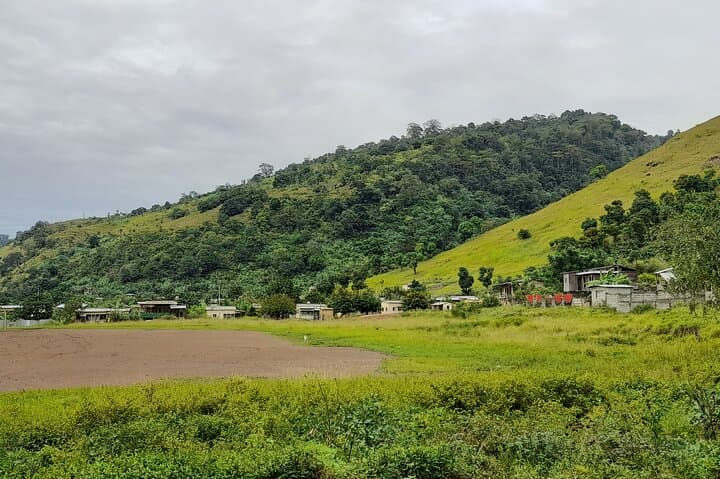

You leave the coast and climb into the island’s green spine, the road narrowing as the air cools and the scent of wet soil and coffee cherries rises. At 600 meters above sea level near Trindade the landscape tightens into steep ridges and terraces where centuries of cultivation have shaped the slopes; waterfalls push the valley air like a quiet insistence.
You leave the coast and climb into the island’s green spine, the road narrowing as the air cools and the scent of wet soil and coffee cherries rises. At 600 meters above sea level near Trindade the landscape tightens into steep ridges and terraces where centuries of cultivation have shaped the slopes; waterfalls push the valley air like a quiet insistence.
The route traces São Tomé’s colonial agricultural past — the Roças — and the political memory recorded in Batepá square, scene of the 1953 massacre that altered local history. Geologically, the island is volcanic: volcanic soils and high rainfall create rich black earth ideal for Arabica, the variety preserved at Roça Monte Café. Culture here is braiding: Portuguese colonial architecture, Creole farm life and the legacy of labor movements meet in small village markets and the coffee museum where drying beds and old pulpers are displayed.
Expect botanical variety in the Jardim Botânico and a brisk walk to Cascata São Nicolau where water throws itself down rock faces that look older than the trees. At Roça Saudade, a traditional two-course lunch without drinks gives a taste of local cooking and a chance to meet hosts who keep roça traditions alive.
Practical notes: this is a multi-day, low-impact itinerary with mostly dirt and paved roads, short site walks and modest altitude change. Wear grippy shoes for muddy trails, bring layers for mist at elevation, insect repellent and cash for small purchases. Start early to avoid afternoon rains and allow time for museum visits and unscheduled photo stops.