THE ADVENTURE COLLECTIVE® · Independent discovery and booking for outdoor travel

See São Paulo from above on a private helicopter flight that includes hotel transfer. In 20–30 minutes of flight you’ll fly over Paulista, Ibirapuera Park, Luz Station and the Sambódromo with pilot commentary and airport transfers included.
See São Paulo from above on a private helicopter flight that includes hotel transfer. In 20–30 minutes of flight you’ll fly over Paulista, Ibirapuera Park, Luz Station and the Sambódromo with pilot commentary and airport transfers included.
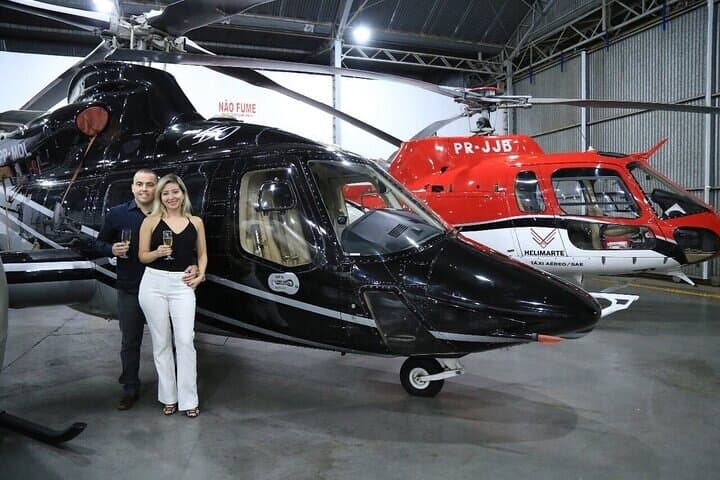
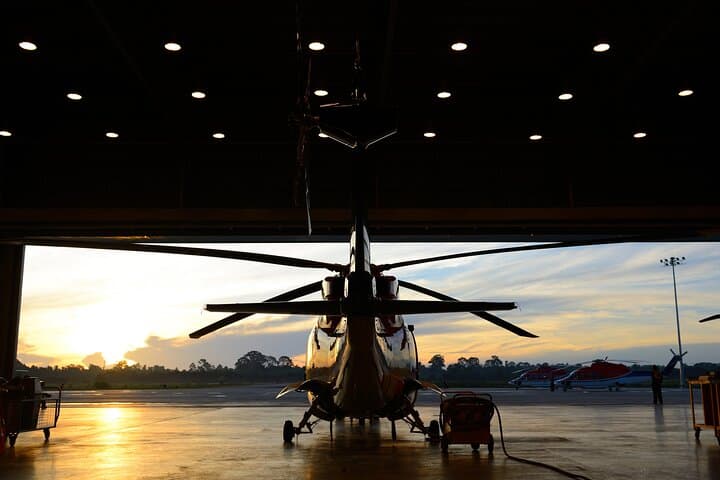
You step into the cool lobby of your hotel while São Paulo hums beyond the glass. A short ride north to Campo de Marte Airport and the city opens not at street level but from above — a spread of avenues, parks and rooftops that rearrange themselves into a new logic under the helicopter’s rotor wash.
Verified experiences and guided adventures in the surrounding area.
Operated by Gregtur Turismo · São Paulo, São Paulo
You step into the cool lobby of your hotel while São Paulo hums beyond the glass. A short ride north to Campo de Marte Airport and the city opens not at street level but from above — a spread of avenues, parks and rooftops that rearrange themselves into a new logic under the helicopter’s rotor wash.
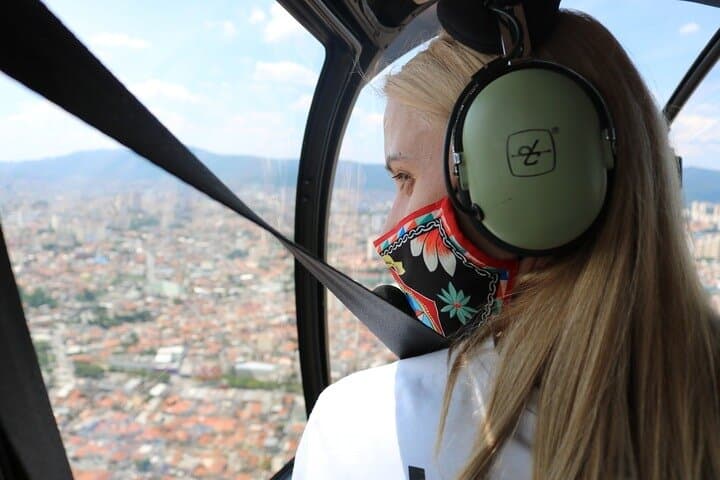
From this perspective Paulista Avenue becomes a spine of light, Ibirapuera Park a green lung, and the old downtown a cluster of terracotta and stone. The pilot doubles as narrator, pointing out Luz Station, the Municipal Market and the sculpted sweep of the Sambódromo as neighborhoods slide beneath. The Tietê River glints and seems to dare you to follow its course toward the coast.
São Paulo’s boom-era architecture and immigrant-built neighborhoods tell a story of industry, migration and relentless reinvention—visible in the grid of early 20th-century blocks and the modern stadiums at the city’s edge. Geology is less dramatic here than history: an elevated plateau of basalt and urban fill supporting one of the world’s largest megacities.
Practicalities: tours run 20–30 minutes in the air with transport included; expect a safety briefing, weight limits and light luggage rules. Bring a camera with a fast shutter, request window seating, and time your flight for late afternoon to catch changing shadows across the avenues. Motion-sickness meds help if you are sensitive; arrive 30 minutes early for check-in.
The ride is short but revealing — an aerial orientation that turns São Paulo’s complexity into readable patterns and gives any visitor an efficient first look at Brazil’s largest city.
easy.
2–3 hours.
Suitable for all fitness levels; mostly seated with minimal physical exertion
Flight time is typically 20–30 minutes depending on the option you book; total experience including transport and briefing is about 2–3 hours.
Yes, door-to-door pickup and drop-off from most São Paulo hotels and airports is included in the tour price.
Flights are cancelled in unsafe weather; the operator will offer a refund if cancelled at least 24 hours prior or rebooking subject to availability if weather cancels close to departure.
Private flights accommodate 1–5 people depending on the aircraft model (Robinson R22, R44, or AS350) and weight distribution limits.
São Paulo grew from a colonial-era settlement into an immigrant-driven industrial hub; many downtown landmarks date to early 20th-century expansion and immigrant communities.
Aeronautical operators follow strict heliport rules to limit noise and emissions near residential neighborhoods; choose operators that adhere to local flight corridors and time restrictions.
Gregtur Turismo operates guided outdoor trips and adventures with an emphasis on safety, stewardship, and memorable experiences.

You step into the cool lobby of your hotel while São Paulo hums beyond the glass. A short ride north to Campo de Marte Airport and the city opens not at street level but from above — a spread of avenues, parks and rooftops that rearrange themselves into a new logic under the helicopter’s rotor wash.
You step into the cool lobby of your hotel while São Paulo hums beyond the glass. A short ride north to Campo de Marte Airport and the city opens not at street level but from above — a spread of avenues, parks and rooftops that rearrange themselves into a new logic under the helicopter’s rotor wash.
From this perspective Paulista Avenue becomes a spine of light, Ibirapuera Park a green lung, and the old downtown a cluster of terracotta and stone. The pilot doubles as narrator, pointing out Luz Station, the Municipal Market and the sculpted sweep of the Sambódromo as neighborhoods slide beneath. The Tietê River glints and seems to dare you to follow its course toward the coast.
São Paulo’s boom-era architecture and immigrant-built neighborhoods tell a story of industry, migration and relentless reinvention—visible in the grid of early 20th-century blocks and the modern stadiums at the city’s edge. Geology is less dramatic here than history: an elevated plateau of basalt and urban fill supporting one of the world’s largest megacities.
Practicalities: tours run 20–30 minutes in the air with transport included; expect a safety briefing, weight limits and light luggage rules. Bring a camera with a fast shutter, request window seating, and time your flight for late afternoon to catch changing shadows across the avenues. Motion-sickness meds help if you are sensitive; arrive 30 minutes early for check-in.
The ride is short but revealing — an aerial orientation that turns São Paulo’s complexity into readable patterns and gives any visitor an efficient first look at Brazil’s largest city.