THE ADVENTURE COLLECTIVE® · Independent discovery and booking for outdoor travel

See São Paulo’s skyline, river arteries, and iconic landmarks in a compact 15–20 minute helicopter flight. This aerial tour offers panoramic views of Paulista Avenue, the Copan building and historic Ipiranga—perfect for first-time visitors and photographers.
See São Paulo’s skyline, river arteries, and iconic landmarks in a compact 15–20 minute helicopter flight. This aerial tour offers panoramic views of Paulista Avenue, the Copan building and historic Ipiranga—perfect for first-time visitors and photographers.
You lift off from a helipad and the concrete grid of São Paulo folds away beneath you—an urban sea of glass, tile and verdant rooftop islands. The Tietê River cuts through the city like a silver ribbon daring you to follow; Paulista Avenue fans out with museums and high-rises that look like model blocks from this height. The pilot banks gently and the city breathes: stadium roofs glint, the S‑shaped Copan building curves like a brushstroke, and the pale stone of the Sé Cathedral punctuates a dense block of city fabric.
Verified experiences and guided adventures in the surrounding area.
Operated by High Class Helicopteros · São Paulo, São Paulo
You lift off from a helipad and the concrete grid of São Paulo folds away beneath you—an urban sea of glass, tile and verdant rooftop islands. The Tietê River cuts through the city like a silver ribbon daring you to follow; Paulista Avenue fans out with museums and high-rises that look like model blocks from this height. The pilot banks gently and the city breathes: stadium roofs glint, the S‑shaped Copan building curves like a brushstroke, and the pale stone of the Sé Cathedral punctuates a dense block of city fabric.
From the air the city's history reads clearly. You can pick out the Ipiranga area where Emperor Pedro I declared independence, the monumental plazas built as Brazil industrialized, and the market halls that fueled São Paulo's growth. Geologically, the city sits on the São Paulo plateau, a weathered basalt base that gives way toward the Serra do Mar—visible as distant green folds. Culture is audible even at altitude: the hum of traffic, distant chants from stadiums, and the steady thrum of commerce.
Practical guidance: flights run about 15–20 minutes—brief but intense. Tours provide communication headphones and are wheelchair accessible; infants must sit on laps unless a specialized seat is requested. Morning flights offer softer light and clearer air; avoid midday on windy days when turbulence can increase. Bring a compact camera with fast shutter, leave large tripods behind, and secure loose hats.
Booking tips: weight and ID information are required; confirm weather-related policies and arrive early for a short safety briefing. This is a high-impact way to see São Paulo’s scale and texture in a single, unforgettable circuit.
easy.
15–18 minutes.
Minimal physical fitness required—suitable for most travelers who can board a low-step helicopter.
The tour lasts about 15–18 minutes from takeoff to landing—long enough for a full circuit over central São Paulo.
Yes, the operator lists wheelchair-accessible options and accessible transport; notify them in advance to arrange boarding assistance.
Infants are allowed but must sit on a parent’s lap; specialized infant seats are available on request—confirm when booking.
General policy requires cancellation at least 24 hours for a full refund; the operator may reschedule or cancel due to unsafe weather, so check their terms.
From a modest colonial settlement, São Paulo expanded rapidly in the 19th and 20th centuries through coffee, immigration and industrialization—many civic monuments reflect that growth.
Aerial tours should follow noise and flight-path regulations to minimize disturbance; operators often limit flights and use defined routes to reduce impact on bird life and urban neighborhoods.
High Class Helicopteros operates guided outdoor trips and adventures with an emphasis on safety, stewardship, and memorable experiences.


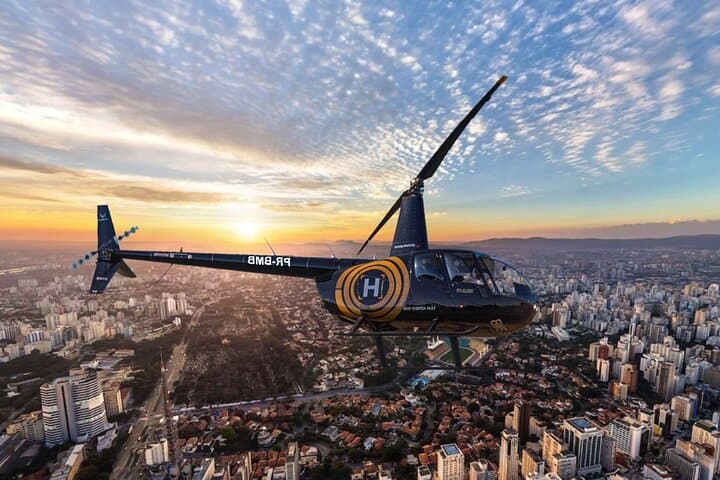

You lift off from a helipad and the concrete grid of São Paulo folds away beneath you—an urban sea of glass, tile and verdant rooftop islands. The Tietê River cuts through the city like a silver ribbon daring you to follow; Paulista Avenue fans out with museums and high-rises that look like model blocks from this height. The pilot banks gently and the city breathes: stadium roofs glint, the S‑shaped Copan building curves like a brushstroke, and the pale stone of the Sé Cathedral punctuates a dense block of city fabric.
You lift off from a helipad and the concrete grid of São Paulo folds away beneath you—an urban sea of glass, tile and verdant rooftop islands. The Tietê River cuts through the city like a silver ribbon daring you to follow; Paulista Avenue fans out with museums and high-rises that look like model blocks from this height. The pilot banks gently and the city breathes: stadium roofs glint, the S‑shaped Copan building curves like a brushstroke, and the pale stone of the Sé Cathedral punctuates a dense block of city fabric.
From the air the city's history reads clearly. You can pick out the Ipiranga area where Emperor Pedro I declared independence, the monumental plazas built as Brazil industrialized, and the market halls that fueled São Paulo's growth. Geologically, the city sits on the São Paulo plateau, a weathered basalt base that gives way toward the Serra do Mar—visible as distant green folds. Culture is audible even at altitude: the hum of traffic, distant chants from stadiums, and the steady thrum of commerce.
Practical guidance: flights run about 15–20 minutes—brief but intense. Tours provide communication headphones and are wheelchair accessible; infants must sit on laps unless a specialized seat is requested. Morning flights offer softer light and clearer air; avoid midday on windy days when turbulence can increase. Bring a compact camera with fast shutter, leave large tripods behind, and secure loose hats.
Booking tips: weight and ID information are required; confirm weather-related policies and arrive early for a short safety briefing. This is a high-impact way to see São Paulo’s scale and texture in a single, unforgettable circuit.