THE ADVENTURE COLLECTIVE® · Independent discovery and booking for outdoor travel

Board a catamaran from Vila Franca do Campo and head into deep Atlantic waters to find whales and dolphins. This 3–4 hour tour blends marine biology, geology and responsible wildlife viewing for an accessible ocean adventure.
Board a catamaran from Vila Franca do Campo and head into deep Atlantic waters to find whales and dolphins. This 3–4 hour tour blends marine biology, geology and responsible wildlife viewing for an accessible ocean adventure.
A cold Atlantic gust strips the harbor to its bones as the catamaran slips away from Vila Franca do Campo Marina. Sea spray writes a silver line on the rail and the guides scan the horizon; gulls wheel like loose punctuation. Within minutes the island’s volcanic profile—steep cliffs and green terraces—recedes and the open Atlantic takes the lead, daring you to look farther.
Verified experiences and guided adventures in the surrounding area.
Operated by OceanEye Azores · Vila Franca do Campo, São Miguel
A cold Atlantic gust strips the harbor to its bones as the catamaran slips away from Vila Franca do Campo Marina. Sea spray writes a silver line on the rail and the guides scan the horizon; gulls wheel like loose punctuation. Within minutes the island’s volcanic profile—steep cliffs and green terraces—recedes and the open Atlantic takes the lead, daring you to look farther.
The Azores have been a crossroads of ocean life for millennia: volcanic islands formed by hotspots, ringed by deep-sea canyons that funnel migratory whales and resident dolphins. Centuries of human interaction shifted from subsistence whaling to modern conservation and science, and today local operators pair traditional seamanship with marine biology expertise.
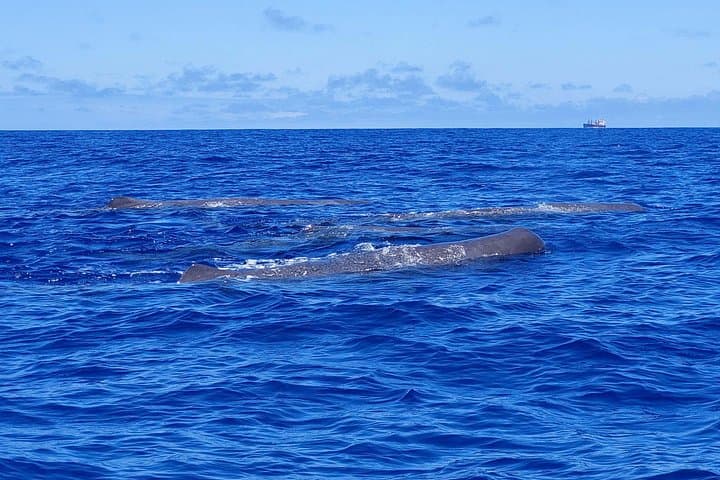
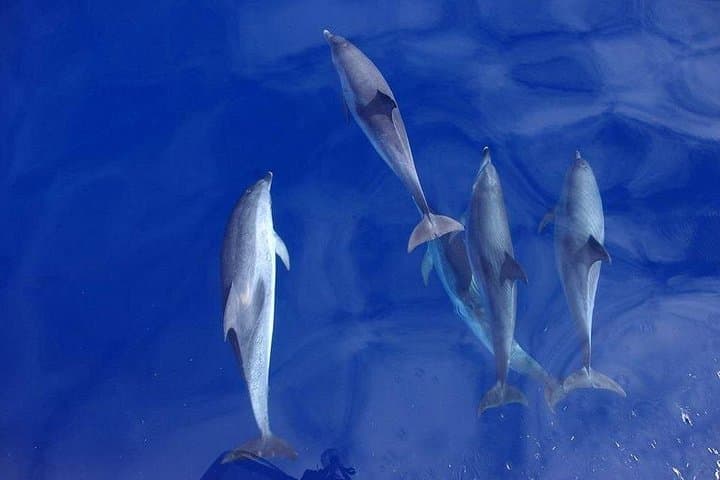
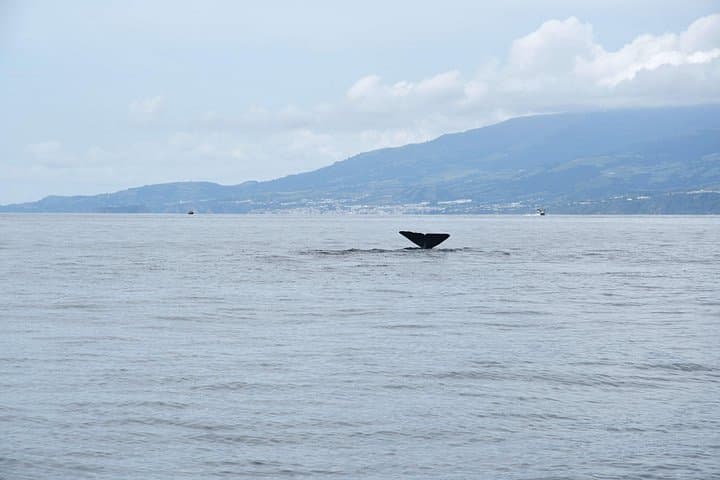
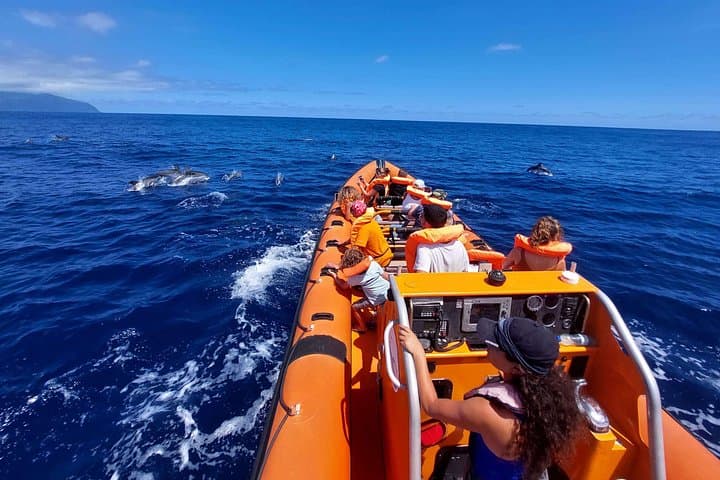
On this 3–4 hour outing you’ll ride a stable catamaran or a nimble RIB, scanning for blows, flukes and surfacing pods. Guides explain species behavior—why sperm whales dive for squid, why common dolphins ride bow waves—and point out Ilhéu de Vila Franca do Campo’s collapsed crater, a geological postcard on the way home.
Practical guidance: expect variable seas—check morning forecasts for calmer windows; carry a windproof layer, sun protection and seasickness remedies if you’re prone. Photography benefits from a fast shutter and stabilization; binoculars sharpen distant blows into discoveries. Operators in the Azores follow responsible approach distances and will offer a reschedule if nothing appears, but sightings vary with season and luck. Plan for bathroom access at the marina, arrive early to check gear, and keep an eye on clothing: the ocean can be several degrees cooler than the shore.
easy.
3–4 hours.
Suitable for most fitness levels; requires basic mobility to board small boats and move on rolling decks.
Sightings are frequent year-round, with different species depending on the season; operators also offer a reschedule if no animals are seen.
Yes—this trip is rated easy and suitable for a wide range of ages, though mobility to board small boats is required and medical restrictions apply for some conditions.
You may bring cameras; drones are typically prohibited without prior permission to avoid disturbing wildlife and other guests.
Tours can be canceled for safety if conditions are poor; check the operator’s cancellation policy—full refund is usually available if canceled 24 hours prior.
The Azores moved from historical whaling practices to modern conservation; local communities now promote research and sustainable watching.
Operators adhere to approach-distance guidelines and work with marine biologists; choose companies that prioritize non-intrusive viewing and support local research initiatives.
OceanEye Azores operates guided outdoor trips and adventures with an emphasis on safety, stewardship, and memorable experiences.
A cold Atlantic gust strips the harbor to its bones as the catamaran slips away from Vila Franca do Campo Marina. Sea spray writes a silver line on the rail and the guides scan the horizon; gulls wheel like loose punctuation. Within minutes the island’s volcanic profile—steep cliffs and green terraces—recedes and the open Atlantic takes the lead, daring you to look farther.
A cold Atlantic gust strips the harbor to its bones as the catamaran slips away from Vila Franca do Campo Marina. Sea spray writes a silver line on the rail and the guides scan the horizon; gulls wheel like loose punctuation. Within minutes the island’s volcanic profile—steep cliffs and green terraces—recedes and the open Atlantic takes the lead, daring you to look farther.
The Azores have been a crossroads of ocean life for millennia: volcanic islands formed by hotspots, ringed by deep-sea canyons that funnel migratory whales and resident dolphins. Centuries of human interaction shifted from subsistence whaling to modern conservation and science, and today local operators pair traditional seamanship with marine biology expertise.
On this 3–4 hour outing you’ll ride a stable catamaran or a nimble RIB, scanning for blows, flukes and surfacing pods. Guides explain species behavior—why sperm whales dive for squid, why common dolphins ride bow waves—and point out Ilhéu de Vila Franca do Campo’s collapsed crater, a geological postcard on the way home.
Practical guidance: expect variable seas—check morning forecasts for calmer windows; carry a windproof layer, sun protection and seasickness remedies if you’re prone. Photography benefits from a fast shutter and stabilization; binoculars sharpen distant blows into discoveries. Operators in the Azores follow responsible approach distances and will offer a reschedule if nothing appears, but sightings vary with season and luck. Plan for bathroom access at the marina, arrive early to check gear, and keep an eye on clothing: the ocean can be several degrees cooler than the shore.