THE ADVENTURE COLLECTIVE® · Independent discovery and booking for outdoor travel

Taste nine distinctive wines on a private three-hour tour that pairs Santorini’s volcanic terroir with cheese and cold cuts. Visit Venetsanos’ museum and Estate Argyros while enjoying dramatic caldera views and local insight.
Taste nine distinctive wines on a private three-hour tour that pairs Santorini’s volcanic terroir with cheese and cold cuts. Visit Venetsanos’ museum and Estate Argyros while enjoying dramatic caldera views and local insight.
The tasting begins on a sun-scraped terrace where the caldera’s cliff faces hold the sea in a slow, luminous grip. Guests step from an air-conditioned vehicle onto volcanic stone; wind from the Aegean pushes at hair and hem while a guide lays out nine small pours—each glass a concentrated map of island terroir.
Verified experiences and guided adventures in the surrounding area.
Operated by Santorini Local Guides · Fira, South Aegean
The tasting begins on a sun-scraped terrace where the caldera’s cliff faces hold the sea in a slow, luminous grip. Guests step from an air-conditioned vehicle onto volcanic stone; wind from the Aegean pushes at hair and hem while a guide lays out nine small pours—each glass a concentrated map of island terroir.
Santorini’s wine story is forged in fire and scarcity. Centuries of eruptions left pumice and basalt that force vines to work for water; the result is Assyrtiko’s mineral intensity. Venetsanos, one of the island’s earliest industrial wineries, opened paths through that history with a museum and tasting room perched over the caldera. Estate Argyros and smaller producers—Gavalas, Hatzidakis, Gaia—showcase different responses to the same stony ground and salt air.
Beyond bottles, the island’s culture is practical and proud: families pruning vines in basket-like trainings, tavernas pairing tangy cheeses and cured meats to counterbalance acid and oak. The caldera itself seems to watch, daring each sip to reveal a new layer of saline and citrus.
Practical guidance: tours run about three hours and include private transport, bottled water, and food pairings. Book a morning slot to avoid midday heat and get clearer views; reserve dietary needs in advance. Wear sturdy shoes—the winery surfaces are uneven—and a light layer against sudden wind. Expect gentle walking, seated tastings, and expert-led explanations; no technical skills required. This is a compact, sensory-forward way to understand Santorini’s geology, viticulture, and the intimate scale of island winemaking.
easy.
3 hours.
Suitable for most fitness levels; involves short walks and standing during tastings.
The private tasting typically lasts about three hours and includes transport between wineries.
Yes—standard options cover two wineries with add-ons available for three or four; request preferences at booking.
Private, air-conditioned transportation is included from common pickup points—confirm your pickup when booking.
This activity is not recommended for pregnant travelers; non-drinkers can join but should advise the operator for alternatives.
Venetsanos was among Santorini’s first industrial wineries and helped modernize island production; the island’s viticulture evolved from small family plots to internationally recognized producers centered on Assyrtiko.
Santorini’s dry, fragile soils and limited freshwater make responsible tourism vital—support local wineries, avoid single-use plastics, and follow marked paths to protect terraces.
Santorini Local Guides operates guided outdoor trips and adventures with an emphasis on safety, stewardship, and memorable experiences.
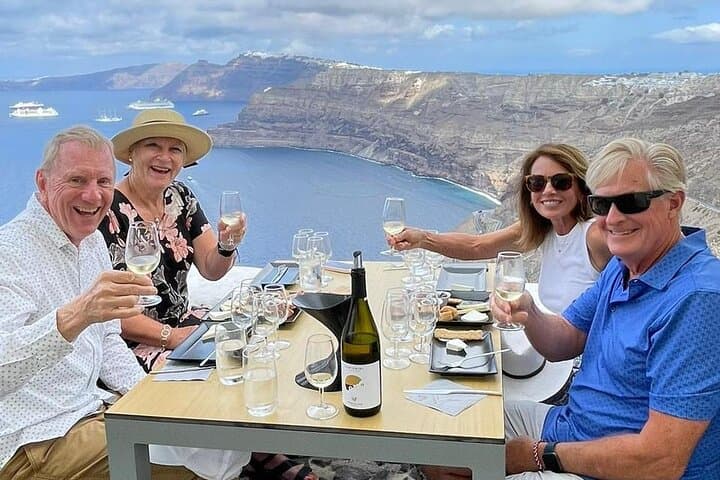
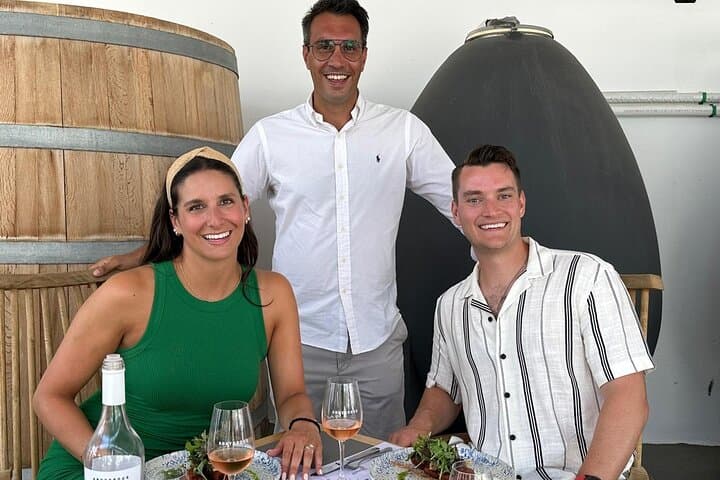
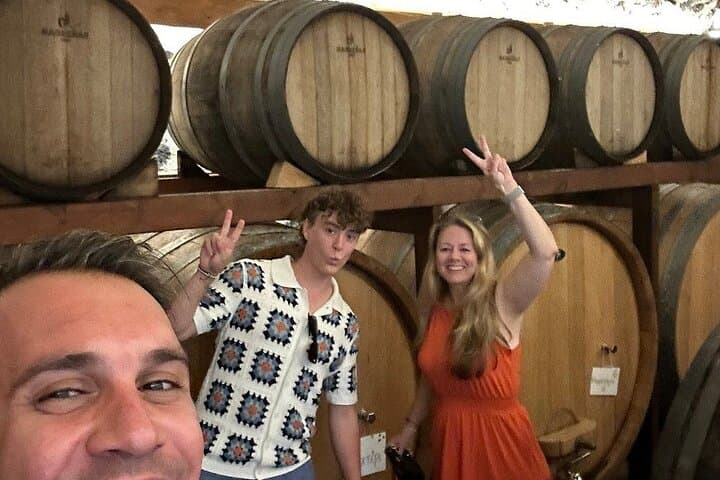
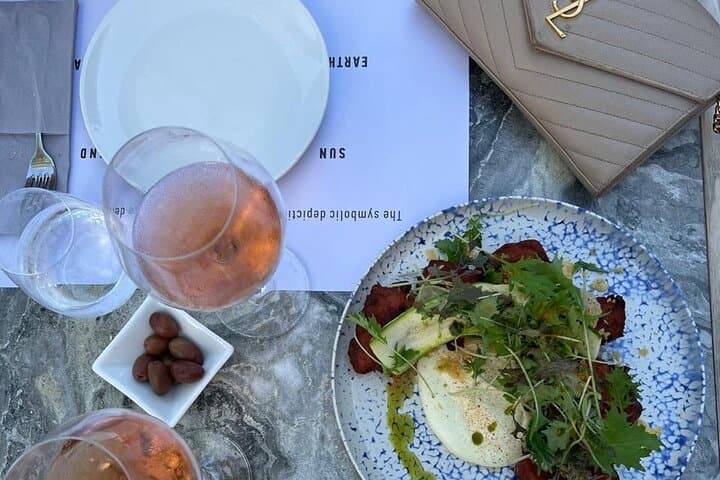
The tasting begins on a sun-scraped terrace where the caldera’s cliff faces hold the sea in a slow, luminous grip. Guests step from an air-conditioned vehicle onto volcanic stone; wind from the Aegean pushes at hair and hem while a guide lays out nine small pours—each glass a concentrated map of island terroir.
The tasting begins on a sun-scraped terrace where the caldera’s cliff faces hold the sea in a slow, luminous grip. Guests step from an air-conditioned vehicle onto volcanic stone; wind from the Aegean pushes at hair and hem while a guide lays out nine small pours—each glass a concentrated map of island terroir.
Santorini’s wine story is forged in fire and scarcity. Centuries of eruptions left pumice and basalt that force vines to work for water; the result is Assyrtiko’s mineral intensity. Venetsanos, one of the island’s earliest industrial wineries, opened paths through that history with a museum and tasting room perched over the caldera. Estate Argyros and smaller producers—Gavalas, Hatzidakis, Gaia—showcase different responses to the same stony ground and salt air.
Beyond bottles, the island’s culture is practical and proud: families pruning vines in basket-like trainings, tavernas pairing tangy cheeses and cured meats to counterbalance acid and oak. The caldera itself seems to watch, daring each sip to reveal a new layer of saline and citrus.
Practical guidance: tours run about three hours and include private transport, bottled water, and food pairings. Book a morning slot to avoid midday heat and get clearer views; reserve dietary needs in advance. Wear sturdy shoes—the winery surfaces are uneven—and a light layer against sudden wind. Expect gentle walking, seated tastings, and expert-led explanations; no technical skills required. This is a compact, sensory-forward way to understand Santorini’s geology, viticulture, and the intimate scale of island winemaking.