THE ADVENTURE COLLECTIVE® · Independent discovery and booking for outdoor travel

Explore Santorini’s volcanic character on a private half-day tour that pairs the Akrotiri archaeological site and the Red Beach with cliff-top panoramas and a local wine tasting. Practical for travelers who want history, geology and local flavors in one accessible outing.
Explore Santorini’s volcanic character on a private half-day tour that pairs the Akrotiri archaeological site and the Red Beach with cliff-top panoramas and a local wine tasting. Practical for travelers who want history, geology and local flavors in one accessible outing.
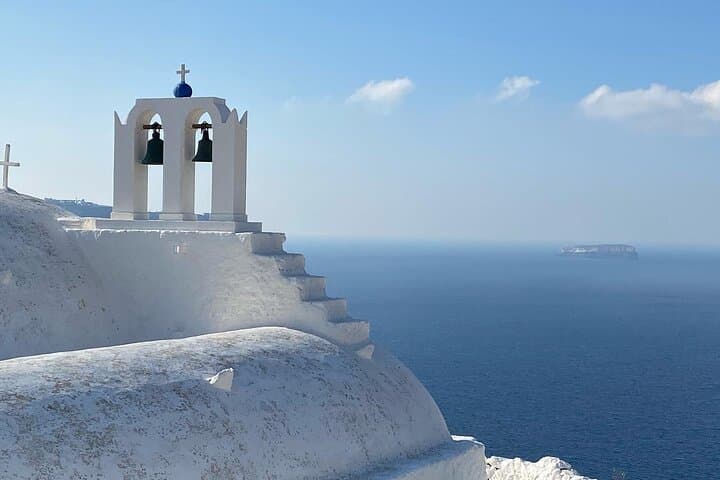
You step out of an air-conditioned van onto a cliff that looks over the caldera; the sea below glints steel-blue and the wind smells faintly of smoke and salt. The island’s volcanic bones are visible in every cliff face and beach: rust-red layers, black pumice, and terraces that hold vines like living ropes.
Verified experiences and guided adventures in the surrounding area.
Operated by Santorini Tours operated by Tour Operator Greece · Santorini (Thira), South Aegean
You step out of an air-conditioned van onto a cliff that looks over the caldera; the sea below glints steel-blue and the wind smells faintly of smoke and salt. The island’s volcanic bones are visible in every cliff face and beach: rust-red layers, black pumice, and terraces that hold vines like living ropes.
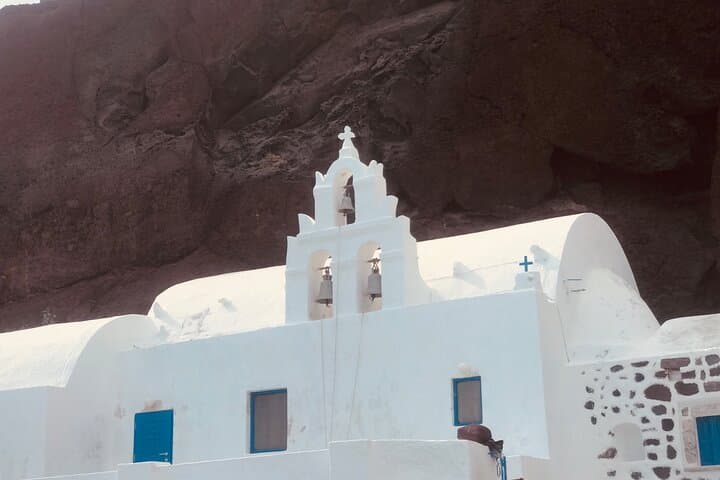
This half-day private discovery combines archaeology, geology and local culture. Akrotiri is a Late Bronze Age settlement preserved under volcanic ash after a major eruption; its narrow streets, plastered houses and vibrant fresco reproductions give a sense of urban life before the island’s reshaping. The Red Beach nearby shows how iron-rich volcanic strata crumble into dramatic scarlet cliffs and pebble shores. Higher up, the hilltop monastery of Profitis Ilias (the island’s high point) affords a sweeping view across the caldera to the drowned volcano and neighboring islets.
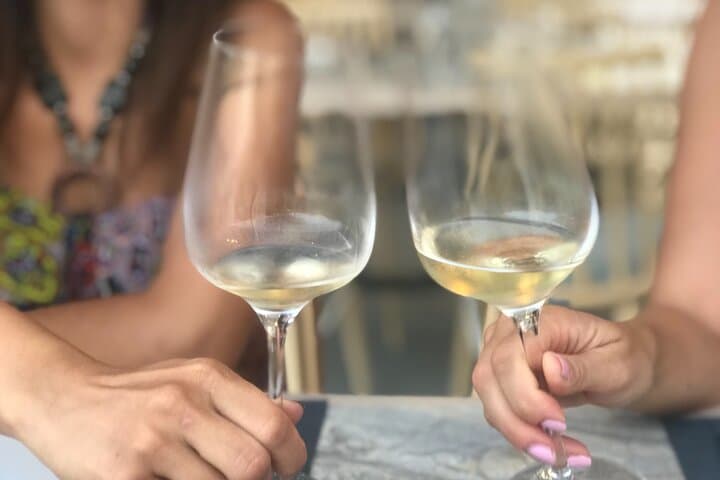
The day ends in Exo Gonia with a small winery tasting native Santorinian varieties—assyrtiko among them—whose mineral-driven acidity comes from the island’s volcanic soils.
Practical guidance: plan for 4–5 hours, bring sun protection and sturdy walking shoes for cobbled lanes and uneven viewpoints. Akrotiri visits often require timed-entry; private tours typically arrange skip-the-line access but carry your confirmation. Summer afternoons can be very hot—start early or late—and Red Beach has limited shade and no formal lifeguard service. Carry water, a light layer for windy overlooks, and a camera with a lens hood for bright reflections off white buildings and the sea.
easy.
4–5 hours.
Suitable for most fitness levels; involves short walks on uneven surfaces and some stairs
Private tours commonly arrange skip-the-line access, but policies vary—confirm whether entry fees are included when booking.
Red Beach is accessible for swimming in calm conditions, but there are no formal lifeguards and access down to the sand involves uneven paths—exercise caution.
The itinerary typically includes a tasting of several local labels at a small winery; confirm the number of pours and whether transfers back to your hotel are provided.
Yes—this tour is described as suitable for all fitness levels; infants typically must sit on an adult’s lap during vehicle transfers, and parents should watch children near cliff edges and beaches.
Akrotiri is a well-preserved Bronze Age settlement buried by a volcanic eruption in the second millennium BCE; Santorini’s caldera formed through successive explosive events that shaped the island’s cliffs and soils.
The archaeological site and many coastal areas are protected; stay on marked paths, avoid climbing fragile cliffs and support wineries that practice erosion-control and water-conserving viticulture.
Santorini Tours operated by Tour Operator Greece operates guided outdoor trips and adventures with an emphasis on safety, stewardship, and memorable experiences.

You step out of an air-conditioned van onto a cliff that looks over the caldera; the sea below glints steel-blue and the wind smells faintly of smoke and salt. The island’s volcanic bones are visible in every cliff face and beach: rust-red layers, black pumice, and terraces that hold vines like living ropes.
You step out of an air-conditioned van onto a cliff that looks over the caldera; the sea below glints steel-blue and the wind smells faintly of smoke and salt. The island’s volcanic bones are visible in every cliff face and beach: rust-red layers, black pumice, and terraces that hold vines like living ropes.
This half-day private discovery combines archaeology, geology and local culture. Akrotiri is a Late Bronze Age settlement preserved under volcanic ash after a major eruption; its narrow streets, plastered houses and vibrant fresco reproductions give a sense of urban life before the island’s reshaping. The Red Beach nearby shows how iron-rich volcanic strata crumble into dramatic scarlet cliffs and pebble shores. Higher up, the hilltop monastery of Profitis Ilias (the island’s high point) affords a sweeping view across the caldera to the drowned volcano and neighboring islets.
The day ends in Exo Gonia with a small winery tasting native Santorinian varieties—assyrtiko among them—whose mineral-driven acidity comes from the island’s volcanic soils.
Practical guidance: plan for 4–5 hours, bring sun protection and sturdy walking shoes for cobbled lanes and uneven viewpoints. Akrotiri visits often require timed-entry; private tours typically arrange skip-the-line access but carry your confirmation. Summer afternoons can be very hot—start early or late—and Red Beach has limited shade and no formal lifeguard service. Carry water, a light layer for windy overlooks, and a camera with a lens hood for bright reflections off white buildings and the sea.