THE ADVENTURE COLLECTIVE® · Independent discovery and booking for outdoor travel

Explore Santo Domingo’s Colonial Zone on a private three-hour walking tour that threads through the city’s oldest cathedral, fortress gates, and shaded plazas. This guide explains what you’ll see, a bit of history, and practical tips to prepare for the walk.
Explore Santo Domingo’s Colonial Zone on a private three-hour walking tour that threads through the city’s oldest cathedral, fortress gates, and shaded plazas. This guide explains what you’ll see, a bit of history, and practical tips to prepare for the walk.
The sun hits the carved stone of the Cathedral of Santa María as you step off a narrow cobblestone lane and into a square that has watched four centuries of arrivals and departures. A warm breeze from the Caribbean nudges open shuttered windows; street vendors set out trays of guava paste and coffee. This is Santo Domingo’s Colonial Zone: compact, textured, and stubbornly alive.
Verified experiences and guided adventures in the surrounding area.
Operated by Opatrip Dominican · Santo Domingo, Distrito Nacional
The sun hits the carved stone of the Cathedral of Santa María as you step off a narrow cobblestone lane and into a square that has watched four centuries of arrivals and departures. A warm breeze from the Caribbean nudges open shuttered windows; street vendors set out trays of guava paste and coffee. This is Santo Domingo’s Colonial Zone: compact, textured, and stubbornly alive.
Founded in the late 15th century, the Colonial Zone holds the first cathedral and the earliest European colonial architecture in the Americas. Stone fortresses like Fortaleza Ozama keep quiet guard over the Ozama River while the Alcázar de Colón displays domestic life for the Spanish elite. The streets themselves record shifts—from colonial administration to independence struggles at Puerta del Conde, to contemporary cafés along C. Las Damas.
Culturally, the neighborhood is an active mix: religious processions, small museums, and local artisans sharing centuries-old crafts. Geologically there’s little change—limestone and coral stone underfoot—but the city’s layout preserves layers of social history that reveal themselves in plazas, mausoleums, and museum courtyards.
Practical guidance: this private three-hour walking tour covers tight, uneven surfaces—bring supportive shoes, sun protection, and a refillable water bottle. Tours move at a comfortable pace with short stops at key sites; ask your guide about skip-the-line options for museums and where to find lesser-known rooftop viewpoints. Mornings are cooler and quieter; late afternoons offer softer light for photos. Keep a small amount of cash for museum entries, tips, and street snacks, and respect conservation signs—many historic structures are fragile and managed for preservation.
easy.
3 hours.
Suitable for most fitness levels; participants should be able to walk on uneven surfaces for up to three hours with short stops.
Yes; the pace is adjustable and the tour is labeled easy, but participants should be able to walk short distances on uneven cobblestones.
The tour description lists a professional local guide; museum or special-site admissions are typically not included—confirm with the operator before booking.
This is a dedicated tour for your party only—timing and focus can be customized to your interests within the three-hour window.
Language options depend on guide availability—ask the operator at booking to request a guide who speaks your preferred language.
Santo Domingo was founded in 1496 and its Colonial Zone contains some of the earliest European-built structures in the Americas, including the first cathedral and administrative buildings from the 16th century.
The Colonial Zone faces heritage preservation pressures; stay on marked paths, avoid touching fragile masonry, and support licensed local guides and small cultural institutions.
Opatrip Dominican operates guided outdoor trips and adventures with an emphasis on safety, stewardship, and memorable experiences.

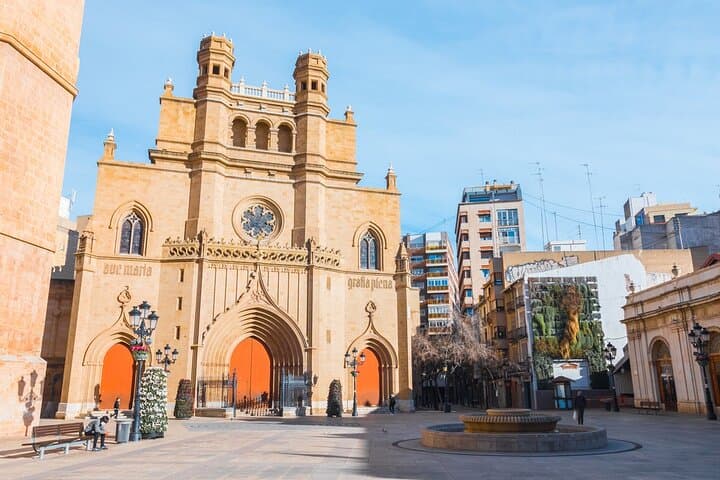
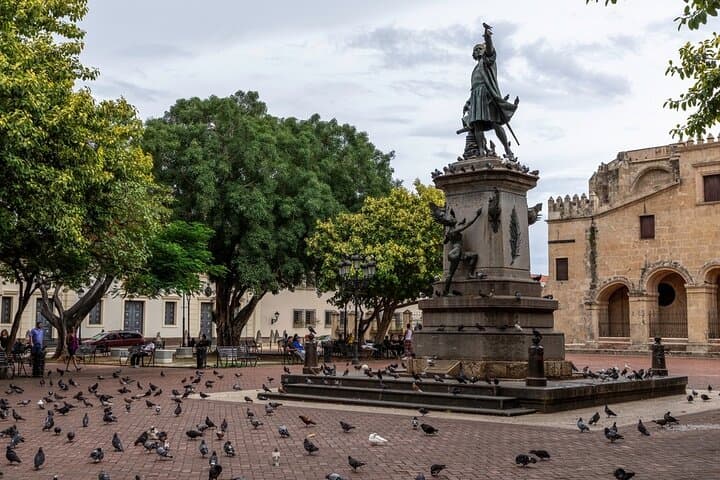

The sun hits the carved stone of the Cathedral of Santa María as you step off a narrow cobblestone lane and into a square that has watched four centuries of arrivals and departures. A warm breeze from the Caribbean nudges open shuttered windows; street vendors set out trays of guava paste and coffee. This is Santo Domingo’s Colonial Zone: compact, textured, and stubbornly alive.
The sun hits the carved stone of the Cathedral of Santa María as you step off a narrow cobblestone lane and into a square that has watched four centuries of arrivals and departures. A warm breeze from the Caribbean nudges open shuttered windows; street vendors set out trays of guava paste and coffee. This is Santo Domingo’s Colonial Zone: compact, textured, and stubbornly alive.
Founded in the late 15th century, the Colonial Zone holds the first cathedral and the earliest European colonial architecture in the Americas. Stone fortresses like Fortaleza Ozama keep quiet guard over the Ozama River while the Alcázar de Colón displays domestic life for the Spanish elite. The streets themselves record shifts—from colonial administration to independence struggles at Puerta del Conde, to contemporary cafés along C. Las Damas.
Culturally, the neighborhood is an active mix: religious processions, small museums, and local artisans sharing centuries-old crafts. Geologically there’s little change—limestone and coral stone underfoot—but the city’s layout preserves layers of social history that reveal themselves in plazas, mausoleums, and museum courtyards.
Practical guidance: this private three-hour walking tour covers tight, uneven surfaces—bring supportive shoes, sun protection, and a refillable water bottle. Tours move at a comfortable pace with short stops at key sites; ask your guide about skip-the-line options for museums and where to find lesser-known rooftop viewpoints. Mornings are cooler and quieter; late afternoons offer softer light for photos. Keep a small amount of cash for museum entries, tips, and street snacks, and respect conservation signs—many historic structures are fragile and managed for preservation.