THE ADVENTURE COLLECTIVE® · Independent discovery and booking for outdoor travel

Explore Santo Domingo’s Colonial Zone by bike in a compact, two-hour route that hits plazas, ruins and the waterfront. This guided ride mixes history, local culture and practical tips to help you feel like a local by the end of the tour.
Explore Santo Domingo’s Colonial Zone by bike in a compact, two-hour route that hits plazas, ruins and the waterfront. This guided ride mixes history, local culture and practical tips to help you feel like a local by the end of the tour.
You push off from Zona Bici a block from Columbus Plaza and the cathedral, the Caribbean breeze immediately loosening the heat as the city unfolds.
Verified experiences and guided adventures in the surrounding area.
Operated by Zona Bici Bike Rental · Santo Domingo, Distrito Nacional
You push off from Zona Bici a block from Columbus Plaza and the cathedral, the Caribbean breeze immediately loosening the heat as the city unfolds.
Streets narrow and then open to plazas where horse-drawn carriages idle and vendors call out over the hum of pedals. The ride threads past the stone South Wall, along the Malecón, and beside the Ozama River that dares you to slow down and look; tide-scoured limestone and old cannon emplacements keep time with the sea.
This is Hispaniola’s oldest European quarter: the Colonial Zone grew from 15th-century Spanish settlement, with Calle Las Damas remaining the oldest paved street in the Americas. Buildings are coral-stone and stucco, scarred by centuries of salt and sun; churches, ruins and small family-run shops tell stories of colonial governance, maritime trade and the city’s role in the Atlantic world.
The route is urban and primarily flat, with short cobbled sections—expect roughly 6–8 km covered in about two hours at an easy pace. Local color matters: merengue from a radio, the smell of roasted coffee, friendly shopkeepers. Guides point out key sites—the Alcázar de Colón, the Ruins of San Francisco, La Fortaleza Ozama—and share practical tips on where locals eat and dance.
For planning: bring sunscreen, a refillable bottle, a helmet, and a comfortable pair of closed-toe shoes. Morning or late-afternoon slots beat midday heat. Traffic is light in narrow alleys but can be busy on the waterfront; basic bike-handling and situational awareness are enough to enjoy a confident, informative ride.
easy.
2 hours.
Suitable for most fitness levels; participants should be comfortable riding a city bike for two hours with brief stops.
The tour starts and ends at Zona Bici on Calle Arzobispo Meriño 217, a block from Columbus Plaza and the cathedral.
Yes—routes are primarily flat and the pace is relaxed, but children must be accompanied by an adult; infant seats are available on request.
Wear closed-toe shoes, light clothing, sunscreen and bring a water bottle; helmets are strongly recommended.
Full refunds are available if you cancel at least 24 hours before departure; the tour may be canceled for bad weather.
The Colonial Zone was established in the late 15th century and includes some of the oldest Spanish-built structures in the Americas, including the Alcázar de Colón.
The area balances tourism and preservation—stay on public paths, avoid climbing on ruins, and support local businesses to help maintain historic buildings.
Zona Bici Bike Rental operates guided outdoor trips and adventures with an emphasis on safety, stewardship, and memorable experiences.


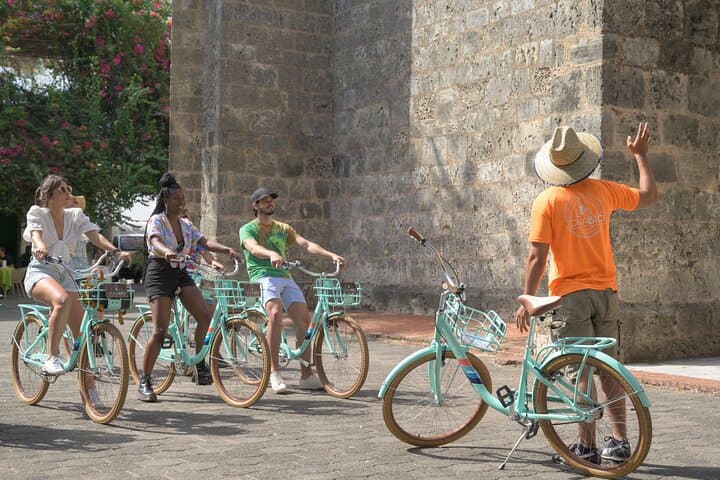
You push off from Zona Bici a block from Columbus Plaza and the cathedral, the Caribbean breeze immediately loosening the heat as the city unfolds.
You push off from Zona Bici a block from Columbus Plaza and the cathedral, the Caribbean breeze immediately loosening the heat as the city unfolds.
Streets narrow and then open to plazas where horse-drawn carriages idle and vendors call out over the hum of pedals. The ride threads past the stone South Wall, along the Malecón, and beside the Ozama River that dares you to slow down and look; tide-scoured limestone and old cannon emplacements keep time with the sea.
This is Hispaniola’s oldest European quarter: the Colonial Zone grew from 15th-century Spanish settlement, with Calle Las Damas remaining the oldest paved street in the Americas. Buildings are coral-stone and stucco, scarred by centuries of salt and sun; churches, ruins and small family-run shops tell stories of colonial governance, maritime trade and the city’s role in the Atlantic world.
The route is urban and primarily flat, with short cobbled sections—expect roughly 6–8 km covered in about two hours at an easy pace. Local color matters: merengue from a radio, the smell of roasted coffee, friendly shopkeepers. Guides point out key sites—the Alcázar de Colón, the Ruins of San Francisco, La Fortaleza Ozama—and share practical tips on where locals eat and dance.
For planning: bring sunscreen, a refillable bottle, a helmet, and a comfortable pair of closed-toe shoes. Morning or late-afternoon slots beat midday heat. Traffic is light in narrow alleys but can be busy on the waterfront; basic bike-handling and situational awareness are enough to enjoy a confident, informative ride.