THE ADVENTURE COLLECTIVE® · Independent discovery and booking for outdoor travel

Visit Santiago Matatlán for a hands-on mezcal day: cut agave, tour artisanal distilleries, and taste a dozen varieties while learning the craft’s history and terroir. This 5–6 hour trip mixes light fieldwork with guided tastings and cellar visits.
Visit Santiago Matatlán for a hands-on mezcal day: cut agave, tour artisanal distilleries, and taste a dozen varieties while learning the craft’s history and terroir. This 5–6 hour trip mixes light fieldwork with guided tastings and cellar visits.
The day opens in Oaxaca’s historic center and, within an hour’s drive, the high plain gives way to ragged agave rows that lean like weathered sentinels across rutted earth. In Santiago Matatlán, the air smells of roasted maguey and campfire: the pulque sap still glistens on hands, and the mezcaleros move with purposeful economy.
Verified experiences and guided adventures in the surrounding area.
Operated by Palenque Mal De Amor · Santiago Matatlán, Oaxaca
The day opens in Oaxaca’s historic center and, within an hour’s drive, the high plain gives way to ragged agave rows that lean like weathered sentinels across rutted earth. In Santiago Matatlán, the air smells of roasted maguey and campfire: the pulque sap still glistens on hands, and the mezcaleros move with purposeful economy.
This is the heart of mezcal country — a landscape carved by volcanic soils and seasonal rains that shape agave growth. Santiago Matatlán has been called the Mezcal Capital for generations; families here blend Zapotec traditions with artisanal distillation methods that date back centuries. You’ll see earthen ovens, tahona wheels, and glass jugs aging in cool caverns — each step revealing why different agave species yield distinct flavors.
Expect hands-on moments: cutting piñas, tasting cooked maguey, and even packing a bottle you helped finish. Guided tastings walk through joven, reposado, añejo, and wild-fermented varieties while explaining denomination of origin and organoleptic terms so the palate learns a language as precise as the distillation.
Practical side: the tour runs about 5–6 hours including transport from Oaxaca city, mostly at low effort but with standing, short walks on uneven farm tracks, and exposure to sun and smoke. Bring sun protection, comfortable closed-toe shoes for the fields, and water — hydration preserves your palate and energy. Photography is welcome; remember to ask before photographing private workspaces. This excursion is equal parts cultural immersion and fieldwork, a clear, tactile lesson in why mezcal tastes like the land that raised it.
easy.
5–6 hours.
Suitable for most fitness levels; requires standing, short walks on uneven farm tracks, and basic mobility.
The experience lasts about 5–6 hours and includes round-trip transportation from the meeting point in Oaxaca’s historic center.
Yes — guided tastings cover a range of more than a dozen mezcals, explaining categories, agave varieties, and tasting techniques.
No — it’s classified as easy; expect short walks, standing during demonstrations, and light participation like cutting agave.
Yes — you can pack and purchase bottles, and the tour includes handling of a mobile barrel and guidance on packaging.
Santiago Matatlán has long been a center for mezcal production; local Zapotec and municipal practices shaped artisanal techniques still used in family distilleries today.
Sustainable agave harvesting and replanting are growing priorities; choose tours that emphasize responsible sourcing and support local producers.
Palenque Mal De Amor operates guided outdoor trips and adventures with an emphasis on safety, stewardship, and memorable experiences.
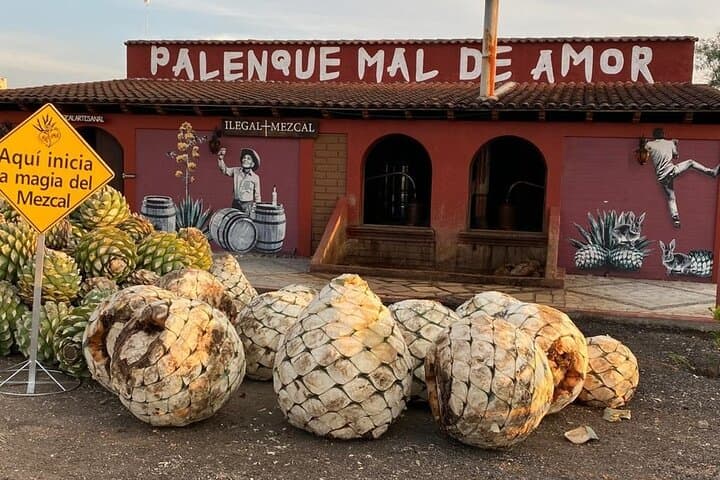



The day opens in Oaxaca’s historic center and, within an hour’s drive, the high plain gives way to ragged agave rows that lean like weathered sentinels across rutted earth. In Santiago Matatlán, the air smells of roasted maguey and campfire: the pulque sap still glistens on hands, and the mezcaleros move with purposeful economy.
The day opens in Oaxaca’s historic center and, within an hour’s drive, the high plain gives way to ragged agave rows that lean like weathered sentinels across rutted earth. In Santiago Matatlán, the air smells of roasted maguey and campfire: the pulque sap still glistens on hands, and the mezcaleros move with purposeful economy.
This is the heart of mezcal country — a landscape carved by volcanic soils and seasonal rains that shape agave growth. Santiago Matatlán has been called the Mezcal Capital for generations; families here blend Zapotec traditions with artisanal distillation methods that date back centuries. You’ll see earthen ovens, tahona wheels, and glass jugs aging in cool caverns — each step revealing why different agave species yield distinct flavors.
Expect hands-on moments: cutting piñas, tasting cooked maguey, and even packing a bottle you helped finish. Guided tastings walk through joven, reposado, añejo, and wild-fermented varieties while explaining denomination of origin and organoleptic terms so the palate learns a language as precise as the distillation.
Practical side: the tour runs about 5–6 hours including transport from Oaxaca city, mostly at low effort but with standing, short walks on uneven farm tracks, and exposure to sun and smoke. Bring sun protection, comfortable closed-toe shoes for the fields, and water — hydration preserves your palate and energy. Photography is welcome; remember to ask before photographing private workspaces. This excursion is equal parts cultural immersion and fieldwork, a clear, tactile lesson in why mezcal tastes like the land that raised it.