THE ADVENTURE COLLECTIVE® · Independent discovery and booking for outdoor travel

Swap Barcelona’s boulevards for pine-scented trails, a short vineyard walk and a medieval cloister. This 9 km guided route combines a village stroll, forest views and a local wine tasting before finishing at the 9th‑century Monastery of Sant Cugat.
Swap Barcelona’s boulevards for pine-scented trails, a short vineyard walk and a medieval cloister. This 9 km guided route combines a village stroll, forest views and a local wine tasting before finishing at the 9th‑century Monastery of Sant Cugat.
You step off the commuter train and the city’s roar thins to the hush of Collserola pines—sunlight sifts through needle and leaf as the path climbs. The 9 km circuit (about 5.6 miles) threads village streets, a short forest hike and a patchwork of terraced vineyards before finishing at the carved stone of the Monastery of Sant Cugat.
Verified experiences and guided adventures in the surrounding area.
Operated by BARCELONA HORIZON TOURS · Sant Cugat del Vallès, Catalonia
You step off the commuter train and the city’s roar thins to the hush of Collserola pines—sunlight sifts through needle and leaf as the path climbs. The 9 km circuit (about 5.6 miles) threads village streets, a short forest hike and a patchwork of terraced vineyards before finishing at the carved stone of the Monastery of Sant Cugat.
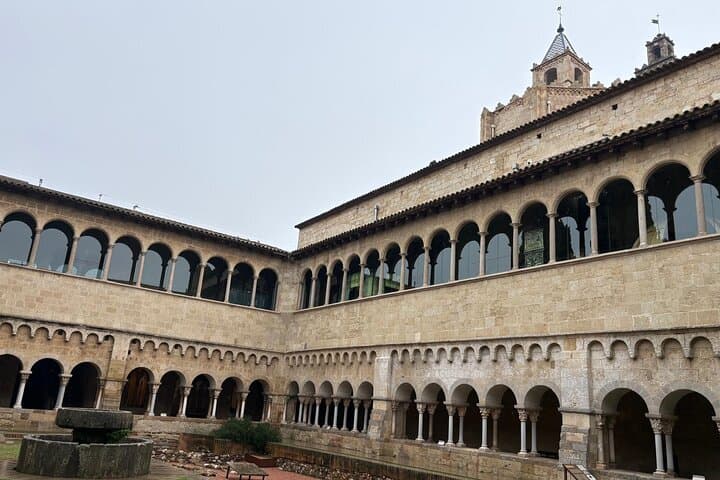
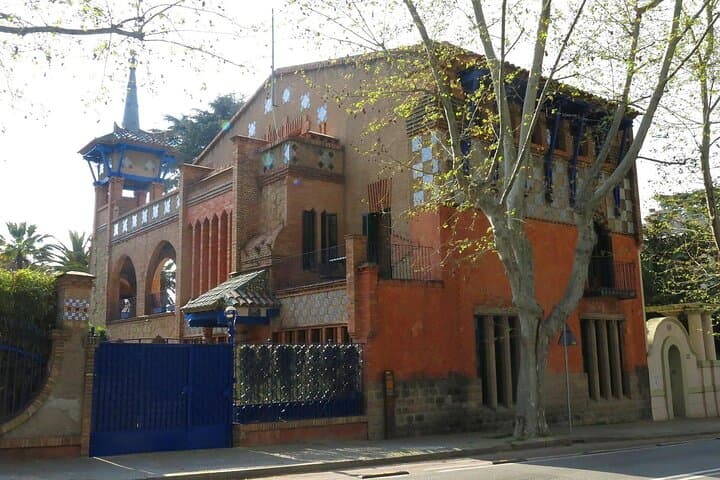
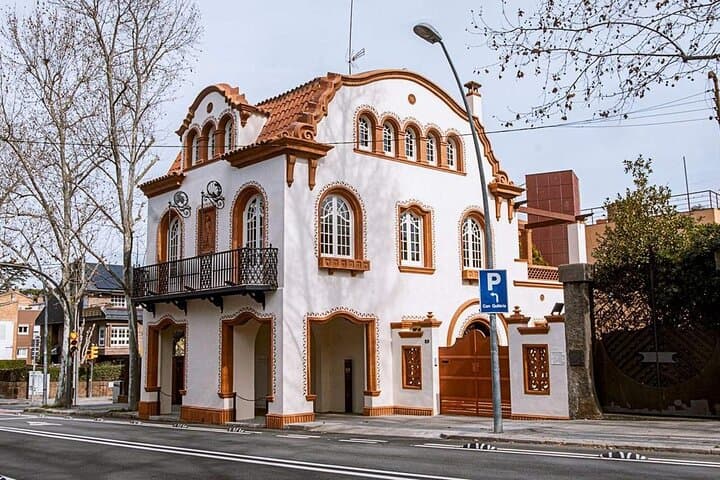
Sant Cugat sits on the western flank of the Collserola range, formed from Miocene sediments and folded hills that create short, steep ridgelines and clear viewpoints back toward Barcelona. The town’s modernist façades and narrow medieval lanes reflect a layering of Catalan civic growth; the monastery itself dates to the 9th century, with monastic life lasting until the 19th-century disentailment. The cloister’s 144 capitals offer close-up medieval iconography that rewards a slow pace.
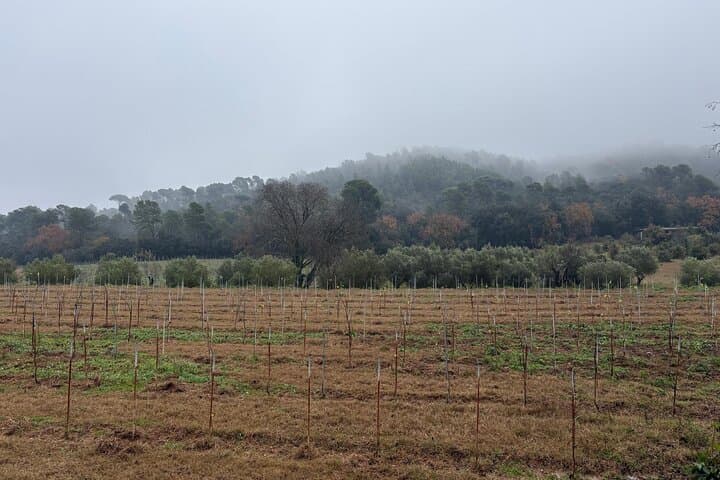
The hike portion covers mixed terrain—paved village streets, compact dirt tracks and easy forest singletrack—with cumulative elevation gain around 135 m (440 ft). Along the way small family vineyards open onto terraces where a guided wine tasting introduces local varietals and production customs.
Practical guide: allow 3–4 hours total, wear grippy shoes for short rocky sections and bring 1–1.5 L water. Trains from Barcelona take roughly 20 minutes; the meeting point is conveniently reached by public transport. The route is not suitable for those with limited mobility or serious cardiovascular issues. Start in the morning to avoid summer heat and leave time to explore the monastery cloister—the tour ends at its gates so you can linger before returning to the city.
moderate.
3–4 hours.
Moderate fitness—comfortable walking pace for 9 km with short climbs and some uneven footing
The walking component covers about 9 km (5.6 miles) with roughly 135 m (440 ft) of cumulative ascent; expect around 2 hours of walking within a 3–4 hour tour.
The itinerary notes access to the monastery is included and the tour ends at the monastery gates so you can explore further on your own.
Sant Cugat is well served by Cercanías trains—roughly a 20‑minute ride back to central Barcelona with frequent departures.
The route is not recommended for travelers with walking difficulties, pregnant visitors, or those with serious spine or cardiovascular conditions due to pace and some uneven terrain.
The Monastery of Sant Cugat was founded in the 9th century; its cloister contains 144 capitals with varied medieval carvings and reflects centuries of monastic and civic change.
Much of the hiking sector lies within the Parc Natural de la Serra de Collserola—stay on trails, take out all trash and respect vineyard boundaries to support local conservation.
BARCELONA HORIZON TOURS operates guided outdoor trips and adventures with an emphasis on safety, stewardship, and memorable experiences.
You step off the commuter train and the city’s roar thins to the hush of Collserola pines—sunlight sifts through needle and leaf as the path climbs. The 9 km circuit (about 5.6 miles) threads village streets, a short forest hike and a patchwork of terraced vineyards before finishing at the carved stone of the Monastery of Sant Cugat.
You step off the commuter train and the city’s roar thins to the hush of Collserola pines—sunlight sifts through needle and leaf as the path climbs. The 9 km circuit (about 5.6 miles) threads village streets, a short forest hike and a patchwork of terraced vineyards before finishing at the carved stone of the Monastery of Sant Cugat.
Sant Cugat sits on the western flank of the Collserola range, formed from Miocene sediments and folded hills that create short, steep ridgelines and clear viewpoints back toward Barcelona. The town’s modernist façades and narrow medieval lanes reflect a layering of Catalan civic growth; the monastery itself dates to the 9th century, with monastic life lasting until the 19th-century disentailment. The cloister’s 144 capitals offer close-up medieval iconography that rewards a slow pace.
The hike portion covers mixed terrain—paved village streets, compact dirt tracks and easy forest singletrack—with cumulative elevation gain around 135 m (440 ft). Along the way small family vineyards open onto terraces where a guided wine tasting introduces local varietals and production customs.
Practical guide: allow 3–4 hours total, wear grippy shoes for short rocky sections and bring 1–1.5 L water. Trains from Barcelona take roughly 20 minutes; the meeting point is conveniently reached by public transport. The route is not suitable for those with limited mobility or serious cardiovascular issues. Start in the morning to avoid summer heat and leave time to explore the monastery cloister—the tour ends at its gates so you can linger before returning to the city.