THE ADVENTURE COLLECTIVE® · Independent discovery and booking for outdoor travel

Trace Ghana’s layered past and living forest in one long day: Cape Coast Castle’s powerful history meets Kakum National Park’s skyward canopy walks, with cultural ceremonies and coastal views woven between. Practical tips for a 10–11 hour experience.
Trace Ghana’s layered past and living forest in one long day: Cape Coast Castle’s powerful history meets Kakum National Park’s skyward canopy walks, with cultural ceremonies and coastal views woven between. Practical tips for a 10–11 hour experience.
You step from an air‑conditioned car into sun and salt-scented air at Cape Coast, the castle’s stone silhouette a quiet accusation against the horizon. Voices of a living coastline—fishermen, traders, and tour guides—frame the heavy gates that once watched ships arrive and never leave.
Verified experiences and guided adventures in the surrounding area.
Operated by AGATE TOURS · Cape Coast, Central Region
You step from an air‑conditioned car into sun and salt-scented air at Cape Coast, the castle’s stone silhouette a quiet accusation against the horizon. Voices of a living coastline—fishermen, traders, and tour guides—frame the heavy gates that once watched ships arrive and never leave.
The Sankofa day tour threads together Ghana’s most resonant landmarks: the Castle and Elmina forts that map the trans‑Atlantic slave trade, then inland into the humid green of Kakum National Park where suspended planks teach a different kind of history—one of forest ecology and connection.
Geology here is simple and honest: coastal sedimentary rock gives way to laterite soils beneath the rainforest, rain carving gullies and feeding the streams that keep the canopy alive. Culturally, the tour centers Akan history and contemporary community life—expect a naming ceremony or cultural demonstration that emphasizes return and remembrance as much as spectacle.
Practicalities matter on a long, singular day. The route covers paved castle courtyards and uneven forest boardwalks; plan for ten to eleven hours total with short hikes, stair climbs inside forts, and the 350‑meter Kakum canopy bridge system. Hydrate early and often; wear closed shoes with grip for slippery wood. Respect memorial sites—photography rules often apply inside chapels and dungeons—and follow guides on the canopy for safety.
This is a tour of contrasts: heavy stone and airy suspension, public history and private reflection, the ocean’s constant claim and the forest’s quiet insistence. It’s a full day of remembering, learning, and moving—physically and emotionally—through landscapes that keep reaching back.
moderate.
10–11 hours.
Moderate fitness: able to handle several hours of walking, stairs inside forts and short hikes to canopy access points.
The experience runs about 10–11 hours, including travel between Cape Coast and Kakum, guided site visits, and cultural activities.
Yes — entrance fees, an air‑conditioned vehicle, bottled water, snacks, and a personal guide are provided as part of the tour.
The tour lists wheelchair‑accessible transport and surfaces, but historic forts and canopy walks include stairs and elevated walkways that may limit access; check specifics with the operator.
Infants and small children can join, but the tour is not recommended for pregnant travelers, people with serious heart conditions or spinal injuries; moderate fitness is required.
Cape Coast Castle and nearby forts were central nodes in the trans‑Atlantic slave trade; the tour links those sites with Akan cultural practices and local naming ceremonies.
Kakum National Park protects a fragment of Ghana’s Upper Guinea rainforest—stay on trails, avoid feeding wildlife, and support locally run conservation and community tourism initiatives.
AGATE TOURS operates guided outdoor trips and adventures with an emphasis on safety, stewardship, and memorable experiences.
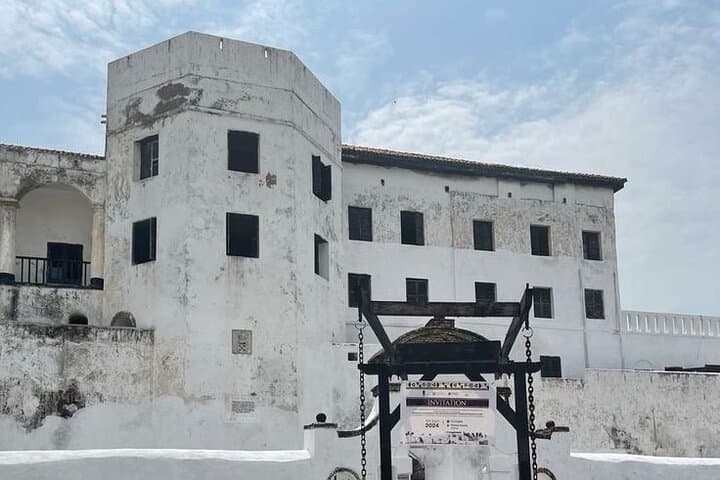
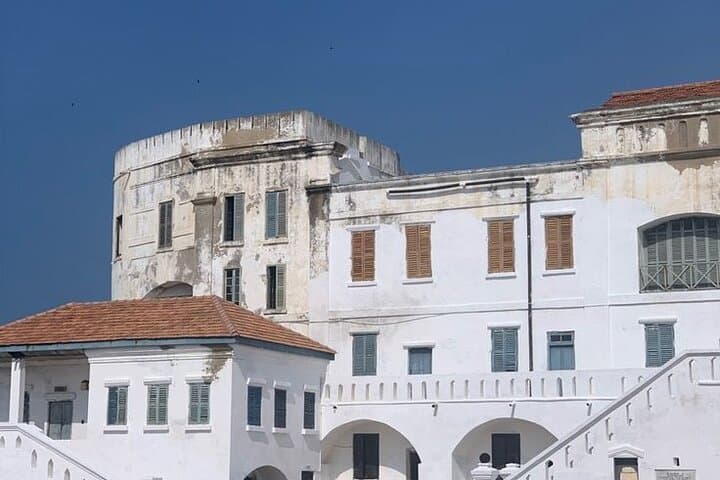
You step from an air‑conditioned car into sun and salt-scented air at Cape Coast, the castle’s stone silhouette a quiet accusation against the horizon. Voices of a living coastline—fishermen, traders, and tour guides—frame the heavy gates that once watched ships arrive and never leave.
You step from an air‑conditioned car into sun and salt-scented air at Cape Coast, the castle’s stone silhouette a quiet accusation against the horizon. Voices of a living coastline—fishermen, traders, and tour guides—frame the heavy gates that once watched ships arrive and never leave.
The Sankofa day tour threads together Ghana’s most resonant landmarks: the Castle and Elmina forts that map the trans‑Atlantic slave trade, then inland into the humid green of Kakum National Park where suspended planks teach a different kind of history—one of forest ecology and connection.
Geology here is simple and honest: coastal sedimentary rock gives way to laterite soils beneath the rainforest, rain carving gullies and feeding the streams that keep the canopy alive. Culturally, the tour centers Akan history and contemporary community life—expect a naming ceremony or cultural demonstration that emphasizes return and remembrance as much as spectacle.
Practicalities matter on a long, singular day. The route covers paved castle courtyards and uneven forest boardwalks; plan for ten to eleven hours total with short hikes, stair climbs inside forts, and the 350‑meter Kakum canopy bridge system. Hydrate early and often; wear closed shoes with grip for slippery wood. Respect memorial sites—photography rules often apply inside chapels and dungeons—and follow guides on the canopy for safety.
This is a tour of contrasts: heavy stone and airy suspension, public history and private reflection, the ocean’s constant claim and the forest’s quiet insistence. It’s a full day of remembering, learning, and moving—physically and emotionally—through landscapes that keep reaching back.