THE ADVENTURE COLLECTIVE® · Independent discovery and booking for outdoor travel

Drive from Durban into the Drakensberg and climb Sani Pass by 4x4 to Lesotho — a full-day route of gravel switchbacks, highland views, a traditional Sotho village visit and a drink at the highest pub in Africa. Learn what to expect and how to prepare for the climb.
Drive from Durban into the Drakensberg and climb Sani Pass by 4x4 to Lesotho — a full-day route of gravel switchbacks, highland views, a traditional Sotho village visit and a drink at the highest pub in Africa. Learn what to expect and how to prepare for the climb.
A cold wind meets the vehicle as you climb out of the lowlands and into the raw highlands of the Drakensberg. Gravel crunches under the tyres, clouds scud across corrugated ridgelines, and the landscape seems to push back — daring you to look farther. By mid-morning the valley below has shrunk to a patchwork of farms; above, rock and grass carry the conversation.
Verified experiences and guided adventures in the surrounding area.
Operated by African Saf Safaris · Underberg, KwaZulu-Natal
A cold wind meets the vehicle as you climb out of the lowlands and into the raw highlands of the Drakensberg. Gravel crunches under the tyres, clouds scud across corrugated ridgelines, and the landscape seems to push back — daring you to look farther. By mid-morning the valley below has shrunk to a patchwork of farms; above, rock and grass carry the conversation.
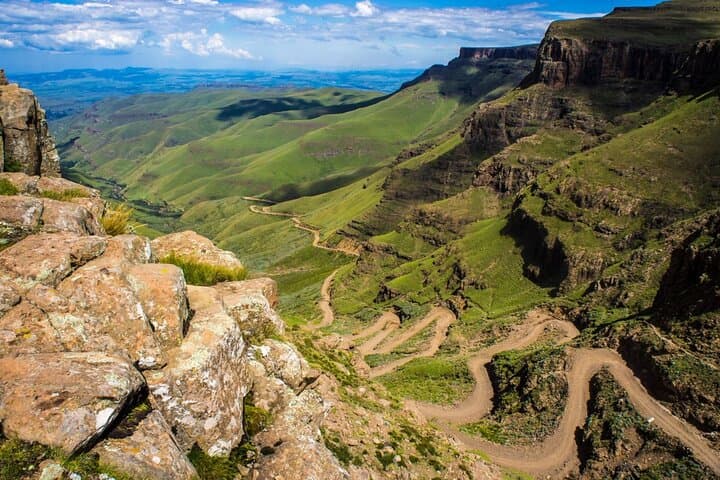
Sani Pass is an old trade and military route that cleaves the border between KwaZulu-Natal and Lesotho, rising to roughly 2,870–2,880 m (around 9,429 ft) at the summit. The geology is basic, with steep, weathered sandstone and basalt giving way to high-altitude grasslands shaped by wind and frost. Cultural beats here are Sotho: stone kraals, traditional beadwork and a way of life adapted to thin air and cold winters.
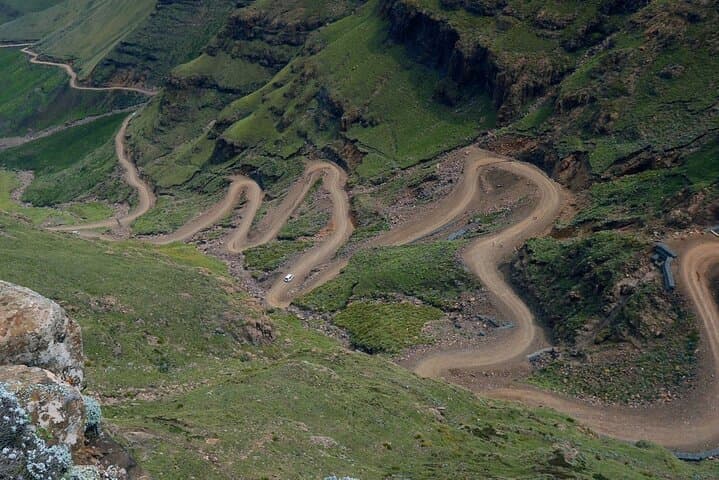
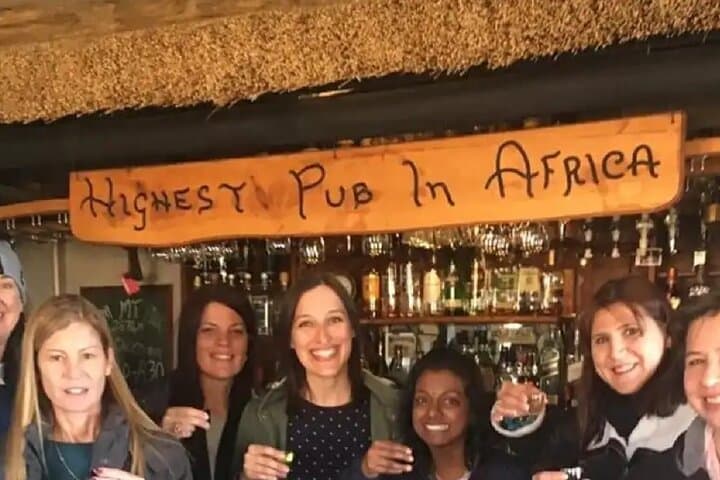
Expect roughly 9 km of gravel switchbacks with an elevation gain around 1,200–1,400 m from the Underberg approach — narrow, steep, and often rutted. Vehicles take the strain, but the terrain is a character of its own: gullies that cut like veins, grasses that bow in the wind, and the occasional herd of hardy ponies. In Lesotho, you step out into village life, share a meal, and can toast at the famed ‘‘highest pub in Africa.’'
Practical pointers: wear layers for sudden temperature drops, bring a sturdy pair of shoes for short walks, carry ID for the border crossing, and allow a full day (around 12 hours) for travel time from Durban with stops. Hydrate and be ready for rough roads — the Pass rewards patience with unmatched highland views.
moderate.
12 hours.
Moderate fitness — able to handle a full day of travel and short uphill walks at altitude.
Yes: this tour crosses an international border so all travellers must carry a valid passport; check visa requirements for your nationality beforehand.
No: the Pass is steep, narrow and mostly gravel — vehicles transfer to 4x4s for the ascent and descent for safety.
The summit is roughly 2,870–2,880 m (about 9,429 ft); some people notice mild altitude effects, so pace yourself and hydrate.
There is a café/pub near the summit where you can get lunch and drinks, plus basic facilities; in Lesotho village stops amenities are limited, so bring essentials.
Sani Pass has long been a trade and shepherding route between the Zulu lowlands and the Sotho highlands; the modern 4x4 route follows paths used for centuries.
The alpine grasslands are fragile; stick to vehicle tracks and footpaths, avoid disturbing grazing areas, and pack out all litter to limit erosion and habitat loss.
African Saf Safaris operates guided outdoor trips and adventures with an emphasis on safety, stewardship, and memorable experiences.
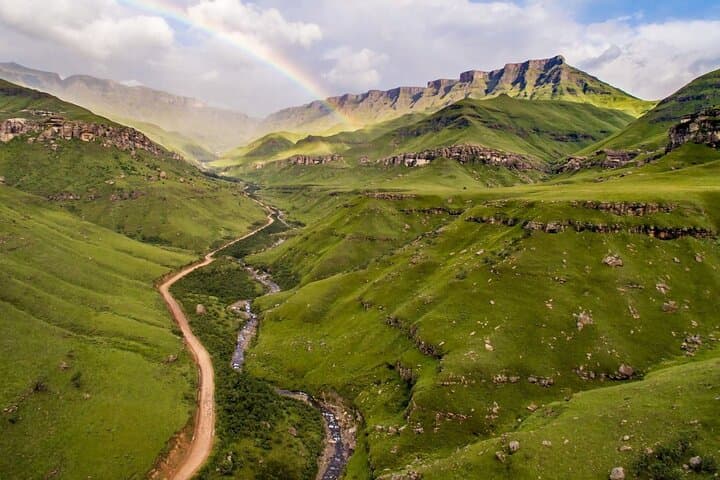
A cold wind meets the vehicle as you climb out of the lowlands and into the raw highlands of the Drakensberg. Gravel crunches under the tyres, clouds scud across corrugated ridgelines, and the landscape seems to push back — daring you to look farther. By mid-morning the valley below has shrunk to a patchwork of farms; above, rock and grass carry the conversation.
A cold wind meets the vehicle as you climb out of the lowlands and into the raw highlands of the Drakensberg. Gravel crunches under the tyres, clouds scud across corrugated ridgelines, and the landscape seems to push back — daring you to look farther. By mid-morning the valley below has shrunk to a patchwork of farms; above, rock and grass carry the conversation.
Sani Pass is an old trade and military route that cleaves the border between KwaZulu-Natal and Lesotho, rising to roughly 2,870–2,880 m (around 9,429 ft) at the summit. The geology is basic, with steep, weathered sandstone and basalt giving way to high-altitude grasslands shaped by wind and frost. Cultural beats here are Sotho: stone kraals, traditional beadwork and a way of life adapted to thin air and cold winters.
Expect roughly 9 km of gravel switchbacks with an elevation gain around 1,200–1,400 m from the Underberg approach — narrow, steep, and often rutted. Vehicles take the strain, but the terrain is a character of its own: gullies that cut like veins, grasses that bow in the wind, and the occasional herd of hardy ponies. In Lesotho, you step out into village life, share a meal, and can toast at the famed ‘‘highest pub in Africa.’'
Practical pointers: wear layers for sudden temperature drops, bring a sturdy pair of shoes for short walks, carry ID for the border crossing, and allow a full day (around 12 hours) for travel time from Durban with stops. Hydrate and be ready for rough roads — the Pass rewards patience with unmatched highland views.