THE ADVENTURE COLLECTIVE® · Independent discovery and booking for outdoor travel

A guided 2–5 hour trip from Walvis Bay that takes you where the Namib dunes fall into the Atlantic. Expect lagoon birding, salt pans, dune and beach driving, and a choice of picnic options.
A guided 2–5 hour trip from Walvis Bay that takes you where the Namib dunes fall into the Atlantic. Expect lagoon birding, salt pans, dune and beach driving, and a choice of picnic options.
A wind-scrubbed ribbon of sand runs between high ochre dunes and a flat, silver ocean; Sandwich Harbour arrives like an argument between desert and sea, and a day here puts you squarely inside that debate.
Verified experiences and guided adventures in the surrounding area.
Operated by Okangala Tours & Safaris · Walvis Bay, Erongo
A wind-scrubbed ribbon of sand runs between high ochre dunes and a flat, silver ocean; Sandwich Harbour arrives like an argument between desert and sea, and a day here puts you squarely inside that debate.
The tour typically starts at the Walvis Bay lagoon—an internationally important bird area—before threading through salt pans and onto a hard-packed beach that doubles as a dune-access highway. Guides explain the geology: the Namib’s star dunes are among the oldest on Earth, wind-shaped by Atlantic breezes, and they shove directly into the cold Benguela current here. Culturally the coast bears traces of maritime industry and local fishing communities; the lagoon and pans have supported people and migratory birds for generations.
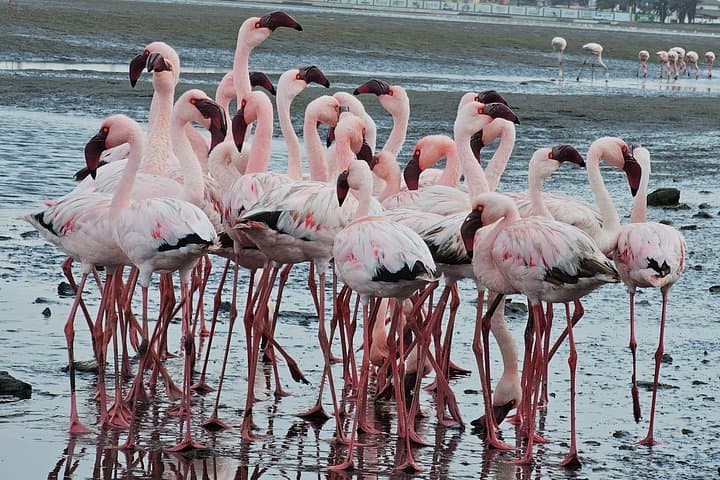
Expect close encounters with large flocks of flamingos and pelicans, opportunistic shorebirds, and, if luck is with you, springbok or ostrich on the salt flats. Small desert specialists—fog-basking beetles and palmato geckos—give texture to stops on dune toes.
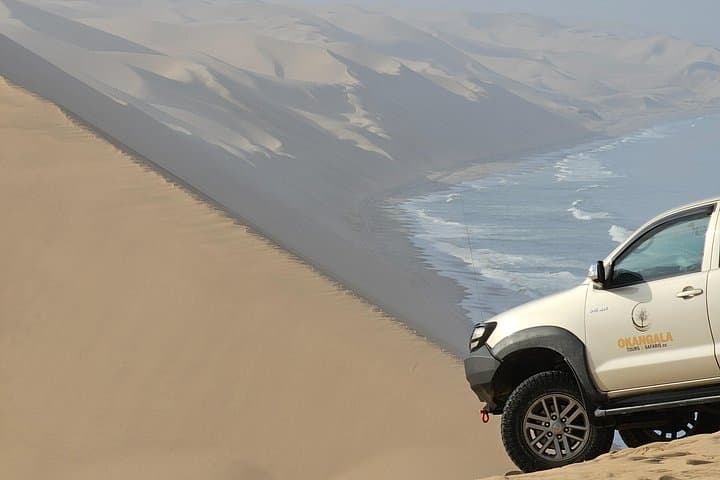
Practically: tours run 2–5 hours, usually by 4x4 with short guided walks on sand. Guides provide refreshments and offer a choice of dune or beach picnic, but bring sun protection, a camera, and binoculars. Movement on wind-scoured dunes can be tiring; pace yourself, drink water, and follow guide instructions—sensitive birding areas and dune vegetation mustn’t be disturbed. Morning light is best for bird activity and photography; afternoon brings higher winds and dramatic side-light on the dunes.
This outing balances easy access with striking scenery: a compact way to experience Namibia’s coastal edge without technical gear, but rich in natural history and photographic payoff.
easy.
2–5 hours.
Suitable for most fitness levels; involves short walks on sand and stable vehicle transfers.
Tours run approximately 2–5 hours and combine a guided 4x4 drive with short, guided walks on dunes and salt pans; refreshments and a picnic option are typically included.
The lagoon is known for flamingos, pelicans and various shorebirds; on the salt pans and dunes you may spot springbok, ostrich and small desert reptiles—sightings vary by season.
The tour is generally family-friendly and labeled physically easy, but dune walking can be uneven—passengers with mobility limitations should review pickup details and discuss accessibility with the operator in advance.
Morning gives the best light and calmer winds for bird activity and photography; afternoons may be windier but offer dramatic dune lighting.
The Walvis Bay area has long been important for coastal communities and maritime activity; Sandwich Harbour’s interface of dunes and ocean has been noted by explorers and ornithologists for over a century.
The lagoon and adjacent habitats are ecologically sensitive—stay on marked routes, avoid disturbing nesting or feeding birds, and follow guide instructions to limit erosion and habitat damage.
Okangala Tours & Safaris operates guided outdoor trips and adventures with an emphasis on safety, stewardship, and memorable experiences.
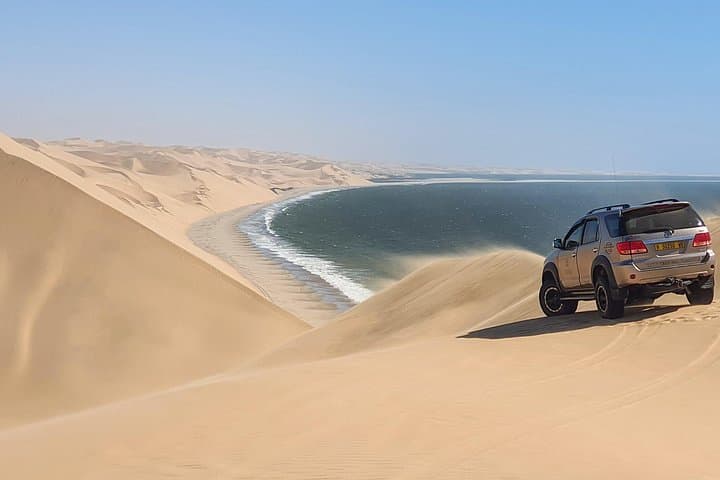
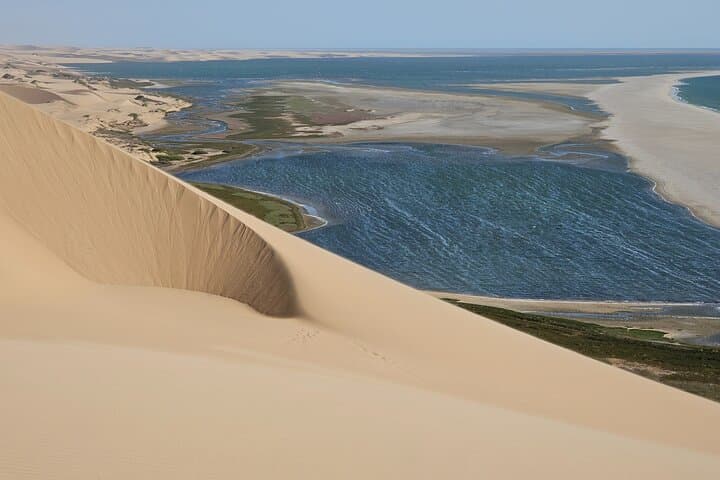
A wind-scrubbed ribbon of sand runs between high ochre dunes and a flat, silver ocean; Sandwich Harbour arrives like an argument between desert and sea, and a day here puts you squarely inside that debate.
A wind-scrubbed ribbon of sand runs between high ochre dunes and a flat, silver ocean; Sandwich Harbour arrives like an argument between desert and sea, and a day here puts you squarely inside that debate.
The tour typically starts at the Walvis Bay lagoon—an internationally important bird area—before threading through salt pans and onto a hard-packed beach that doubles as a dune-access highway. Guides explain the geology: the Namib’s star dunes are among the oldest on Earth, wind-shaped by Atlantic breezes, and they shove directly into the cold Benguela current here. Culturally the coast bears traces of maritime industry and local fishing communities; the lagoon and pans have supported people and migratory birds for generations.
Expect close encounters with large flocks of flamingos and pelicans, opportunistic shorebirds, and, if luck is with you, springbok or ostrich on the salt flats. Small desert specialists—fog-basking beetles and palmato geckos—give texture to stops on dune toes.
Practically: tours run 2–5 hours, usually by 4x4 with short guided walks on sand. Guides provide refreshments and offer a choice of dune or beach picnic, but bring sun protection, a camera, and binoculars. Movement on wind-scoured dunes can be tiring; pace yourself, drink water, and follow guide instructions—sensitive birding areas and dune vegetation mustn’t be disturbed. Morning light is best for bird activity and photography; afternoon brings higher winds and dramatic side-light on the dunes.
This outing balances easy access with striking scenery: a compact way to experience Namibia’s coastal edge without technical gear, but rich in natural history and photographic payoff.