THE ADVENTURE COLLECTIVE® · Independent discovery and booking for outdoor travel

Cross the High Atlas and sleep beneath the Saharan sky on this compact 4-day journey from Marrakech to Merzouga. Expect dramatic gorges, UNESCO kasbahs, camel treks, and a desert camp night with Berber music.
Cross the High Atlas and sleep beneath the Saharan sky on this compact 4-day journey from Marrakech to Merzouga. Expect dramatic gorges, UNESCO kasbahs, camel treks, and a desert camp night with Berber music.
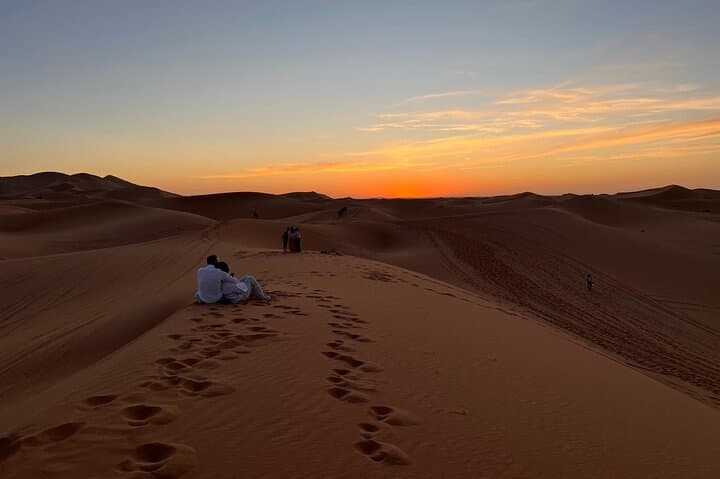
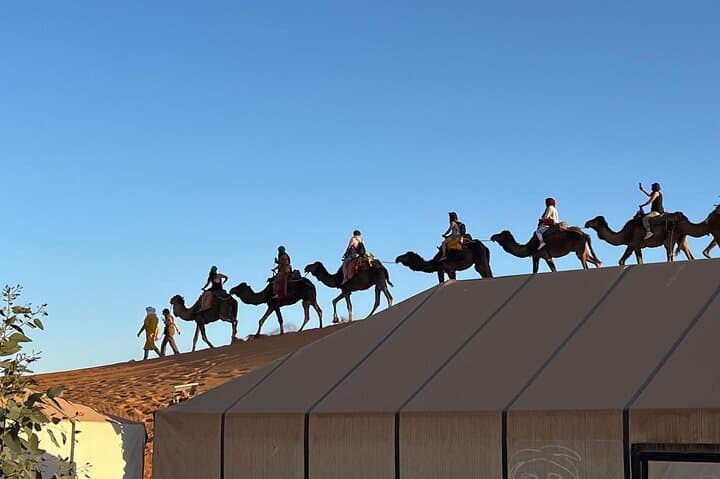
The first light in the Sahara finds the dunes changing color as if rehearsing for the day; camels cut slow silhouettes across Erg Chebbi while a cool wind sculpts fresh ridges underfoot.
Verified experiences and guided adventures in the surrounding area.
Operated by Dune whisper tours · Merzouga, Drâa-Tafilalet
The first light in the Sahara finds the dunes changing color as if rehearsing for the day; camels cut slow silhouettes across Erg Chebbi while a cool wind sculpts fresh ridges underfoot.
This four-day route leaves Marrakech, climbs the High Atlas via the Tizi n’Tichka pass (about 2,260 m), and threads through fortified kasbahs and the UNESCO-listed Ait Ben Haddou before descending into the rose-scented valleys and the red canyons of Todra Gorge. Geology is on constant display: wind-worked sand seas in Merzouga, fluted limestone walls in the gorges, and alluvial terraces that mark ancient river courses.
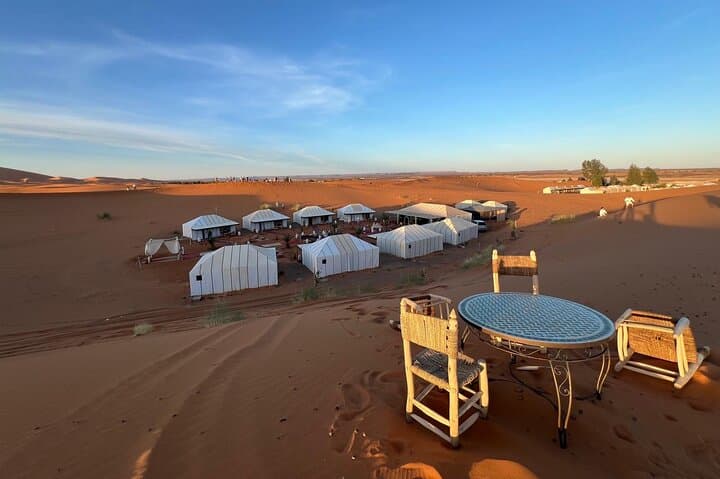
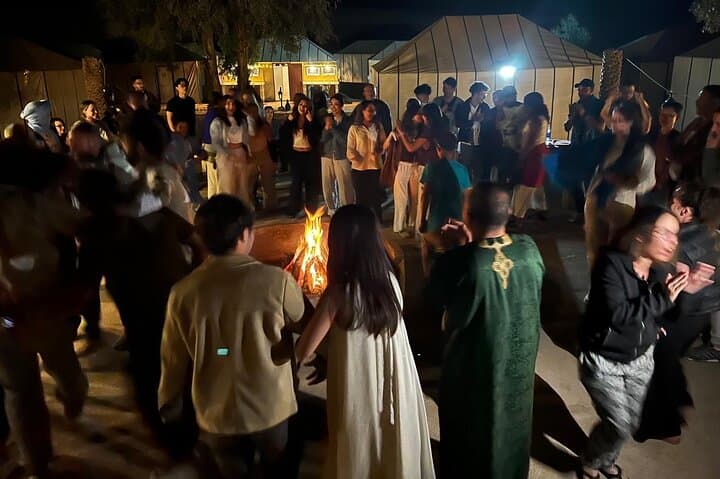
Culturally, the trip is stamped by Amazigh (Berber) hospitality — overnighting in family-run guesthouses, listening to local musicians by the campfire, and sharing tagine meals. The camp night in the desert is straightforward: a small, insulated tent option or sleeping under stars, where the desert’s silence pushes you into a different kind of time.
Practical guidance: expect long drives (Marrakech–Merzouga ~8–10 hours total over the itinerary), travel by air-conditioned 4x4 or minibus, and light guided walks in the gorges and on dunes. Bring layered clothing for 20–30°C daytime swings and cold nights, sun protection, at least 2–3 liters of water per day, and sturdy shoes for rocky paths. Sandboarding can be arranged; camel rides cross soft, shifting sand at sunset. Note health constraints: not recommended for those with serious back, heart, or pregnancy concerns. Plan for early starts, modest daily distances, and carry photocopies of travel documents. With basic fitness and sensible gear, this program offers a compact, tactile way to experience Morocco’s high mountains, river valleys, and the Sahara’s wide-open dunes.
moderate.
4 days.
Moderate fitness—able to handle several hours of walking over sand and uneven paths and tolerate multi-hour transfers by road.
Daily driving varies; expect long legs between sights—total transit across the itinerary is roughly 8–10 hours spread over the route with multiple scenic stops.
The camel ride is low-impact and suitable for most people, though mounting/dismounting can strain the back—avoid if you have serious spinal issues.
Yes: breakfasts and dinners are included for most nights, with one night in a desert camp and other nights in valley guesthouses or lodges as listed.
Sandboarding is available on request at an additional arrangement; bring closed shoes and be prepared for sand access changes by wind.
The route follows historic caravan corridors and fortified kasbahs that once guarded trade routes across the Atlas and into the Sahara.
Visitors should minimize plastic waste and avoid off-track driving on dune systems; local operators often support community-based tourism and water-conservation practices.
Dune whisper tours operates guided outdoor trips and adventures with an emphasis on safety, stewardship, and memorable experiences.
The first light in the Sahara finds the dunes changing color as if rehearsing for the day; camels cut slow silhouettes across Erg Chebbi while a cool wind sculpts fresh ridges underfoot.
The first light in the Sahara finds the dunes changing color as if rehearsing for the day; camels cut slow silhouettes across Erg Chebbi while a cool wind sculpts fresh ridges underfoot.
This four-day route leaves Marrakech, climbs the High Atlas via the Tizi n’Tichka pass (about 2,260 m), and threads through fortified kasbahs and the UNESCO-listed Ait Ben Haddou before descending into the rose-scented valleys and the red canyons of Todra Gorge. Geology is on constant display: wind-worked sand seas in Merzouga, fluted limestone walls in the gorges, and alluvial terraces that mark ancient river courses.
Culturally, the trip is stamped by Amazigh (Berber) hospitality — overnighting in family-run guesthouses, listening to local musicians by the campfire, and sharing tagine meals. The camp night in the desert is straightforward: a small, insulated tent option or sleeping under stars, where the desert’s silence pushes you into a different kind of time.
Practical guidance: expect long drives (Marrakech–Merzouga ~8–10 hours total over the itinerary), travel by air-conditioned 4x4 or minibus, and light guided walks in the gorges and on dunes. Bring layered clothing for 20–30°C daytime swings and cold nights, sun protection, at least 2–3 liters of water per day, and sturdy shoes for rocky paths. Sandboarding can be arranged; camel rides cross soft, shifting sand at sunset. Note health constraints: not recommended for those with serious back, heart, or pregnancy concerns. Plan for early starts, modest daily distances, and carry photocopies of travel documents. With basic fitness and sensible gear, this program offers a compact, tactile way to experience Morocco’s high mountains, river valleys, and the Sahara’s wide-open dunes.