THE ADVENTURE COLLECTIVE® · Independent discovery and booking for outdoor travel

Spend a day exploring Sandoy’s Viking sites, white sandy beaches, and dramatic cliffs with a local guide. This small-group tour blends short walks, cultural history, and wildlife viewing for an accessible island experience.
Spend a day exploring Sandoy’s Viking sites, white sandy beaches, and dramatic cliffs with a local guide. This small-group tour blends short walks, cultural history, and wildlife viewing for an accessible island experience.
You step off the coach and the air on Sandoy pushes at you — salt, peat smoke, a sea that seems to keep its own time. Small stone houses hunch against the wind and sheep dot the sloping fields; in a single afternoon the island lays out centuries: Viking farmsteads, a huge blue mailbox in Skopun, and white dunes that feel almost Mediterranean against basalt cliffs.
Verified experiences and guided adventures in the surrounding area.
Operated by Experience Faroe Islands · Sandur, Sandoy
You step off the coach and the air on Sandoy pushes at you — salt, peat smoke, a sea that seems to keep its own time. Small stone houses hunch against the wind and sheep dot the sloping fields; in a single afternoon the island lays out centuries: Viking farmsteads, a huge blue mailbox in Skopun, and white dunes that feel almost Mediterranean against basalt cliffs.
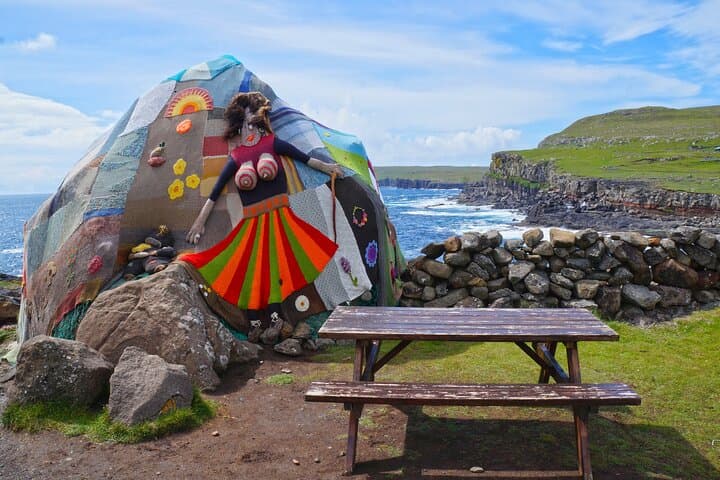
Sandoy's geology is raw and readable: layers of basalt intercut with glacial deposits, petrified tree-bark imprints in lava, and stretches of sand formed where sea and lake meet. Kirkjubø’s medieval roots and Húsavík’s stone farm ruins trace continuous settlement back to the early Norse era; folklore and modern art sit side-by-side in tiny villages where everyone knows each other's name.
Bird cliffs and quiet coves host seals and migrating species — the island's quiet is its currency. Local guides point out places where archaeological digs suggest settlement from as early as 200–300 AD, and explain how the undersea tunnel reshaped connections to Streymoy.
Practical side: this is a full-day, small-group tour with private transport, short walks on uneven, often muddy ground, and at least one lunch stop. Weather changes fast — bring windproof outer layers, waterproof footwear, and a daypack with water and snacks. Photography rewards patience: dawn and late afternoon light carve the cliffs and dunes into high-contrast frames.
Expect easy strolls rather than long hikes, close encounters with Faroese village life, and interpretive stops that weave geology, Norse history, and local culture into a compact, immersive day on one of the Faroe Islands’ most understated islands.
easy.
6–8 hours.
Suitable for most fitness levels; requires standing and short walks on uneven terrain.
The tour lasts about 6–8 hours and includes short, guided walks (10–30 minutes) at several stops; most walking is easy but over uneven ground.
Yes — the itinerary is labeled suitable for all fitness levels, though passengers should be able to board/exit a coach and handle short walks on uneven surfaces.
Yes — sightings of seals in secluded coves and breeding seabirds on cliffs are common, but sightings depend on season and weather.
Yes — private transportation, bottled water, lunch, fees, and a local guide are included in the tour price.
Sandoy shows continuous human settlement from Viking Age farms to medieval stone houses in Kirkjubø; excavations suggest habitation as early as 200–300 AD.
Many dunes and plant communities are protected and fragile; stick to marked routes and avoid trampling dune vegetation to preserve rare species.
Experience Faroe Islands operates guided outdoor trips and adventures with an emphasis on safety, stewardship, and memorable experiences.
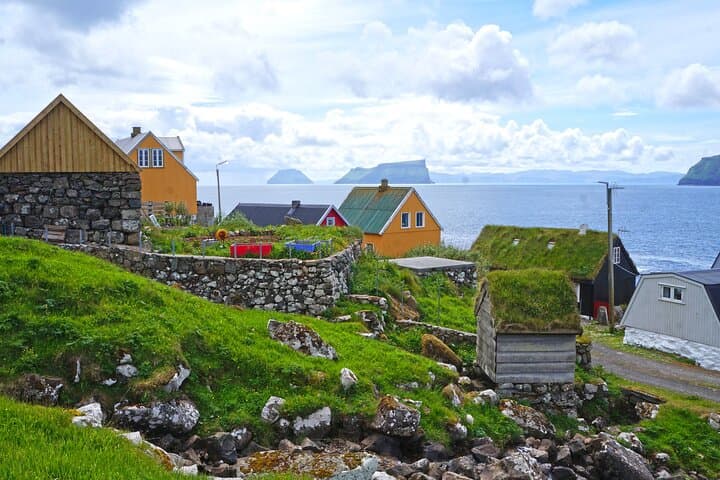
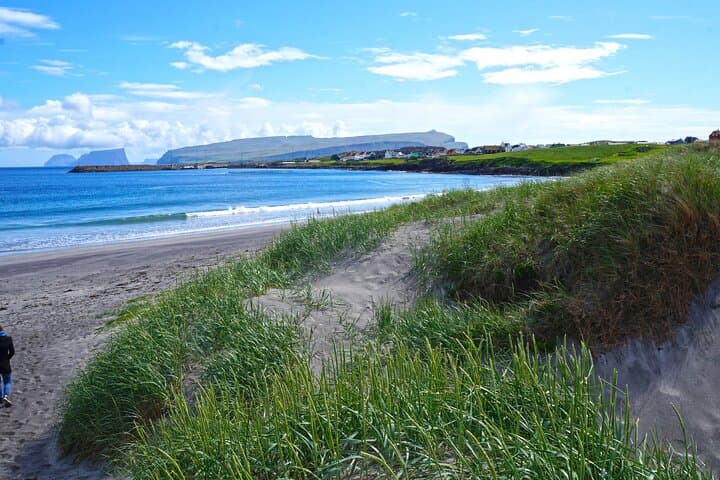
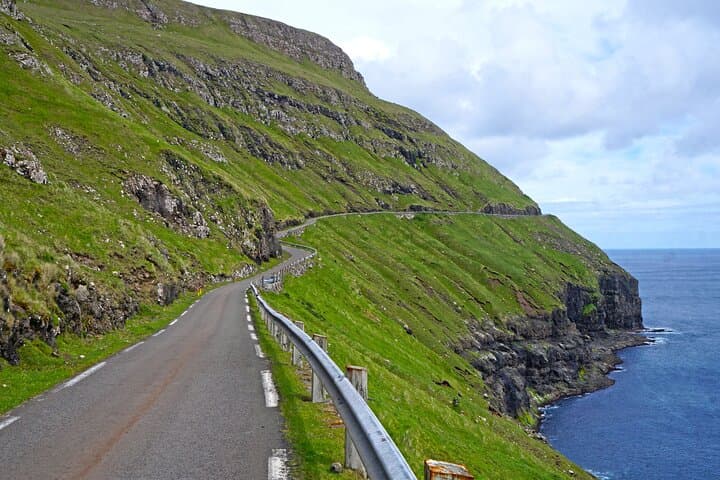
You step off the coach and the air on Sandoy pushes at you — salt, peat smoke, a sea that seems to keep its own time. Small stone houses hunch against the wind and sheep dot the sloping fields; in a single afternoon the island lays out centuries: Viking farmsteads, a huge blue mailbox in Skopun, and white dunes that feel almost Mediterranean against basalt cliffs.
You step off the coach and the air on Sandoy pushes at you — salt, peat smoke, a sea that seems to keep its own time. Small stone houses hunch against the wind and sheep dot the sloping fields; in a single afternoon the island lays out centuries: Viking farmsteads, a huge blue mailbox in Skopun, and white dunes that feel almost Mediterranean against basalt cliffs.
Sandoy's geology is raw and readable: layers of basalt intercut with glacial deposits, petrified tree-bark imprints in lava, and stretches of sand formed where sea and lake meet. Kirkjubø’s medieval roots and Húsavík’s stone farm ruins trace continuous settlement back to the early Norse era; folklore and modern art sit side-by-side in tiny villages where everyone knows each other's name.
Bird cliffs and quiet coves host seals and migrating species — the island's quiet is its currency. Local guides point out places where archaeological digs suggest settlement from as early as 200–300 AD, and explain how the undersea tunnel reshaped connections to Streymoy.
Practical side: this is a full-day, small-group tour with private transport, short walks on uneven, often muddy ground, and at least one lunch stop. Weather changes fast — bring windproof outer layers, waterproof footwear, and a daypack with water and snacks. Photography rewards patience: dawn and late afternoon light carve the cliffs and dunes into high-contrast frames.
Expect easy strolls rather than long hikes, close encounters with Faroese village life, and interpretive stops that weave geology, Norse history, and local culture into a compact, immersive day on one of the Faroe Islands’ most understated islands.