THE ADVENTURE COLLECTIVE® · Independent discovery and booking for outdoor travel

Ride wind-formed dunes above the Indian Ocean at Jeffreys Bay. This two-hour instructor-led sandboarding experience pairs easy-to-learn technique with coastal views and practical local tips.
Ride wind-formed dunes above the Indian Ocean at Jeffreys Bay. This two-hour instructor-led sandboarding experience pairs easy-to-learn technique with coastal views and practical local tips.
The wind organizes the sand into ripples that flash like bright fish scales as you climb—two steps forward, one sliding back—toward a slope shaped by the Indian Ocean’s breath. At the top, the dune leans into the beach and dares you: a steep, clean face waiting for a run. You push off and the board carries you, sand hissing beneath, surf and sky widening to the horizon.
Verified experiences and guided adventures in the surrounding area.
Operated by All Africa Adventures · Jeffreys Bay, Eastern Cape
The wind organizes the sand into ripples that flash like bright fish scales as you climb—two steps forward, one sliding back—toward a slope shaped by the Indian Ocean’s breath. At the top, the dune leans into the beach and dares you: a steep, clean face waiting for a run. You push off and the board carries you, sand hissing beneath, surf and sky widening to the horizon.
Jeffreys Bay began as a simple fishing village and grew into a surf and coastal-recreation hub; the dunes themselves are recent Holocene deposits—windblown sand building over years where rivers meet the sea. Local culture mixes Afrikaans fishing-town grit with surfing subculture; you’ll often see surfers, shell collectors, and fishers sharing the same morning light.
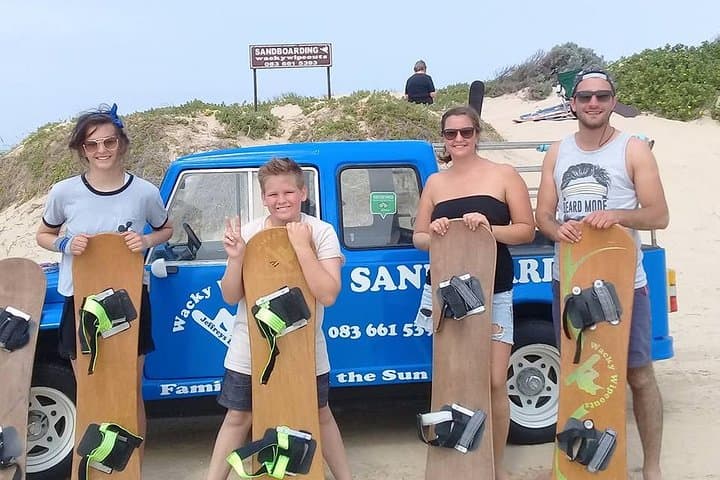
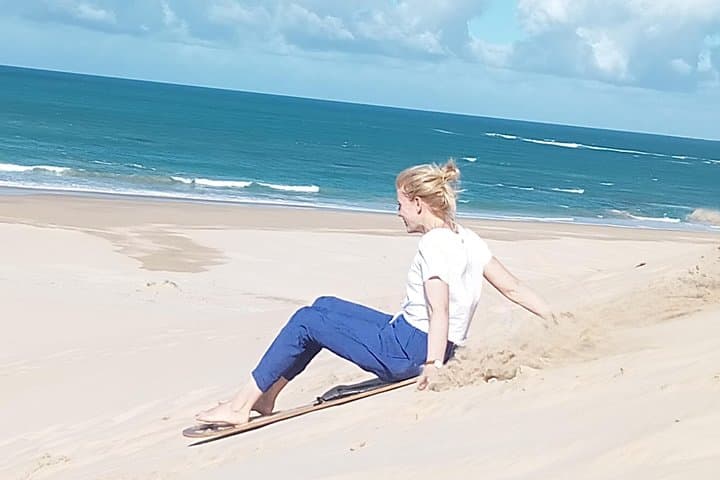
Practical guidance: tours run about two hours with instructor-led coaching and gear provided—standing and sitting boards are available. Small amounts of walking (≈300 m) over uneven sand link the beach parking to the dune base. The operator cancels sessions when dunes are wet after rain; drying can take a day or two. Expect moderate physical effort: short climbs, repeated runs, and occasional falls that are gentle on sand but abrasive on skin.
Timing matters—early morning or late afternoon offers softer sand and cooler temperatures. Protect exposed skin, carry water, and choose closed-toe shoes that shrug off sand. Spectators are welcome and parking is usually close to the beach access. For a fuller day, pair sandboarding with a lagoon kayak or a coastal surf session in nearby breaks.
moderate.
2 hours.
Moderately fit—able to walk short distances on uneven sand and do repeated short climbs
Sandboarding is suspended until dunes dry—this can take a day or two after heavy rain because wet sand doesn’t slide safely.
No—an instructor provides basic coaching and both standing and sitting boards are available for beginners.
Bookings typically require a minimum of two people; operators may set age bands—check at booking for exact limits.
No—uneven dune terrain and a short 300 m walk to the dune base make it unsuitable for wheelchairs or significant walking disabilities.
Jeffreys Bay grew from a fishing community into a surf and coastal recreation town; the coastline shows both indigenous shell middens and modern recreational use.
Dune vegetation is delicate—stay on marked access routes, avoid trampling foredunes, and pack out all waste to protect nesting birds and stabilize sand.
All Africa Adventures operates guided outdoor trips and adventures with an emphasis on safety, stewardship, and memorable experiences.
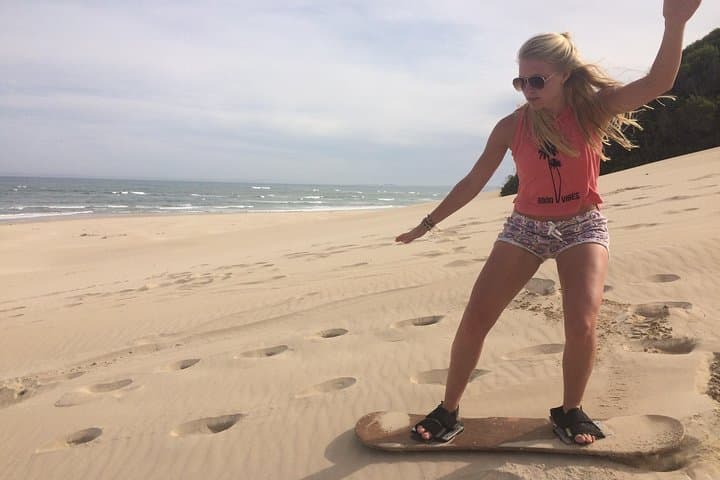
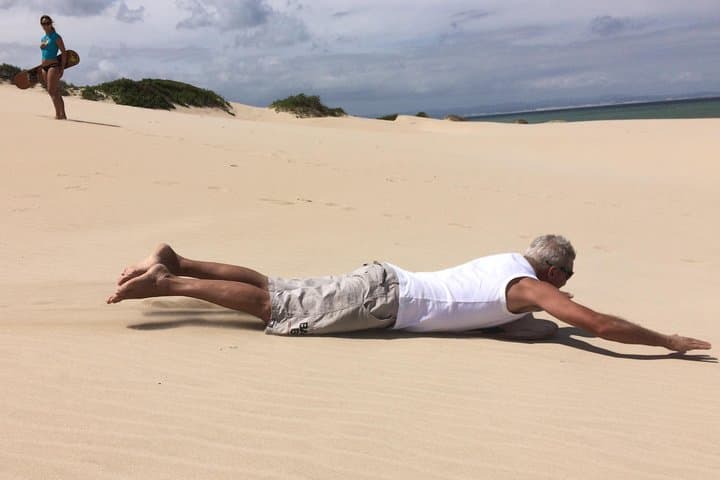
The wind organizes the sand into ripples that flash like bright fish scales as you climb—two steps forward, one sliding back—toward a slope shaped by the Indian Ocean’s breath. At the top, the dune leans into the beach and dares you: a steep, clean face waiting for a run. You push off and the board carries you, sand hissing beneath, surf and sky widening to the horizon.
The wind organizes the sand into ripples that flash like bright fish scales as you climb—two steps forward, one sliding back—toward a slope shaped by the Indian Ocean’s breath. At the top, the dune leans into the beach and dares you: a steep, clean face waiting for a run. You push off and the board carries you, sand hissing beneath, surf and sky widening to the horizon.
Jeffreys Bay began as a simple fishing village and grew into a surf and coastal-recreation hub; the dunes themselves are recent Holocene deposits—windblown sand building over years where rivers meet the sea. Local culture mixes Afrikaans fishing-town grit with surfing subculture; you’ll often see surfers, shell collectors, and fishers sharing the same morning light.
Practical guidance: tours run about two hours with instructor-led coaching and gear provided—standing and sitting boards are available. Small amounts of walking (≈300 m) over uneven sand link the beach parking to the dune base. The operator cancels sessions when dunes are wet after rain; drying can take a day or two. Expect moderate physical effort: short climbs, repeated runs, and occasional falls that are gentle on sand but abrasive on skin.
Timing matters—early morning or late afternoon offers softer sand and cooler temperatures. Protect exposed skin, carry water, and choose closed-toe shoes that shrug off sand. Spectators are welcome and parking is usually close to the beach access. For a fuller day, pair sandboarding with a lagoon kayak or a coastal surf session in nearby breaks.