THE ADVENTURE COLLECTIVE® · Independent discovery and booking for outdoor travel

Ride wind‑shaped dunes with Table Mountain on the horizon during a two‑hour sandboarding session near Cape Town. Guided runs, waxed boards and local insight make this an accessible coastal thrill with big photographic payoff.
Ride wind‑shaped dunes with Table Mountain on the horizon during a two‑hour sandboarding session near Cape Town. Guided runs, waxed boards and local insight make this an accessible coastal thrill with big photographic payoff.
The wind cuts across the crest of a coastal dune and the city’s silhouette—Table Mountain—hovers on the horizon. You strap into a sandboard, feel the grain shift beneath your feet, and push off: the dune pitches steeply, the board hums, and gravity does the rest. Runs are short and punchy; between laps guides point out angles that give faster glides and spots that frame Table Mountain for photos.
Verified experiences and guided adventures in the surrounding area.
Operated by ATLANTIS DUNES SANDBOARDING · Atlantis, Western Cape
The wind cuts across the crest of a coastal dune and the city’s silhouette—Table Mountain—hovers on the horizon. You strap into a sandboard, feel the grain shift beneath your feet, and push off: the dune pitches steeply, the board hums, and gravity does the rest. Runs are short and punchy; between laps guides point out angles that give faster glides and spots that frame Table Mountain for photos.
This stretch of Atlantic-facing dunes belongs to the greater West Coast coastal plain, a shifting landscape shaped by ocean winds and ancient sand deposits. The area sits on Cape Flats sand overlying older Table Mountain sandstone, and the human story ranges from Khoikhoi coastal use to 20th‑century development of the nearby Atlantis township. The dunes now attract adventure visitors while supporting fragile fynbos and shore-bird habitat.
Practical side: sessions are typically two hours with instructor-led briefings, waxed boards, and multiple runs for practice. Terrain is loose sand—expect short climbs between descents rather than long hikes. Timing matters: mornings and late afternoons have softer light and cooler winds; high summer midday can be hot and windy. Bring sun protection, a full water bottle, and shoes that shed sand easily. Follow guides’ instructions to protect dune vegetation and avoid trampling stabilised areas.
For photographers, the juxtaposition of white sand, blue sea, and Table Mountain makes low-angle light most dramatic. For first-timers, controlled, repeated descents build confidence quickly—this is an accessible rush with clear safety routines and real views of Cape Town from a rare, sandy vantage.
easy.
2 hours.
Light aerobic fitness; able to walk up steep, short dune faces repeatedly
No—sessions include instruction and practice runs suitable for first-timers and intermediates.
Closed-toe shoes, comfortable activewear that can get sandy, a hat, and layers for wind.
The tour allows a range of ages but requires basic mobility for dune climbs; check operator age policies and disclose health conditions.
Operators may cancel for high winds or rain—bookings usually allow refunds if cancelled 24 hours ahead.
The coastal dunes are part of the West Coast sand plain; nearby Atlantis developed in the 1970s and the landscape holds traces of earlier Khoikhoi coastal use.
Dunes host fragile fynbos and are vulnerable to erosion—stay on designated routes, avoid trampling vegetation, and pack out all waste.
ATLANTIS DUNES SANDBOARDING operates guided outdoor trips and adventures with an emphasis on safety, stewardship, and memorable experiences.
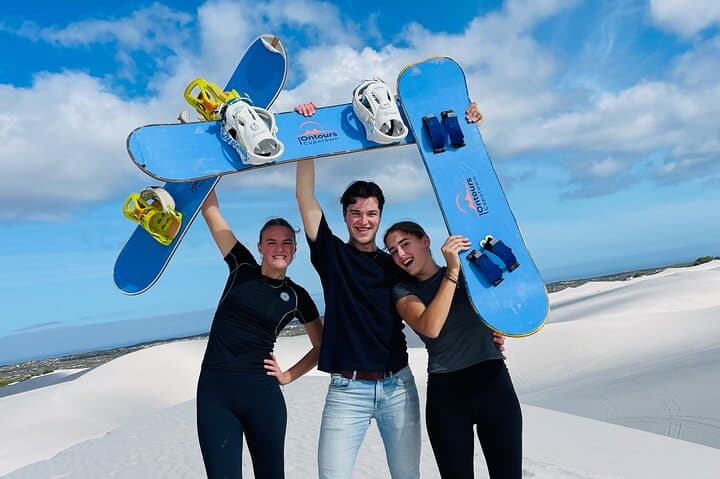
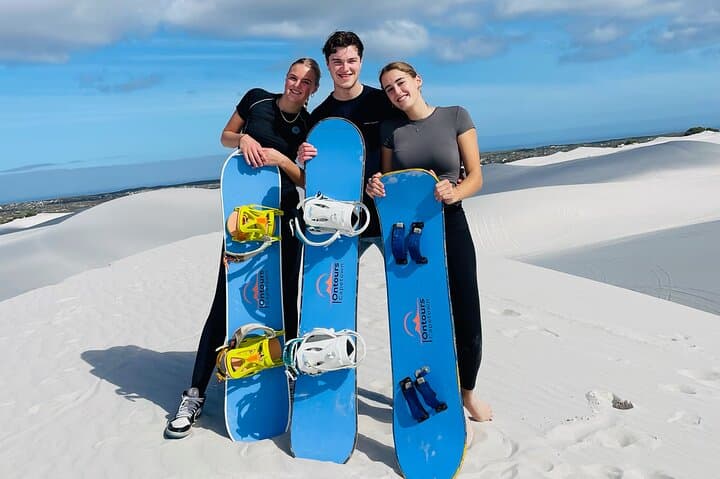
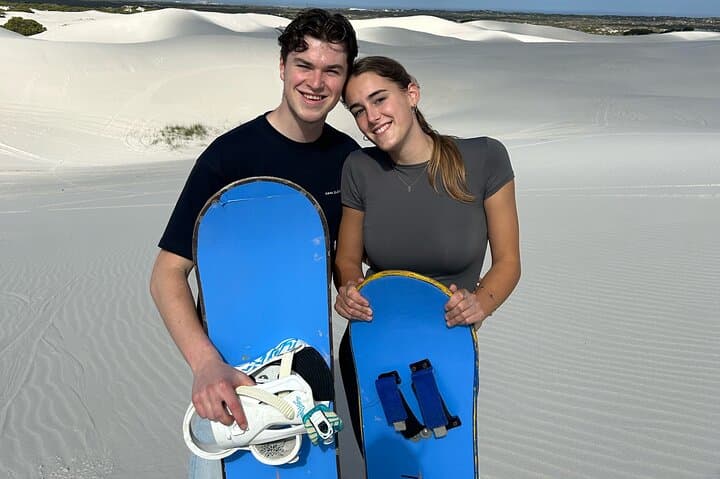
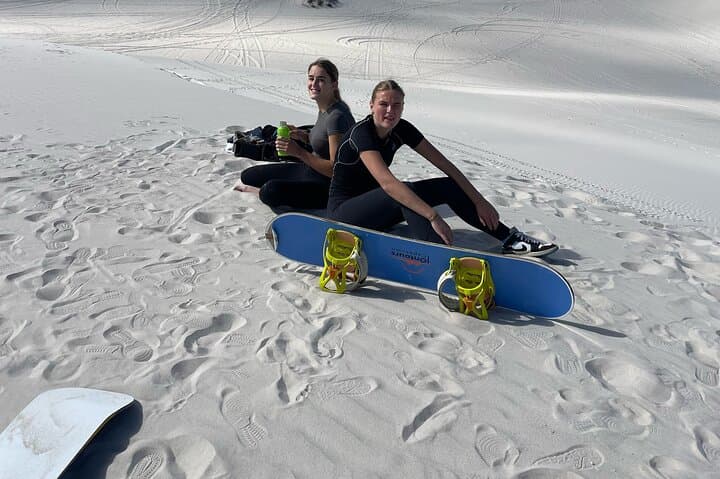
The wind cuts across the crest of a coastal dune and the city’s silhouette—Table Mountain—hovers on the horizon. You strap into a sandboard, feel the grain shift beneath your feet, and push off: the dune pitches steeply, the board hums, and gravity does the rest. Runs are short and punchy; between laps guides point out angles that give faster glides and spots that frame Table Mountain for photos.
The wind cuts across the crest of a coastal dune and the city’s silhouette—Table Mountain—hovers on the horizon. You strap into a sandboard, feel the grain shift beneath your feet, and push off: the dune pitches steeply, the board hums, and gravity does the rest. Runs are short and punchy; between laps guides point out angles that give faster glides and spots that frame Table Mountain for photos.
This stretch of Atlantic-facing dunes belongs to the greater West Coast coastal plain, a shifting landscape shaped by ocean winds and ancient sand deposits. The area sits on Cape Flats sand overlying older Table Mountain sandstone, and the human story ranges from Khoikhoi coastal use to 20th‑century development of the nearby Atlantis township. The dunes now attract adventure visitors while supporting fragile fynbos and shore-bird habitat.
Practical side: sessions are typically two hours with instructor-led briefings, waxed boards, and multiple runs for practice. Terrain is loose sand—expect short climbs between descents rather than long hikes. Timing matters: mornings and late afternoons have softer light and cooler winds; high summer midday can be hot and windy. Bring sun protection, a full water bottle, and shoes that shed sand easily. Follow guides’ instructions to protect dune vegetation and avoid trampling stabilised areas.
For photographers, the juxtaposition of white sand, blue sea, and Table Mountain makes low-angle light most dramatic. For first-timers, controlled, repeated descents build confidence quickly—this is an accessible rush with clear safety routines and real views of Cape Town from a rare, sandy vantage.