THE ADVENTURE COLLECTIVE® · Independent discovery and booking for outdoor travel

Strap in and surf wind-sculpted dunes with Table Mountain on the horizon. This two‑hour sandboarding session at Atlantis Dunes pairs easy-to-learn technique with coastal views and practical local knowledge.
Strap in and surf wind-sculpted dunes with Table Mountain on the horizon. This two‑hour sandboarding session at Atlantis Dunes pairs easy-to-learn technique with coastal views and practical local knowledge.
The first thing you notice at Atlantis Dunes is how the sand moves — not as a static sea but as a living surface that shifts underfoot and reshapes itself with every breath of wind. Guides gather by a white bus in the lot, call out for Gregg, strap boards to eager hands, and lead groups up the nearest slope. From the crest, Table Mountain sits far to the south, a steady, blue-gray presence that makes the dunes feel like an inland surf break cut out of the West Coast.
Verified experiences and guided adventures in the surrounding area.
Operated by Adventure Cape Town · Atlantis, Western Cape
The first thing you notice at Atlantis Dunes is how the sand moves — not as a static sea but as a living surface that shifts underfoot and reshapes itself with every breath of wind. Guides gather by a white bus in the lot, call out for Gregg, strap boards to eager hands, and lead groups up the nearest slope. From the crest, Table Mountain sits far to the south, a steady, blue-gray presence that makes the dunes feel like an inland surf break cut out of the West Coast.
These dunes are young in geological terms: windblown sands deposited over millennia where the Cape’s coastal currents and shifting shorelines meet. Local farmers and developers once saw little value in the rippled hills; today they’re a public playground and a practical example of the region’s delicate fynbos and coastal dynamics. The dunes sit within the broader context of the West Coast’s Mediterranean climate — wet winters, dry summers — and the riding season syncs with those rhythms.
Culturally, Atlantis is a working town north of Cape Town with an industrial past and a resilient community. Sandboarding tours blend that local grit with outdoor sport tourism: guides often live nearby and know the best lines, the quiet early-morning dunes, and where to catch a view of the mountain framed by sand.
What you get is straightforward: two hours of instruction, runs down broad powdery faces, and the odd sprint back up for another run. The ride itself is less about high speeds and more about flow — choosing a line, leaning into the slope, and using your legs to steer. Equipment is provided, so your job is simply to arrive ready to move.
Practicalities matter here. The sand is deep and walking uphill is aerobic; expect heart-rate spikes even on a short session. Mornings are cooler and the wind is usually lighter — those make for the best conditions and cleaner photos. Wear closed shoes that can handle hot sand, a hat, and sunscreen; carry water and a light wind layer. Booking is instant with a 24-hour cancellation window; tours meet at the car park where the white bus or a white Ford Ranger will be waiting.
Conservation is part of the rhythm: dunes host fragile vegetation and nesting birds, so stick to the routes your guide sets and avoid trampling fynbos patches. After the final run, many riders head west to Melkbosstrand or back toward Cape Town for a cold beer and a long look at the coastline.
Sandboarding at Atlantis is a short, sharp taste of Cape Town’s wild edge — athletic, accessible, and rooted in a landscape that both invites play and asks for care.
moderate.
2 hours.
Moderate fitness; expect repeated uphill walks on loose sand and short bursts of exertion.
No — guides provide a briefing and demonstrations; beginners can learn basic stance and turns during the two-hour session.
The tour includes sandboard equipment and instruction; meet at the designated car park where the white bus or ranger will collect participants.
The activity is suitable for many ages, but walking up dunes can be strenuous; consult guides if you have mobility concerns or medical conditions.
Early morning or late afternoon for softer light, lighter winds, and more comfortable temperatures.
Yes — full refund if you cancel at least 24 hours before the scheduled departure time.
Not recommended for pregnant travelers, people with serious heart or spinal conditions, or those unable to walk on uneven terrain.
The dunes are wind-deposited coastal sands shaped over centuries; the nearby town of Atlantis developed as an industrial and residential hub north of Cape Town.
Dune vegetation is fragile; tours reduce impact by using guide-selected routes — avoid off-route walking and pack out trash.
Adventure Cape Town operates guided outdoor trips and adventures with an emphasis on safety, stewardship, and memorable experiences.
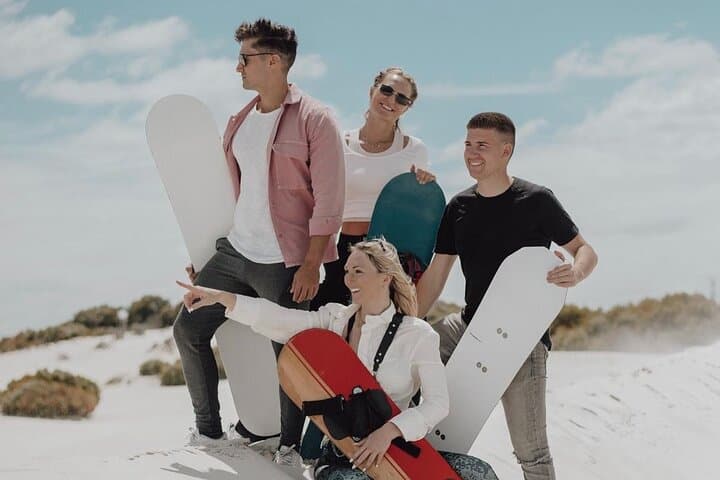
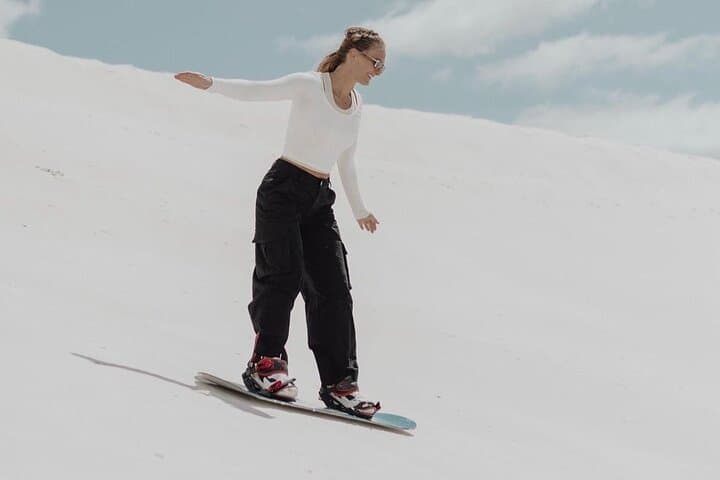


The first thing you notice at Atlantis Dunes is how the sand moves — not as a static sea but as a living surface that shifts underfoot and reshapes itself with every breath of wind. Guides gather by a white bus in the lot, call out for Gregg, strap boards to eager hands, and lead groups up the nearest slope. From the crest, Table Mountain sits far to the south, a steady, blue-gray presence that makes the dunes feel like an inland surf break cut out of the West Coast.
The first thing you notice at Atlantis Dunes is how the sand moves — not as a static sea but as a living surface that shifts underfoot and reshapes itself with every breath of wind. Guides gather by a white bus in the lot, call out for Gregg, strap boards to eager hands, and lead groups up the nearest slope. From the crest, Table Mountain sits far to the south, a steady, blue-gray presence that makes the dunes feel like an inland surf break cut out of the West Coast.
These dunes are young in geological terms: windblown sands deposited over millennia where the Cape’s coastal currents and shifting shorelines meet. Local farmers and developers once saw little value in the rippled hills; today they’re a public playground and a practical example of the region’s delicate fynbos and coastal dynamics. The dunes sit within the broader context of the West Coast’s Mediterranean climate — wet winters, dry summers — and the riding season syncs with those rhythms.
Culturally, Atlantis is a working town north of Cape Town with an industrial past and a resilient community. Sandboarding tours blend that local grit with outdoor sport tourism: guides often live nearby and know the best lines, the quiet early-morning dunes, and where to catch a view of the mountain framed by sand.
What you get is straightforward: two hours of instruction, runs down broad powdery faces, and the odd sprint back up for another run. The ride itself is less about high speeds and more about flow — choosing a line, leaning into the slope, and using your legs to steer. Equipment is provided, so your job is simply to arrive ready to move.
Practicalities matter here. The sand is deep and walking uphill is aerobic; expect heart-rate spikes even on a short session. Mornings are cooler and the wind is usually lighter — those make for the best conditions and cleaner photos. Wear closed shoes that can handle hot sand, a hat, and sunscreen; carry water and a light wind layer. Booking is instant with a 24-hour cancellation window; tours meet at the car park where the white bus or a white Ford Ranger will be waiting.
Conservation is part of the rhythm: dunes host fragile vegetation and nesting birds, so stick to the routes your guide sets and avoid trampling fynbos patches. After the final run, many riders head west to Melkbosstrand or back toward Cape Town for a cold beer and a long look at the coastline.
Sandboarding at Atlantis is a short, sharp taste of Cape Town’s wild edge — athletic, accessible, and rooted in a landscape that both invites play and asks for care.