THE ADVENTURE COLLECTIVE® · Independent discovery and booking for outdoor travel

Spend a day away from the city on a guided tour into Sandankyo Valley — a 13km river-cut gorge with five waterfalls, promenades and a short boat ride. This small-group trip balances easy walking with focused nature viewing across all four seasons.
Spend a day away from the city on a guided tour into Sandankyo Valley — a 13km river-cut gorge with five waterfalls, promenades and a short boat ride. This small-group trip balances easy walking with focused nature viewing across all four seasons.
A morning bus eases out of Hiroshima and climbs toward a gorge where the river seems to have a personality of its own — patient, insistent, cutting channels through bedrock and marshaling pools beneath five distinct waterfalls. On this small-group, nine-hour outing you spend time walking an established promenade and riding a short boat, the slow current revealing bands of rock and forested slopes that change color with each season.
Verified experiences and guided adventures in the surrounding area.
Operated by Beauty of Japan · Akiota, Hiroshima Prefecture
A morning bus eases out of Hiroshima and climbs toward a gorge where the river seems to have a personality of its own — patient, insistent, cutting channels through bedrock and marshaling pools beneath five distinct waterfalls. On this small-group, nine-hour outing you spend time walking an established promenade and riding a short boat, the slow current revealing bands of rock and forested slopes that change color with each season.
Sandankyo's story is literal: the Shibaki River carved the 13-kilometer ravine over millennia. The area was designated a scenic natural monument in 1925, and the promenade and boat access were later developed to allow respectful viewing. Geologically the gorge exposes a cross-section of river-polished rock faces and terraces; culturally the valley has long been a rural retreat for Hiroshima residents, celebrated for spring blooms, summer greenery, autumn leaves and quiet winter light.
Expect easy walking on maintained paths punctuated by boardwalks and steps; the boat offers a low-impact close-up of cascades and reflective pools. Practical notes: the tour is suitable for most abilities but includes several short stair sections and uneven surfaces, so solid footwear matters. Carry water, a light waterproof layer, and a camera with a mid-zoom — compositions favor reflections and tight canyon scenes. Timing makes a difference: fall foliage and spring fresh leaf are peak visuals, while summer is lush and often humid. With a maximum of six travelers per departure, the experience feels intentional rather than crowded, giving you space to hear the river dare you forward and feel the valley respond.
easy.
9 hours.
Casual to moderate: suitable for most people who can walk for several hours with short stair sections; not strenuous.
Most tours include round-trip transport by bus from central Hiroshima; independent travelers can take trains and a local bus service to Akiota, but schedules are less frequent.
Yes — the itinerary includes a short boat segment on the Shibaki River that gives close views of waterfalls and canyon walls.
Yes — the operator notes the tour is suitable for ages six and up and is designed for most fitness levels, though some stairs and uneven surfaces are present.
Wear comfortable, closed-toe shoes with good grip, layers including a waterproof, sun protection, a water bottle, and any snacks you need; insect repellent is useful in warmer months.
Sandankyo was designated a scenic natural spot in 1925; the promenade and boat access were later developed to allow controlled public access to the ravine.
Stick to marked paths and carry out waste; the valley's popularity requires visitors to minimize impact to protect river clarity and fragile plant communities.
Beauty of Japan operates guided outdoor trips and adventures with an emphasis on safety, stewardship, and memorable experiences.
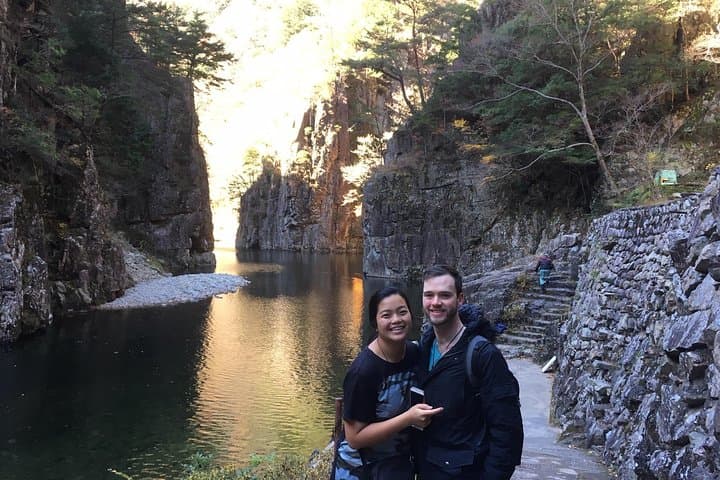
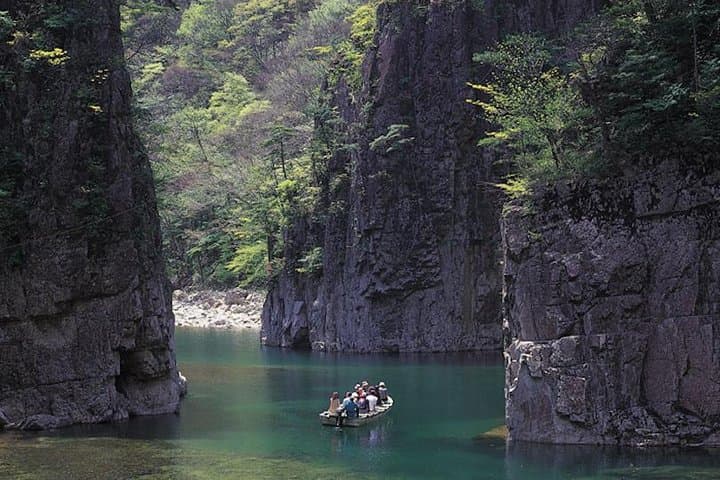
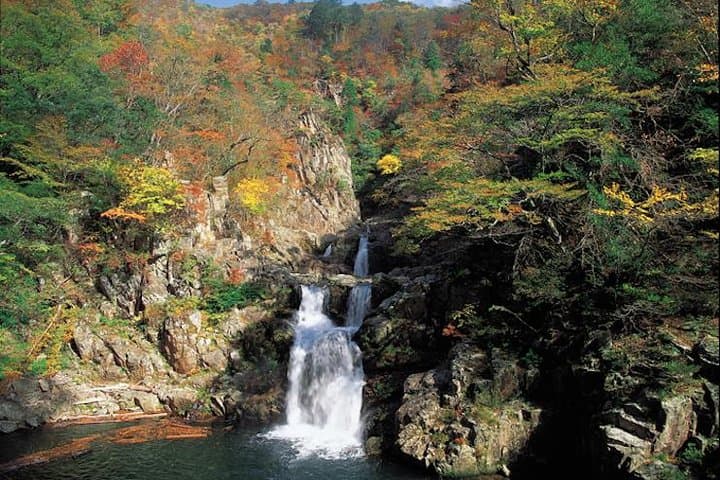
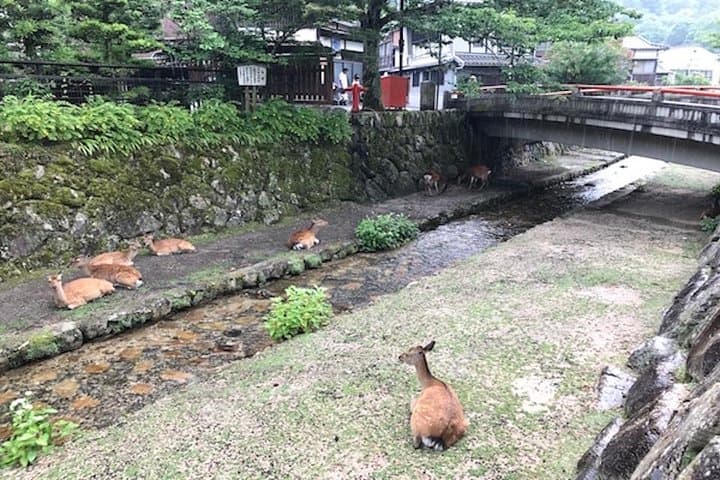
A morning bus eases out of Hiroshima and climbs toward a gorge where the river seems to have a personality of its own — patient, insistent, cutting channels through bedrock and marshaling pools beneath five distinct waterfalls. On this small-group, nine-hour outing you spend time walking an established promenade and riding a short boat, the slow current revealing bands of rock and forested slopes that change color with each season.
A morning bus eases out of Hiroshima and climbs toward a gorge where the river seems to have a personality of its own — patient, insistent, cutting channels through bedrock and marshaling pools beneath five distinct waterfalls. On this small-group, nine-hour outing you spend time walking an established promenade and riding a short boat, the slow current revealing bands of rock and forested slopes that change color with each season.
Sandankyo's story is literal: the Shibaki River carved the 13-kilometer ravine over millennia. The area was designated a scenic natural monument in 1925, and the promenade and boat access were later developed to allow respectful viewing. Geologically the gorge exposes a cross-section of river-polished rock faces and terraces; culturally the valley has long been a rural retreat for Hiroshima residents, celebrated for spring blooms, summer greenery, autumn leaves and quiet winter light.
Expect easy walking on maintained paths punctuated by boardwalks and steps; the boat offers a low-impact close-up of cascades and reflective pools. Practical notes: the tour is suitable for most abilities but includes several short stair sections and uneven surfaces, so solid footwear matters. Carry water, a light waterproof layer, and a camera with a mid-zoom — compositions favor reflections and tight canyon scenes. Timing makes a difference: fall foliage and spring fresh leaf are peak visuals, while summer is lush and often humid. With a maximum of six travelers per departure, the experience feels intentional rather than crowded, giving you space to hear the river dare you forward and feel the valley respond.