THE ADVENTURE COLLECTIVE® · Independent discovery and booking for outdoor travel

Stand where waves have carved stair-like cliffs and step into a cavern of maritime legend. This two-hour guided tour of Sandanbeki and Senjojiki pairs raw coastal geology with centuries-old local stories and practical tips for visiting safely.
Stand where waves have carved stair-like cliffs and step into a cavern of maritime legend. This two-hour guided tour of Sandanbeki and Senjojiki pairs raw coastal geology with centuries-old local stories and practical tips for visiting safely.
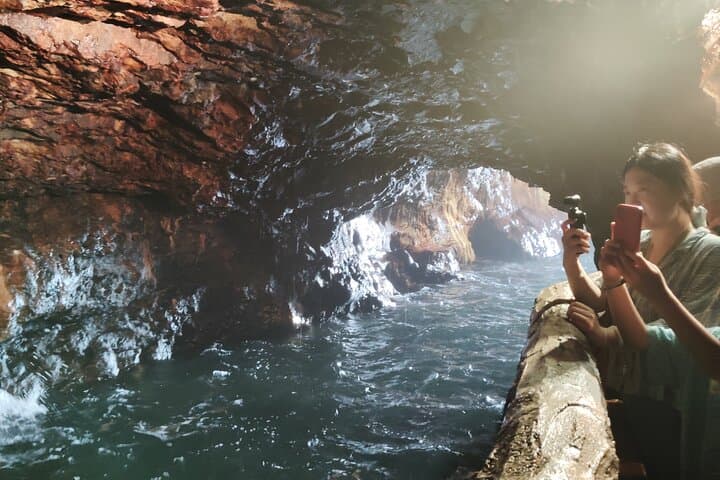
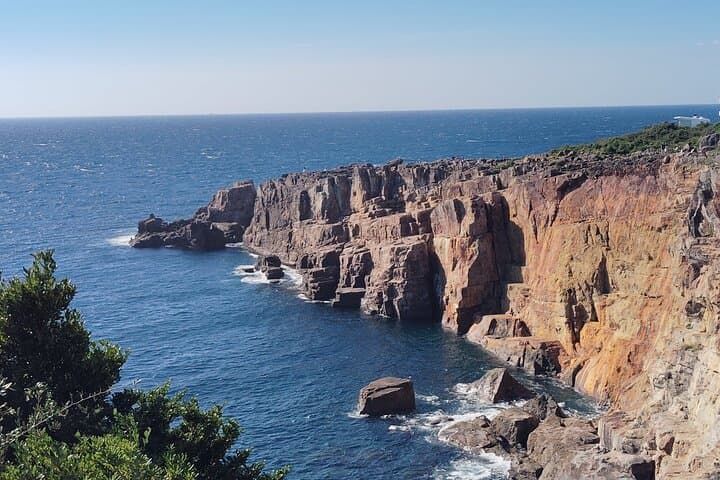
The wind carries a spray of salt as you step onto the rim of Sandanbeki, the cliff-face falling away in layered steps toward the Pacific. Waves strike rhythmically against the rock, and the guide’s voice threads history into the roar — a coastline that shaped sailors and stories. Descend into the cave and the ocean’s breath is immediate: cool, wet, and full of the sound of water meeting stone.
Verified experiences and guided adventures in the surrounding area.
Operated by DeepExperience · Shirahama, Wakayama Prefecture
The wind carries a spray of salt as you step onto the rim of Sandanbeki, the cliff-face falling away in layered steps toward the Pacific. Waves strike rhythmically against the rock, and the guide’s voice threads history into the roar — a coastline that shaped sailors and stories. Descend into the cave and the ocean’s breath is immediate: cool, wet, and full of the sound of water meeting stone.
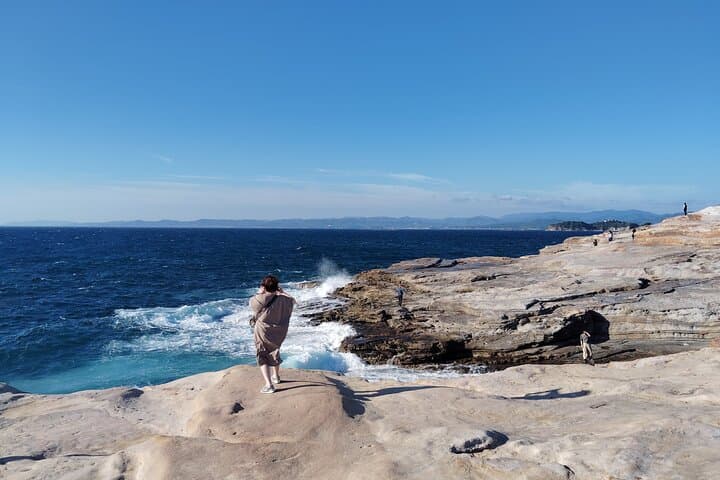
Geology here reads like a slow-motion sculpture. Sandstone beds, folded and eroded, form the “three-tiered” walls that give Sandanbeki its name; Senjojiki’s broad terrace — literally "a thousand tatami mats" — is a wave-polished platform that catches light and tide. Culturally, the site is tied to Kumano’s seafaring past: the cave is said to have sheltered naval units, and local folklore colors the landscape with human resilience against ocean force.
Expect two hours of guided walking with short stair descents and level stretches for photography. Terrain ranges from paved viewing points to uneven, water-splashed rock near the cave entrance; solid shoes and steady footing matter. Morning and late afternoon offer the best light and fewer crowds. Public transport reaches nearby Shirahama, and the tour’s moderate pace suits most fitness levels, though the cave includes steps and damp surfaces.
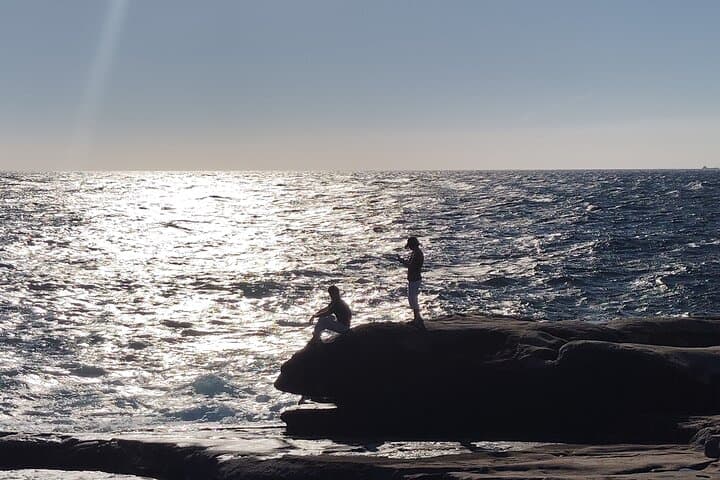
Practical tips: check tide times before visiting, keep to marked paths to reduce erosion, and carry a windproof layer — sea spray and sudden gusts are part of the experience. Whether you go for geology, history, or the windswept view, Sandanbeki and Senjojiki deliver hands-on coastal drama with straightforward logistics.
easy.
2 hours.
Light walking on mostly paved paths with some steps and uneven rock; suitable for most fitness levels.
The guided tour runs about two hours at a relaxed pace with time to view the cliff overlooks, enter the cave, and walk the Senjojiki terrace.
The cave includes stairs and some damp, uneven surfaces—visitors with limited mobility may find it challenging; contact the operator for details on alternatives.
Yes—Shirahama is the nearest town with train and bus links; local buses and short taxi rides connect to the Sandanbeki area.
Strong winds and high tides can make the terrace and cave entrance slippery; guides monitor conditions and the tour can be adjusted for safety.
Sandanbeki is historically linked to Kumano’s maritime culture; local lore says naval forces once sheltered in the cave, and the cliffs served as a coastal landmark for centuries.
The sandstone is vulnerable to erosion and trampling—stay on marked paths, avoid removing shells or rock, and follow guide instructions to limit impact.
DeepExperience operates guided outdoor trips and adventures with an emphasis on safety, stewardship, and memorable experiences.
The wind carries a spray of salt as you step onto the rim of Sandanbeki, the cliff-face falling away in layered steps toward the Pacific. Waves strike rhythmically against the rock, and the guide’s voice threads history into the roar — a coastline that shaped sailors and stories. Descend into the cave and the ocean’s breath is immediate: cool, wet, and full of the sound of water meeting stone.
The wind carries a spray of salt as you step onto the rim of Sandanbeki, the cliff-face falling away in layered steps toward the Pacific. Waves strike rhythmically against the rock, and the guide’s voice threads history into the roar — a coastline that shaped sailors and stories. Descend into the cave and the ocean’s breath is immediate: cool, wet, and full of the sound of water meeting stone.
Geology here reads like a slow-motion sculpture. Sandstone beds, folded and eroded, form the “three-tiered” walls that give Sandanbeki its name; Senjojiki’s broad terrace — literally "a thousand tatami mats" — is a wave-polished platform that catches light and tide. Culturally, the site is tied to Kumano’s seafaring past: the cave is said to have sheltered naval units, and local folklore colors the landscape with human resilience against ocean force.
Expect two hours of guided walking with short stair descents and level stretches for photography. Terrain ranges from paved viewing points to uneven, water-splashed rock near the cave entrance; solid shoes and steady footing matter. Morning and late afternoon offer the best light and fewer crowds. Public transport reaches nearby Shirahama, and the tour’s moderate pace suits most fitness levels, though the cave includes steps and damp surfaces.
Practical tips: check tide times before visiting, keep to marked paths to reduce erosion, and carry a windproof layer — sea spray and sudden gusts are part of the experience. Whether you go for geology, history, or the windswept view, Sandanbeki and Senjojiki deliver hands-on coastal drama with straightforward logistics.