THE ADVENTURE COLLECTIVE® · Independent discovery and booking for outdoor travel

Walk the ramparts and alleys of San Marino with a private guide who brings the oldest republic’s stones to life. This two-hour walk covers the Basilica, the Public Palace and two of Mount Titano’s towers—expect cobbles, stairs and panoramic views.
Walk the ramparts and alleys of San Marino with a private guide who brings the oldest republic’s stones to life. This two-hour walk covers the Basilica, the Public Palace and two of Mount Titano’s towers—expect cobbles, stairs and panoramic views.
You step through Porta San Francesco and the city exhales—stone streets narrowing, bell towers cutting the sky, and the ridge of Mount Titano pressing you into history. The guide sets the tempo: slow enough to listen for legends, brisk enough to reach two of the three ancient towers before the light shifts. Wind from the Adriatic teases the flags on Guaita and Falesia; below, terraces and tiled roofs slide toward the Italian plain.
Verified experiences and guided adventures in the surrounding area.
Operated by Opatrip.com San Marino · San Marino, San Marino
You step through Porta San Francesco and the city exhales—stone streets narrowing, bell towers cutting the sky, and the ridge of Mount Titano pressing you into history. The guide sets the tempo: slow enough to listen for legends, brisk enough to reach two of the three ancient towers before the light shifts. Wind from the Adriatic teases the flags on Guaita and Falesia; below, terraces and tiled roofs slide toward the Italian plain.
This compact city-state dates to Saint Marinus in the 4th century and claims continuous republican government since. The walk threads neo-classical and neo-renaissance architecture: the Basilica rebuilt in the early 19th century, the 19th-century Palazzo Pubblico that hosts civic ceremonies, and narrow alleys that reveal medieval inscriptions and the Crossbowmen’s Quarry where civic martial traditions live on. Geologically, Mount Titano is a limestone ridge—its crags shaped by time into defensive viewpoints that made San Marino defensible and fiercely independent.
Expect roughly 1.5–2 km of walking across uneven cobbles and stair climbs, with cumulative ascent of about 100–150 m; much of the route is uphill toward tower viewpoints. The private format means your guide focuses on stories—battle tactics, the small-state diplomacy—and time for photos at the towers’ ramparts.
Practical notes: wear sturdy shoes for cobbles and steps, bring water and sun protection, and allow two hours. Morning or late-afternoon slots reduce crowds and sharpen the light for views across the Adriatic plain. Carry ID—though border control with Italy is informal, stamps and souvenir counters await.
easy.
2 hours.
Suitable for most fitness levels—expect short stair climbs and uneven surfaces; basic mobility required
Yes—it's a private, paced walk suitable for families and older guests, but there are uneven cobbles and stairs; pushchairs and mobility aids may be difficult in places.
Admissions are typically not included; the itinerary focuses on exterior visits and guided history, but your guide can advise on ticketing for specific museums.
San Marino has an open border with Italy; formal passport control is rare, but carry valid ID or passport for stamping and practicalities.
Private tours are often available in multiple languages—confirm the guide language at booking for this specific departure.
San Marino traces its founding to Saint Marinus in AD 301 and prides itself on a continuous republican tradition that predates many modern states.
The historic center is protected as a UNESCO World Heritage site; visitors are asked to minimize litter, stick to marked paths, and respect restored stonework.
Opatrip.com San Marino operates guided outdoor trips and adventures with an emphasis on safety, stewardship, and memorable experiences.
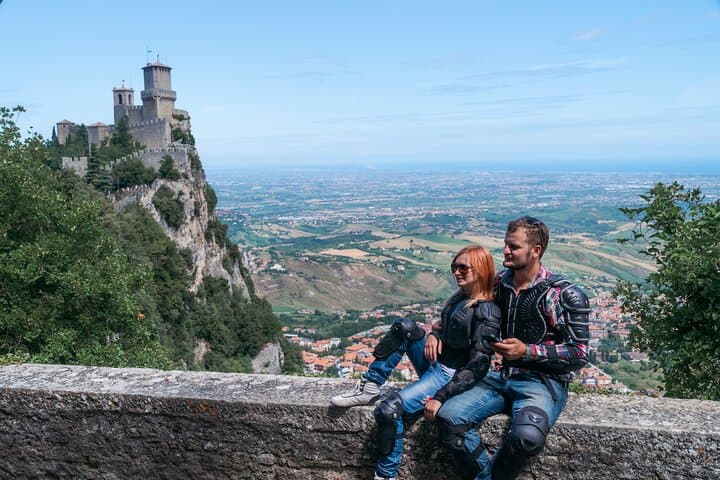
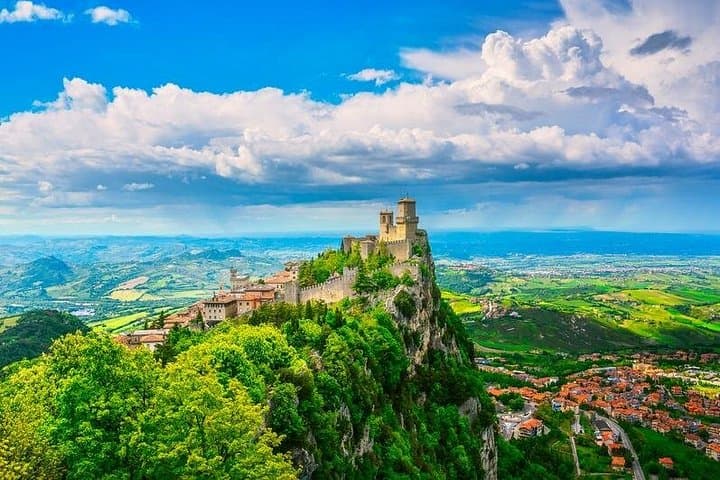
You step through Porta San Francesco and the city exhales—stone streets narrowing, bell towers cutting the sky, and the ridge of Mount Titano pressing you into history. The guide sets the tempo: slow enough to listen for legends, brisk enough to reach two of the three ancient towers before the light shifts. Wind from the Adriatic teases the flags on Guaita and Falesia; below, terraces and tiled roofs slide toward the Italian plain.
You step through Porta San Francesco and the city exhales—stone streets narrowing, bell towers cutting the sky, and the ridge of Mount Titano pressing you into history. The guide sets the tempo: slow enough to listen for legends, brisk enough to reach two of the three ancient towers before the light shifts. Wind from the Adriatic teases the flags on Guaita and Falesia; below, terraces and tiled roofs slide toward the Italian plain.
This compact city-state dates to Saint Marinus in the 4th century and claims continuous republican government since. The walk threads neo-classical and neo-renaissance architecture: the Basilica rebuilt in the early 19th century, the 19th-century Palazzo Pubblico that hosts civic ceremonies, and narrow alleys that reveal medieval inscriptions and the Crossbowmen’s Quarry where civic martial traditions live on. Geologically, Mount Titano is a limestone ridge—its crags shaped by time into defensive viewpoints that made San Marino defensible and fiercely independent.
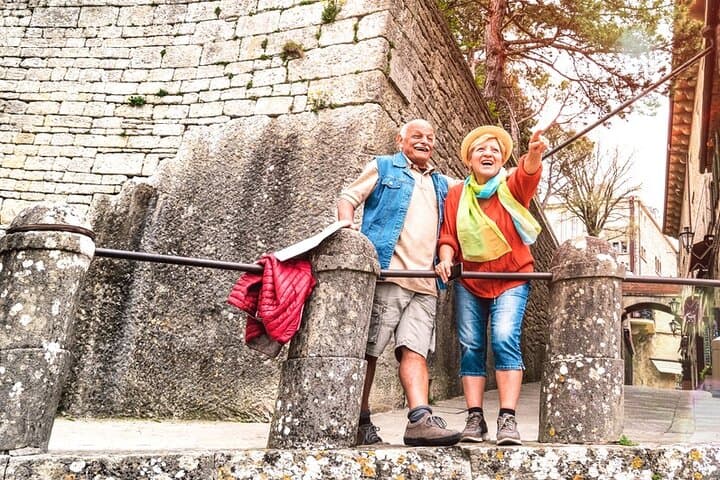
Expect roughly 1.5–2 km of walking across uneven cobbles and stair climbs, with cumulative ascent of about 100–150 m; much of the route is uphill toward tower viewpoints. The private format means your guide focuses on stories—battle tactics, the small-state diplomacy—and time for photos at the towers’ ramparts.
Practical notes: wear sturdy shoes for cobbles and steps, bring water and sun protection, and allow two hours. Morning or late-afternoon slots reduce crowds and sharpen the light for views across the Adriatic plain. Carry ID—though border control with Italy is informal, stamps and souvenir counters await.