THE ADVENTURE COLLECTIVE® · Independent discovery and booking for outdoor travel

Explore San Marino at your own pace with a GPS-linked audio and written guide. Walk Mount Titano’s towers, basilica and civic squares while learning local history, food tips, and lesser-known curiosities.
Explore San Marino at your own pace with a GPS-linked audio and written guide. Walk Mount Titano’s towers, basilica and civic squares while learning local history, food tips, and lesser-known curiosities.
You step through Porta del Paese and the stone underfoot narrows into centuries — a compact medieval town perched on a limestone spine that throws its views out over the Adriatic plain.
Verified experiences and guided adventures in the surrounding area.
Operated by Walking Cap · San Marino, San Marino
You step through Porta del Paese and the stone underfoot narrows into centuries — a compact medieval town perched on a limestone spine that throws its views out over the Adriatic plain.
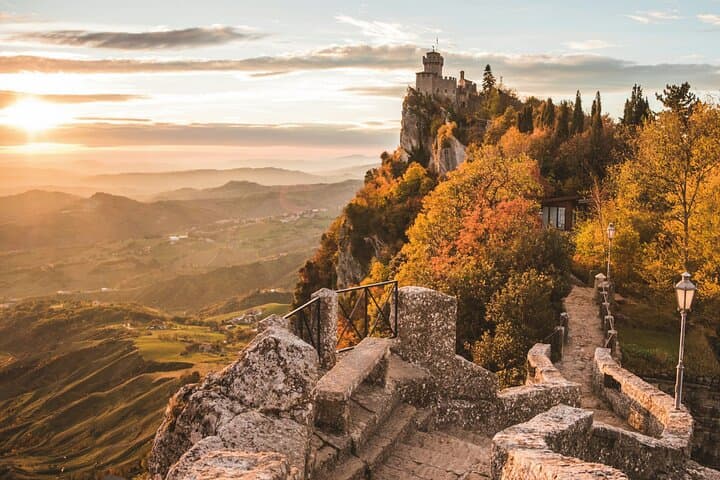
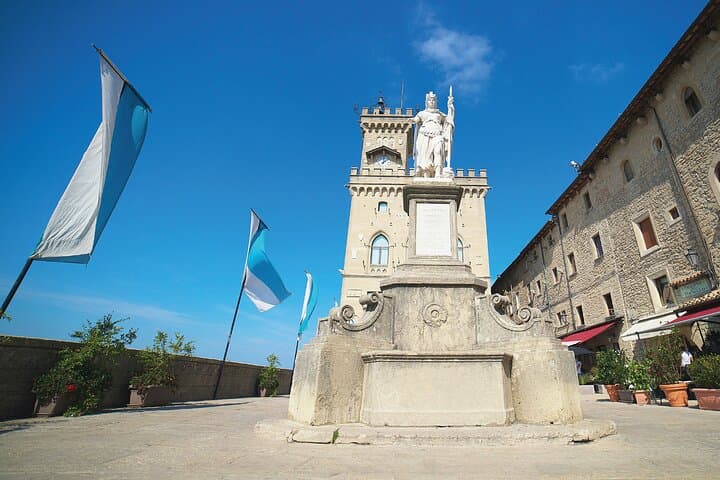
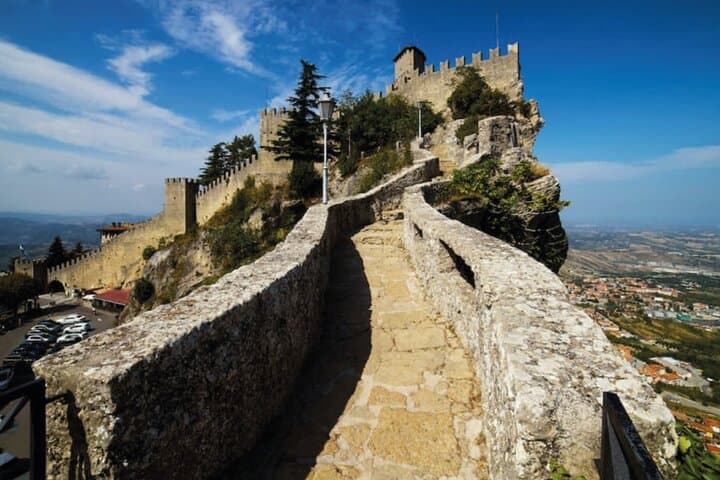
The route traces Mount Titano’s rims: from Cava dei Balestrieri, where the crossbow corps once mustered, to the Basilica del Santo with its relics, then across Piazza della Libertà with the Palazzo Pubblico. Three towers punctuate the skyline — Guaita, Cesta and Montale — each a chapter in a defensive story dating from the 11th–15th centuries. Geologically, Titano is a calcarenite ridge whose exposed rock and narrow alleys shape the city’s compact footprint and panoramic terraces.
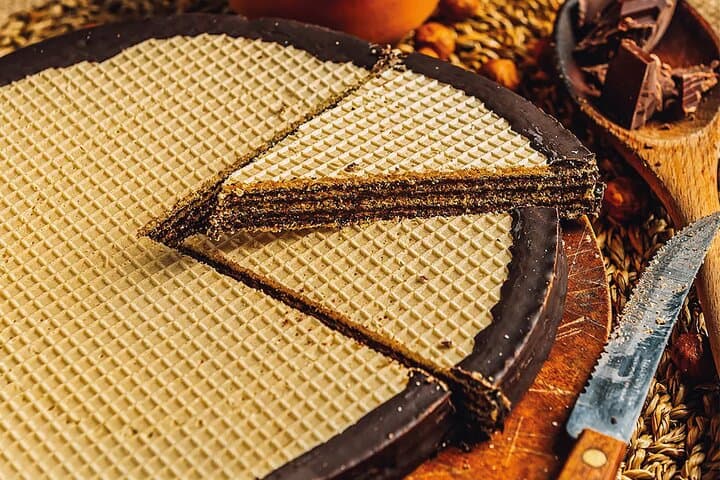
Culture here mixes civic pride and simple rituals: afternoon aperitivo in a small square, museum rooms that hold municipal treasures, and local bakeries selling ciambella and piada. The digital guide layers audio and written context onto GPS-linked routes, so you can pause at a tower, learn about guard routines, then continue without missing a fact.
Practical guidance: expect cobblestones and short, steep stairways — not technical, but uneven underfoot. Plan 3–4 hours to move at museum-friendly pace; start early to avoid midday crowds and heat in summer. Bring a charged smartphone, headphones and a refillable water bottle. Accessibility is reasonable along main routes, but some tower interiors have steps.
This self-guided format gives flexibility: linger at viewpoints, follow food tips in the guide, and use map connections to explore quieter lanes. For a compact day of history, views and local flavor, San Marino rewards a curious, deliberate pace.
easy.
3–4 hours.
Suitable for most fitness levels; requires standing and walking on uneven surfaces for several hours.
No — it’s a self-guided digital package with audio and written content you access on your phone.
The guide includes English, Spanish, Italian, German and French audio and text options.
No — the digital guide provides commentary and directions; museum entry fees are generally paid separately.
Main squares and some streets are accessible, but tower interiors and certain alleyways include steps and are not fully accessible.
San Marino claims continuity since the 4th century; its fortified position on Mount Titano helped preserve independence through medieval and modern eras.
Visitor pressure on narrow streets and historic structures is managed by controlled access and conservation of stonework; stick to marked paths and avoid climbing on ruins.
Walking Cap operates guided outdoor trips and adventures with an emphasis on safety, stewardship, and memorable experiences.
You step through Porta del Paese and the stone underfoot narrows into centuries — a compact medieval town perched on a limestone spine that throws its views out over the Adriatic plain.
You step through Porta del Paese and the stone underfoot narrows into centuries — a compact medieval town perched on a limestone spine that throws its views out over the Adriatic plain.
The route traces Mount Titano’s rims: from Cava dei Balestrieri, where the crossbow corps once mustered, to the Basilica del Santo with its relics, then across Piazza della Libertà with the Palazzo Pubblico. Three towers punctuate the skyline — Guaita, Cesta and Montale — each a chapter in a defensive story dating from the 11th–15th centuries. Geologically, Titano is a calcarenite ridge whose exposed rock and narrow alleys shape the city’s compact footprint and panoramic terraces.
Culture here mixes civic pride and simple rituals: afternoon aperitivo in a small square, museum rooms that hold municipal treasures, and local bakeries selling ciambella and piada. The digital guide layers audio and written context onto GPS-linked routes, so you can pause at a tower, learn about guard routines, then continue without missing a fact.
Practical guidance: expect cobblestones and short, steep stairways — not technical, but uneven underfoot. Plan 3–4 hours to move at museum-friendly pace; start early to avoid midday crowds and heat in summer. Bring a charged smartphone, headphones and a refillable water bottle. Accessibility is reasonable along main routes, but some tower interiors have steps.
This self-guided format gives flexibility: linger at viewpoints, follow food tips in the guide, and use map connections to explore quieter lanes. For a compact day of history, views and local flavor, San Marino rewards a curious, deliberate pace.