THE ADVENTURE COLLECTIVE® · Independent discovery and booking for outdoor travel

Spend two hours beneath a Bortle class 2 sky in Colorado’s San Luis Valley with astronomers who use lasers, binoculars, and electronically assisted telescopes. This guided session combines a constellation tour, live imaging, and a downloadable photo gallery.
Spend two hours beneath a Bortle class 2 sky in Colorado’s San Luis Valley with astronomers who use lasers, binoculars, and electronically assisted telescopes. This guided session combines a constellation tour, live imaging, and a downloadable photo gallery.
The air in the San Luis Valley is thin, cold, and astonishingly dark. Standing under a Bortle class 2 sky, constellations spill from horizon to horizon and the Milky Way pours like a pale river across the vault above. Guides point a green laser through that deep black, tracing Orion and Scorpius as weathered volcanic rims and high desert sage frame the view.
Verified experiences and guided adventures in the surrounding area.
Operated by Immersive Stargazing Experience: Explore the Night Sky · Alamosa, Colorado
The air in the San Luis Valley is thin, cold, and astonishingly dark. Standing under a Bortle class 2 sky, constellations spill from horizon to horizon and the Milky Way pours like a pale river across the vault above. Guides point a green laser through that deep black, tracing Orion and Scorpius as weathered volcanic rims and high desert sage frame the view.
The valley itself is geological history: a broad, high-altitude basin carved by the Rio Grande rift and once filled by Lake Alamosa at the end of the Pleistocene. Human stories are layered here too — ancestral Pueblo and Ute peoples navigated these plains long before homesteads spread across irrigated fields. Today, limited local lighting and wide-open horizons preserve near-pristine night skies that professional astronomers prize.
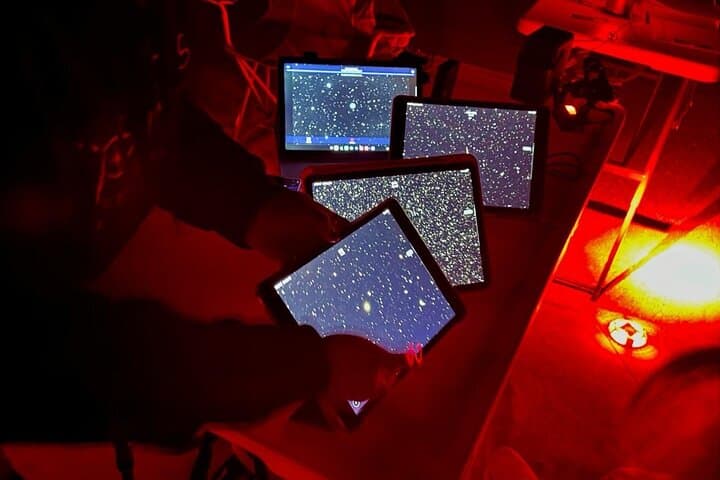
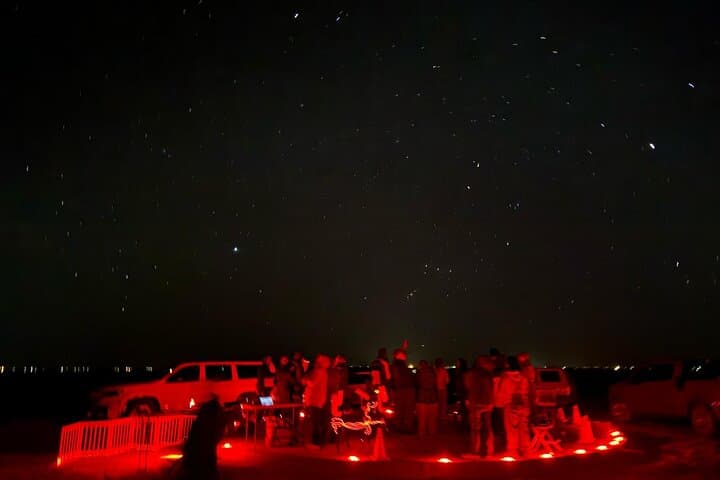
Expect a focused, two-hour session led by astronomers who alternate laser-guided tours and telescope views. Electronically assisted optics let the group see nebulae and galaxies on-screen in real time; photos taken during the session are available to download within 24 hours. The format accommodates questions, short walks to different viewing points, and hands-on time with binoculars and telescopes.
Practical notes: temperatures drop quickly after sunset, so insulated layers and a red-light headlamp are essential. Arrive early to complete a brief safety and orientation and to let your eyes dark-adapt. Facilities are basic — plan for restroom stops in town before the session. Bookings are manually confirmed and sales are final, so check weather forecasts and plan accordingly. For anyone wanting the night sky presented with scientific context and clear, powerful optics, this is a concise, high-value immersion into deep-sky observing.
easy.
2 hours.
Suitable for most ages and fitness levels; mostly standing and short, flat walks
The session runs approximately two hours and typically includes a brief orientation, a guided constellation tour, telescope viewing, and time for Q&A.
Operators note the event is weather dependent; however, booking terms state sales are final — confirm local weather before booking and contact the operator for the latest status.
Yes — the activity is physically easy with minimal walking; infants must sit on laps and service animals are permitted.
Yes — live images captured with electronically assisted telescopes are emailed or made available to download within 24 hours of the session.
The San Luis Valley sits within the Rio Grande rift and was once covered by Pleistocene Lake Alamosa; the region also holds a long history of Ute and Pueblo presence and agricultural settlement.
Light pollution control is a local priority — follow guides’ instructions on preserving dark conditions (no bright lights) and stay on existing paths to protect fragile high-desert plants.
Immersive Stargazing Experience: Explore the Night Sky operates guided outdoor trips and adventures with an emphasis on safety, stewardship, and memorable experiences.
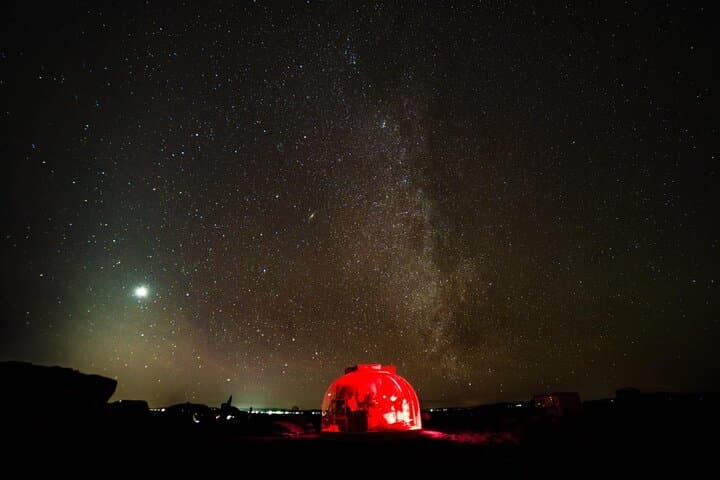

The air in the San Luis Valley is thin, cold, and astonishingly dark. Standing under a Bortle class 2 sky, constellations spill from horizon to horizon and the Milky Way pours like a pale river across the vault above. Guides point a green laser through that deep black, tracing Orion and Scorpius as weathered volcanic rims and high desert sage frame the view.
The air in the San Luis Valley is thin, cold, and astonishingly dark. Standing under a Bortle class 2 sky, constellations spill from horizon to horizon and the Milky Way pours like a pale river across the vault above. Guides point a green laser through that deep black, tracing Orion and Scorpius as weathered volcanic rims and high desert sage frame the view.
The valley itself is geological history: a broad, high-altitude basin carved by the Rio Grande rift and once filled by Lake Alamosa at the end of the Pleistocene. Human stories are layered here too — ancestral Pueblo and Ute peoples navigated these plains long before homesteads spread across irrigated fields. Today, limited local lighting and wide-open horizons preserve near-pristine night skies that professional astronomers prize.
Expect a focused, two-hour session led by astronomers who alternate laser-guided tours and telescope views. Electronically assisted optics let the group see nebulae and galaxies on-screen in real time; photos taken during the session are available to download within 24 hours. The format accommodates questions, short walks to different viewing points, and hands-on time with binoculars and telescopes.
Practical notes: temperatures drop quickly after sunset, so insulated layers and a red-light headlamp are essential. Arrive early to complete a brief safety and orientation and to let your eyes dark-adapt. Facilities are basic — plan for restroom stops in town before the session. Bookings are manually confirmed and sales are final, so check weather forecasts and plan accordingly. For anyone wanting the night sky presented with scientific context and clear, powerful optics, this is a concise, high-value immersion into deep-sky observing.