THE ADVENTURE COLLECTIVE® · Independent discovery and booking for outdoor travel

Spend a half day among Chiang Mai’s artisans in San Kamphaeng, watching parasols painted by hand, silk woven on traditional looms, and teak carved into furniture. This guided tour pairs live demonstrations with shopping opportunities and practical insight into Lanna craft traditions.
Spend a half day among Chiang Mai’s artisans in San Kamphaeng, watching parasols painted by hand, silk woven on traditional looms, and teak carved into furniture. This guided tour pairs live demonstrations with shopping opportunities and practical insight into Lanna craft traditions.
You step off an air‑conditioned minivan and the day stretches into color: lacquer glints on a table, parasol frames creak as a painter lifts a brush, and the scent of teak and dyes hangs in the warm northern Thai air.
Verified experiences and guided adventures in the surrounding area.
Operated by Sunleisure World · San Kamphaeng, Chiang Mai Province
You step off an air‑conditioned minivan and the day stretches into color: lacquer glints on a table, parasol frames creak as a painter lifts a brush, and the scent of teak and dyes hangs in the warm northern Thai air.
San Kamphaeng sits just east of Chiang Mai on the low Ping River plain—an area shaped by fertile alluvial soils and riverside trees that historically supplied mulberry, bamboo and teak for textiles, paper and woodcraft. The village grew into a handicraft hub during the 20th century as Lanna artisans adapted traditional techniques for markets, from hand‑painted umbrellas and Saa paper to silk weaving and fine woodcarving.
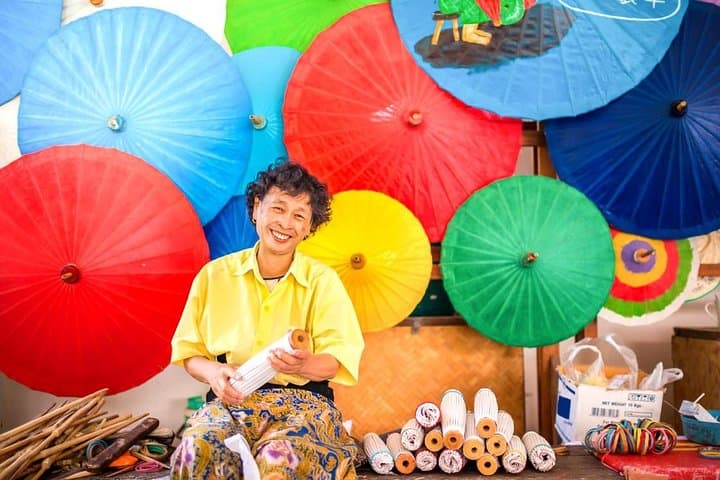
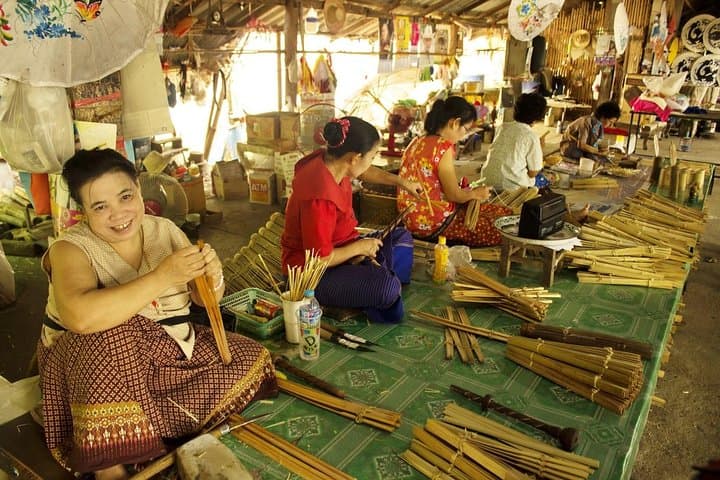
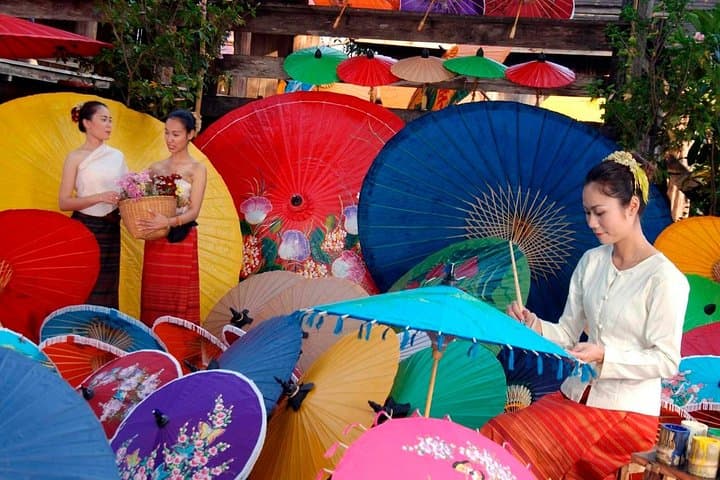
On a half‑day tour you move between small workshops and family studios, watching tools and hands translate local materials into high‑detail pieces. Demonstrations show umbrella stretching and silk weaving; galleries display costume embroidery and gemstone settings rooted in northern Thai motifs. Expect a mix of indoor demonstrations and open‑air work yards where dust and sunlight shape the rhythm.
Practical side: tours run about 3–4 hours with hotel pickup in Chiang Mai, so plan morning slots for cooler temperatures and clearer light for photos. Bring small bills for purchases, wear comfortable shoes for uneven shop floors, and allow time to ask artisans about materials and repair—many will talk craft provenance and care. Photography is usually fine but check before shooting close‑up of hands or patterns. Leave with both souvenirs and a clearer sense of how local resources and Lanna craft traditions continue to shape daily life here.
easy.
3–4 hours.
Minimal fitness needed; mostly standing and short walks between workshops
Pickup is provided from selected Chiang Mai hotels—confirm your pickup point when booking.
Some guides and studio owners speak basic English; guides will translate technical or cultural details when needed.
Yes—many studios sell finished pieces and small souvenirs on site; negotiate politely and carry cash.
Yes, the itinerary is stroller accessible, but some workshops have tight spaces or uneven surfaces—plan for brief lifts.
San Kamphaeng became a concentrated handicraft zone in the 20th century as Lanna artisans commercialized traditional umbrella making, silk weaving and woodcarving for regional markets.
Buying directly from artisan studios supports local livelihoods; avoid single-use plastic packaging and ask about natural dyes or sustainably sourced woods when shopping.
Sunleisure World operates guided outdoor trips and adventures with an emphasis on safety, stewardship, and memorable experiences.
You step off an air‑conditioned minivan and the day stretches into color: lacquer glints on a table, parasol frames creak as a painter lifts a brush, and the scent of teak and dyes hangs in the warm northern Thai air.
You step off an air‑conditioned minivan and the day stretches into color: lacquer glints on a table, parasol frames creak as a painter lifts a brush, and the scent of teak and dyes hangs in the warm northern Thai air.
San Kamphaeng sits just east of Chiang Mai on the low Ping River plain—an area shaped by fertile alluvial soils and riverside trees that historically supplied mulberry, bamboo and teak for textiles, paper and woodcraft. The village grew into a handicraft hub during the 20th century as Lanna artisans adapted traditional techniques for markets, from hand‑painted umbrellas and Saa paper to silk weaving and fine woodcarving.
On a half‑day tour you move between small workshops and family studios, watching tools and hands translate local materials into high‑detail pieces. Demonstrations show umbrella stretching and silk weaving; galleries display costume embroidery and gemstone settings rooted in northern Thai motifs. Expect a mix of indoor demonstrations and open‑air work yards where dust and sunlight shape the rhythm.
Practical side: tours run about 3–4 hours with hotel pickup in Chiang Mai, so plan morning slots for cooler temperatures and clearer light for photos. Bring small bills for purchases, wear comfortable shoes for uneven shop floors, and allow time to ask artisans about materials and repair—many will talk craft provenance and care. Photography is usually fine but check before shooting close‑up of hands or patterns. Leave with both souvenirs and a clearer sense of how local resources and Lanna craft traditions continue to shape daily life here.