THE ADVENTURE COLLECTIVE® · Independent discovery and booking for outdoor travel

Start at San Isidro’s bustling producers’ market and finish with a hands-on, private cooking class at Urban Kitchen in Miraflores. Learn local ingredients, cook alongside a chef and enjoy the meal you prepare in a five‑hour immersive experience.
Start at San Isidro’s bustling producers’ market and finish with a hands-on, private cooking class at Urban Kitchen in Miraflores. Learn local ingredients, cook alongside a chef and enjoy the meal you prepare in a five‑hour immersive experience.
Morning light slices between metal awnings as you step into San Isidro’s producers’ market—clutches of ají amarillo, plump camote, and sacks of quinoa crowd wooden stalls while a Peruvian chef points out the season’s best. The tour begins here, amid the cadence of hawkers and the scent of citrus, then moves to Miraflores’ Urban Kitchen where a compact, participative class turns those market finds into meal-ready techniques.
Verified experiences and guided adventures in the surrounding area.
Operated by LimaTours · Lima, Lima
Morning light slices between metal awnings as you step into San Isidro’s producers’ market—clutches of ají amarillo, plump camote, and sacks of quinoa crowd wooden stalls while a Peruvian chef points out the season’s best. The tour begins here, amid the cadence of hawkers and the scent of citrus, then moves to Miraflores’ Urban Kitchen where a compact, participative class turns those market finds into meal-ready techniques.
Peruvian cuisine is a living archive: Andean tubers and Amazonian fruits meet Spanish, African and Asian techniques brought across centuries of trade and migration. Geologically, Lima sits on the desert edge of the Pacific and beneath the rain shadow of the Andes, which concentrates distinct coastal seafood and highland produce into the country’s kitchens. Visiting a producers’ market puts you at the intersection of that natural and cultural story—local farmers, small-scale fish suppliers and artisanal vendors who feed the city.
Practical guidance: bring identification and confirm hotel pickup details ahead of time; operators require passport copies for tax records and coordinate pickup points for non-hotel stays. Wear closed shoes for market aisles and a light layer for coastal breeze in Miraflores. If you have dietary restrictions, notify organizers in advance—menus are adaptable but ingredients are fresh and pronounced.
Expect a 5-hour private experience: hands-on prep, a chef-led demo, and a communal lunch where you eat what you cooked. You leave not just with a meal but with a small cookbook, new techniques, and a clearer sense of how Peru’s geography shapes its food.
easy.
5 hours.
Suitable for most fitness levels; involves walking through market aisles and standing during a kitchen class
Yes—pickup and drop-off from hotels within the operator’s service area are included; private residences require prior coordination and a meeting point.
A professional bilingual guide (English and Spanish) is provided for the market visit and class.
Yes—inform the operator when booking so the chef can adapt recipes; some traditional ingredients may be suggested as substitutes.
The experience is suitable for most ages; infants must sit on an adult’s lap and adult supervision is required during hands-on cooking.
Peruvian gastronomy evolved from Andean staples and coastal seafood combined with Spanish, African and Asian culinary traditions brought during colonial and migration periods.
Many Lima chefs emphasize sustainable sourcing and reducing food waste; support small producers and avoid single-use plastics when possible.
LimaTours operates guided outdoor trips and adventures with an emphasis on safety, stewardship, and memorable experiences.

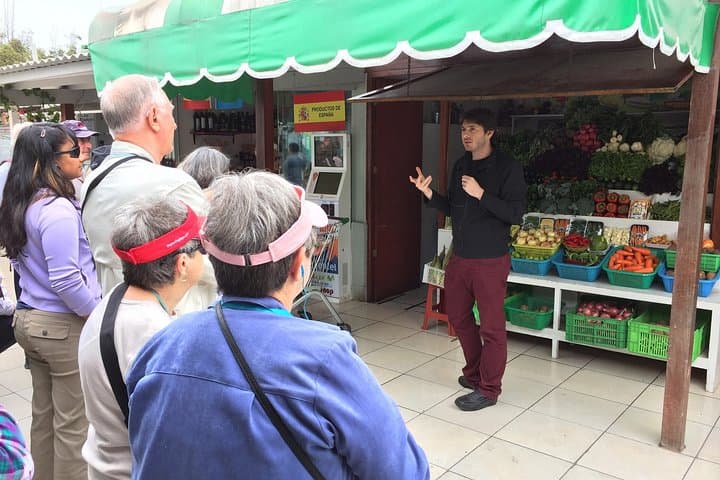


Morning light slices between metal awnings as you step into San Isidro’s producers’ market—clutches of ají amarillo, plump camote, and sacks of quinoa crowd wooden stalls while a Peruvian chef points out the season’s best. The tour begins here, amid the cadence of hawkers and the scent of citrus, then moves to Miraflores’ Urban Kitchen where a compact, participative class turns those market finds into meal-ready techniques.
Morning light slices between metal awnings as you step into San Isidro’s producers’ market—clutches of ají amarillo, plump camote, and sacks of quinoa crowd wooden stalls while a Peruvian chef points out the season’s best. The tour begins here, amid the cadence of hawkers and the scent of citrus, then moves to Miraflores’ Urban Kitchen where a compact, participative class turns those market finds into meal-ready techniques.
Peruvian cuisine is a living archive: Andean tubers and Amazonian fruits meet Spanish, African and Asian techniques brought across centuries of trade and migration. Geologically, Lima sits on the desert edge of the Pacific and beneath the rain shadow of the Andes, which concentrates distinct coastal seafood and highland produce into the country’s kitchens. Visiting a producers’ market puts you at the intersection of that natural and cultural story—local farmers, small-scale fish suppliers and artisanal vendors who feed the city.
Practical guidance: bring identification and confirm hotel pickup details ahead of time; operators require passport copies for tax records and coordinate pickup points for non-hotel stays. Wear closed shoes for market aisles and a light layer for coastal breeze in Miraflores. If you have dietary restrictions, notify organizers in advance—menus are adaptable but ingredients are fresh and pronounced.
Expect a 5-hour private experience: hands-on prep, a chef-led demo, and a communal lunch where you eat what you cooked. You leave not just with a meal but with a small cookbook, new techniques, and a clearer sense of how Peru’s geography shapes its food.