THE ADVENTURE COLLECTIVE® · Independent discovery and booking for outdoor travel

Blend history and geology on a full-day trip from Puerto Iguazú to the restored Jesuit settlement of San Ignacio Miní and the gem galleries of Wanda. Expect guided walks among sandstone ruins, a visit to artisanal yerba-mate processing, and hands-on time viewing amethyst and agate in working mines.
Blend history and geology on a full-day trip from Puerto Iguazú to the restored Jesuit settlement of San Ignacio Miní and the gem galleries of Wanda. Expect guided walks among sandstone ruins, a visit to artisanal yerba-mate processing, and hands-on time viewing amethyst and agate in working mines.
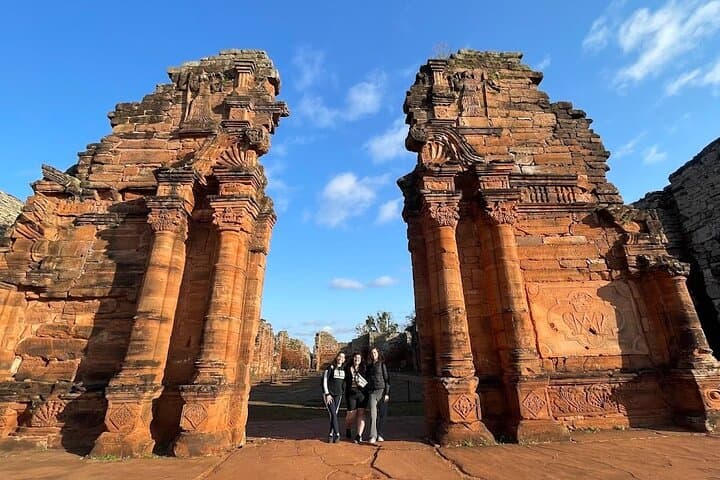
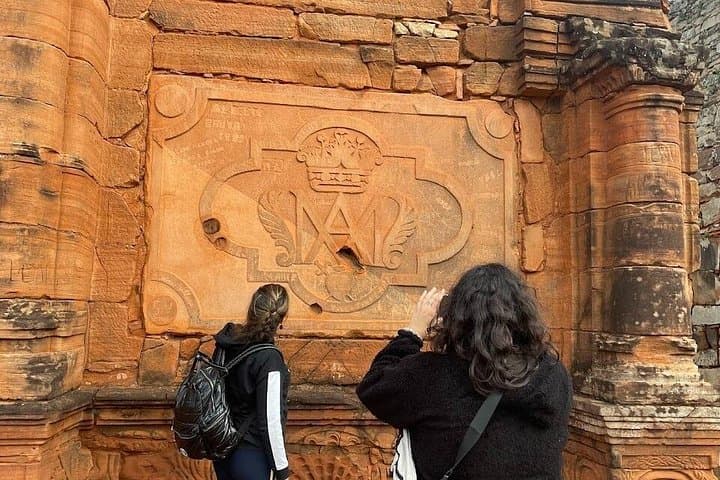
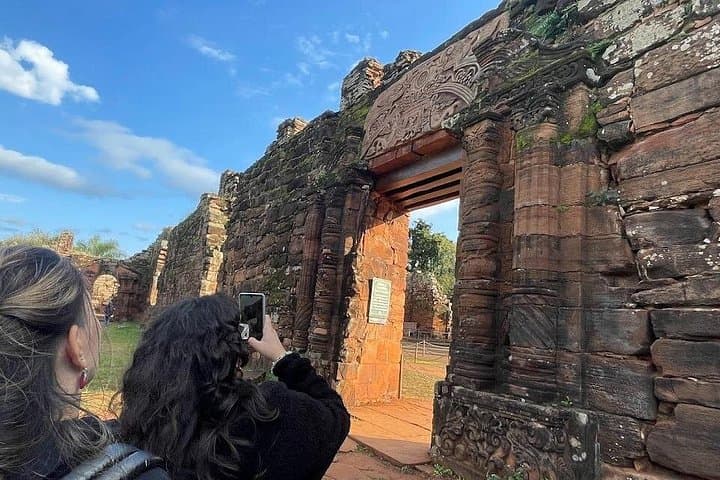
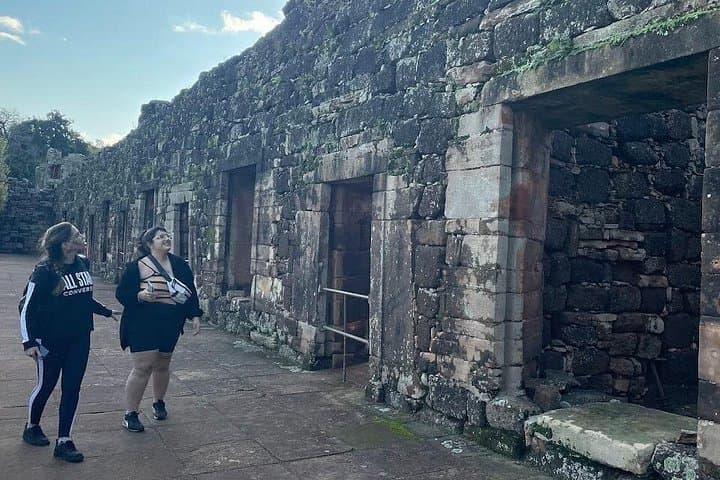
You step off the air-conditioned minibus into a humid pulse of subtropical forest and open sky — a day that threads colonial stonework with glittering mineral veins. Early light catches the carved sandstone walls of San Ignacio Miní, where restored church facades and rectangular plazas reveal the footprint of a 17th-century Jesuit mission. Later the road unspools toward Wanda, where carved galleries of amethyst and agate glint under workshop lamps.
Verified experiences and guided adventures in the surrounding area.
Operated by Tangol · Puerto Iguazú, Misiones
You step off the air-conditioned minibus into a humid pulse of subtropical forest and open sky — a day that threads colonial stonework with glittering mineral veins. Early light catches the carved sandstone walls of San Ignacio Miní, where restored church facades and rectangular plazas reveal the footprint of a 17th-century Jesuit mission. Later the road unspools toward Wanda, where carved galleries of amethyst and agate glint under workshop lamps.
San Ignacio Miní was founded in 1632 as part of a network of missions where Jesuit priests and Guaraní communities lived and worked side by side. The ruins are cut from local red sandstone; columns, courtyards and the cemetery document a blend of European layouts and indigenous craft. Wanda’s mines, by contrast, tell a geological story: hydrothermal pockets created valuable crystals — topaz, amethyst, and agate — now exposed in open pits and small galleries.
Culturally, expect a concise Spanish narration with moments of English explanation; local vendors offer handcrafted jewelry and mate traditions with roots in regional agriculture. Practically, this is a full-day, shared excursion from Puerto Iguazú (about 45–220 km depending on stops). Plan for mostly flat walking on uneven colonial stones and short stair sections at sites. Bring cash for purchases, a light rain shell for sudden showers, and insect repellent for forest edges. Expect long stretches in the vehicle between stops; mornings offer the best light for photography at the ruins and cooler temperatures for exploring the mines. Stick to marked paths at the archaeological site and follow guides when entering gem galleries to protect fragile structures and local working areas.
easy.
12 hours.
Suitable for most fitness levels; requires walking on uneven surfaces and short stair sections
No — the tour price typically includes guide and shared transfers; local site fees, purchases, and optional entry fees at mine shops are paid on-site.
The operator notes wheelchair accessibility, but parts of the ruins have uneven stone surfaces that may limit access; check in advance for specific assistance needs.
The tour is conducted in Spanish with brief English explanations given at strategic stops; large parts of the narration may be primarily Spanish.
Lunch is not listed as included; bring snacks or plan to buy a meal during the day—carry cash for smaller eateries in rural towns.
San Ignacio Miní was established by Jesuits in 1632 as a mission community where European and Guaraní practices intersected; its stone buildings reflect both imported plans and local materials.
The ruins are protected as archaeological heritage—stay on marked paths to prevent erosion. In Wanda, buy gems from reputable sellers and avoid pieces of unclear origin to discourage illegal extraction.
Tangol operates guided outdoor trips and adventures with an emphasis on safety, stewardship, and memorable experiences.
You step off the air-conditioned minibus into a humid pulse of subtropical forest and open sky — a day that threads colonial stonework with glittering mineral veins. Early light catches the carved sandstone walls of San Ignacio Miní, where restored church facades and rectangular plazas reveal the footprint of a 17th-century Jesuit mission. Later the road unspools toward Wanda, where carved galleries of amethyst and agate glint under workshop lamps.
You step off the air-conditioned minibus into a humid pulse of subtropical forest and open sky — a day that threads colonial stonework with glittering mineral veins. Early light catches the carved sandstone walls of San Ignacio Miní, where restored church facades and rectangular plazas reveal the footprint of a 17th-century Jesuit mission. Later the road unspools toward Wanda, where carved galleries of amethyst and agate glint under workshop lamps.
San Ignacio Miní was founded in 1632 as part of a network of missions where Jesuit priests and Guaraní communities lived and worked side by side. The ruins are cut from local red sandstone; columns, courtyards and the cemetery document a blend of European layouts and indigenous craft. Wanda’s mines, by contrast, tell a geological story: hydrothermal pockets created valuable crystals — topaz, amethyst, and agate — now exposed in open pits and small galleries.
Culturally, expect a concise Spanish narration with moments of English explanation; local vendors offer handcrafted jewelry and mate traditions with roots in regional agriculture. Practically, this is a full-day, shared excursion from Puerto Iguazú (about 45–220 km depending on stops). Plan for mostly flat walking on uneven colonial stones and short stair sections at sites. Bring cash for purchases, a light rain shell for sudden showers, and insect repellent for forest edges. Expect long stretches in the vehicle between stops; mornings offer the best light for photography at the ruins and cooler temperatures for exploring the mines. Stick to marked paths at the archaeological site and follow guides when entering gem galleries to protect fragile structures and local working areas.