THE ADVENTURE COLLECTIVE® · Independent discovery and booking for outdoor travel

Spend 45 minutes learning to whisk, taste, and make matcha at Junbi SF — a hands-on tasting that pairs traditional technique with modern flavors. Ideal for groups, the class blends history, practical skills, and a souvenir to take home.
Spend 45 minutes learning to whisk, taste, and make matcha at Junbi SF — a hands-on tasting that pairs traditional technique with modern flavors. Ideal for groups, the class blends history, practical skills, and a souvenir to take home.
The lights are warm and low as the whisk hits the bowl — a soft hiss, then a bright, grassy foam rising to the rim. In Junbi SF’s studio, the city’s edge falls away and what remains is the ritual: precise scoops, a practiced wrist, and a communal table where strangers trade stories between sips.
Verified experiences and guided adventures in the surrounding area.
Operated by Junbi San Francisco · San Francisco, California
The lights are warm and low as the whisk hits the bowl — a soft hiss, then a bright, grassy foam rising to the rim. In Junbi SF’s studio, the city’s edge falls away and what remains is the ritual: precise scoops, a practiced wrist, and a communal table where strangers trade stories between sips.
Matcha’s story begins long before the cup. Harvested and stone-ground in places like Uji, Japan, the powders here trace a line from centuries-old tea ceremony to contemporary San Francisco, where Japanese craft meets local curiosity. The room itself sits on bedrock shaped by the bay — low hills and mixed urban geology underfoot that once guided trade and migration along the Pacific Rim.
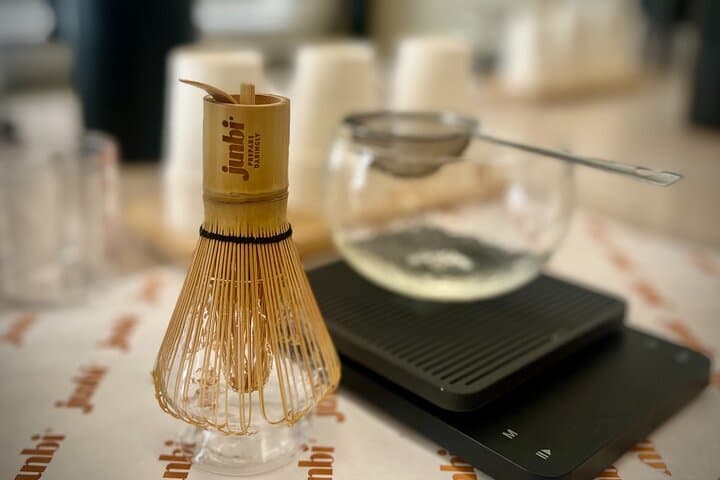
Culturally, the class bridges tradition and accessibility: instructors explain ceremonial forms alongside playful variations like vanilla matcha and hojicha. Expect a mix of tasting notes (umami, vegetal, toasty) and hands-on practice with a chasen (bamboo whisk). The format is social and efficient — team-based stations and an included Junbi souvenir.
Practically, the session is 45 minutes, ideal for groups of 7–15 and suitable for most ages. Come rested, leave with techniques to prepare ceremonial and café-style matcha at home. Hydrate before you arrive, wear comfortable layers for a cool studio, and bring a note-taking device if you want to record recipes. Timing your visit around public transit or a stroll through nearby neighborhoods makes this a compact, sensory stop on a San Francisco day of food and craft.
easy.
45 minutes.
Minimal physical fitness required; standing and light repetitive wrist motion during whisking.
No — the class is designed for beginners and covers both basics and tasting vocabulary.
Yes — infants may sit in laps; the session is family-friendly but focuses on adult tasting.
Yes — the booking is private for your group and is ideal for team-building or friend outings.
Expect ceremonial and premium matcha plus variations like hojicha and a dessert-style vanilla matcha.
Matcha originates from cultivated tea leaves ground into powder, popularized in Uji, Japan; Junbi’s offerings emphasize that lineage while adapting to modern palates.
Look for classes and suppliers that highlight traceable sourcing; reduce waste by using reusable cups and declining single-use items.
Junbi San Francisco operates guided outdoor trips and adventures with an emphasis on safety, stewardship, and memorable experiences.
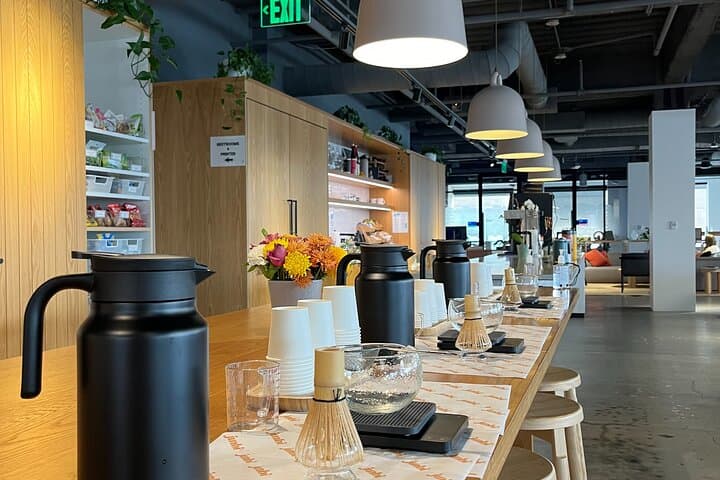
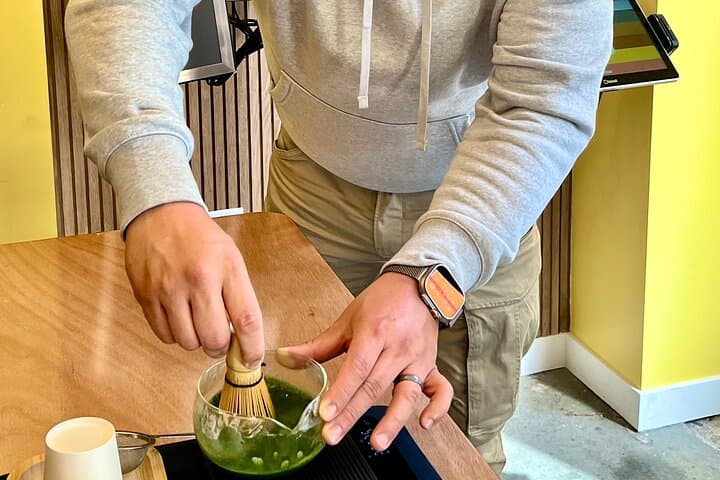

The lights are warm and low as the whisk hits the bowl — a soft hiss, then a bright, grassy foam rising to the rim. In Junbi SF’s studio, the city’s edge falls away and what remains is the ritual: precise scoops, a practiced wrist, and a communal table where strangers trade stories between sips.
The lights are warm and low as the whisk hits the bowl — a soft hiss, then a bright, grassy foam rising to the rim. In Junbi SF’s studio, the city’s edge falls away and what remains is the ritual: precise scoops, a practiced wrist, and a communal table where strangers trade stories between sips.
Matcha’s story begins long before the cup. Harvested and stone-ground in places like Uji, Japan, the powders here trace a line from centuries-old tea ceremony to contemporary San Francisco, where Japanese craft meets local curiosity. The room itself sits on bedrock shaped by the bay — low hills and mixed urban geology underfoot that once guided trade and migration along the Pacific Rim.
Culturally, the class bridges tradition and accessibility: instructors explain ceremonial forms alongside playful variations like vanilla matcha and hojicha. Expect a mix of tasting notes (umami, vegetal, toasty) and hands-on practice with a chasen (bamboo whisk). The format is social and efficient — team-based stations and an included Junbi souvenir.
Practically, the session is 45 minutes, ideal for groups of 7–15 and suitable for most ages. Come rested, leave with techniques to prepare ceremonial and café-style matcha at home. Hydrate before you arrive, wear comfortable layers for a cool studio, and bring a note-taking device if you want to record recipes. Timing your visit around public transit or a stroll through nearby neighborhoods makes this a compact, sensory stop on a San Francisco day of food and craft.