THE ADVENTURE COLLECTIVE® · Independent discovery and booking for outdoor travel

A compact four-mile loop that starts at Chinatown’s Dragon Gate, climbs Russian Hill’s hidden lanes and views, then winds into North Beach’s Italian cafés and bookstores. Expect steep city streets, historic sites, and regular snack stops.
A compact four-mile loop that starts at Chinatown’s Dragon Gate, climbs Russian Hill’s hidden lanes and views, then winds into North Beach’s Italian cafés and bookstores. Expect steep city streets, historic sites, and regular snack stops.
You step under the Dragon Gate and the city tightens around you: the chatter of markets, steam from dumpling windows, and bright paper lanterns swinging over narrow alleys. The route bends uphill from the Cable Car Museum, climbs Russian Hill’s steep streets and secret gardens, then rolls down into North Beach where espresso machines and trattoria patios hum.
Verified experiences and guided adventures in the surrounding area.
Operated by Roam Local · San Francisco, California
You step under the Dragon Gate and the city tightens around you: the chatter of markets, steam from dumpling windows, and bright paper lanterns swinging over narrow alleys. The route bends uphill from the Cable Car Museum, climbs Russian Hill’s steep streets and secret gardens, then rolls down into North Beach where espresso machines and trattoria patios hum.
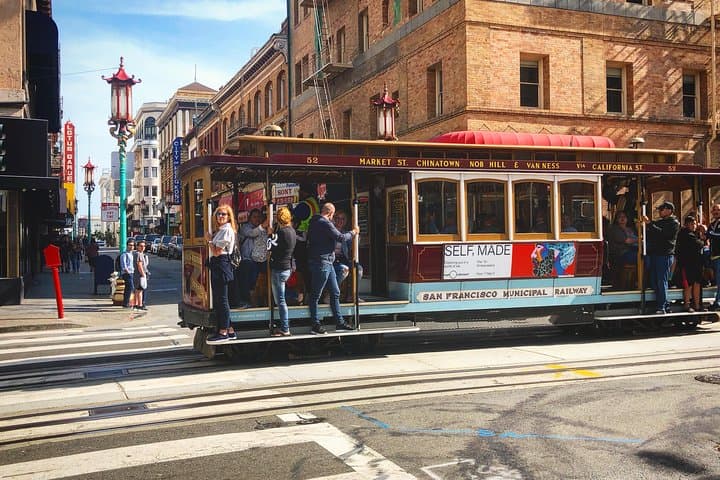
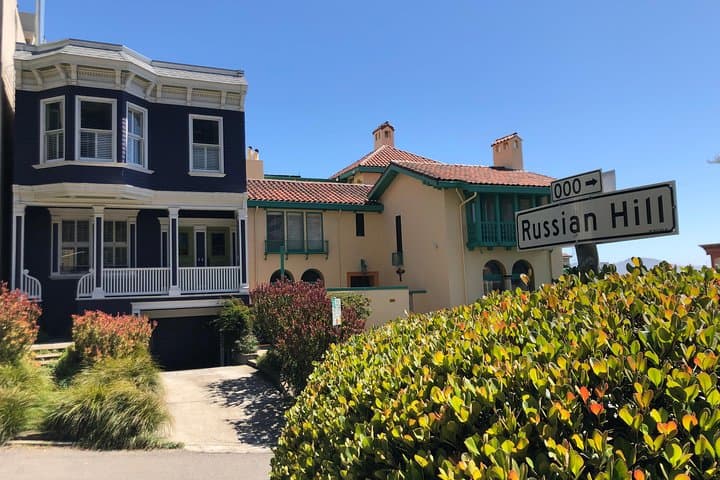
Chinatown is the largest Chinese enclave in the U.S., grown from mid-19th-century immigrant communities. The cable car system—on display at the museum—dates to the late 19th century and still powers a century-old transit ritual. Russian Hill’s geology is a compact ridge of uplifted bedrock and fill that forces streets into sharp pitches and stair-lined cut-throughs like Macondray Lane, a shaded lane that inspired Armistead Maupin’s Barbary Lane. North Beach reflects decades of Italian immigration: corner bakeries, independent bookstores like City Lights, and old-school bars with layered local history.
Expect a roughly four-mile loop on paved streets with stairways and intermittent steep sections—plan for 200–300 ft of cumulative elevation gain and 3–4 hours at a moderate pace. The terrain is urban but uneven: cobblestones, narrow sidewalks, and stairs. Bring comfortable shoes, a light jacket for fog, and a small daypack for purchases from the Golden Gate Fortune Cookie Factory or a slice at Golden Boy Pizza. Schedule morning or late afternoon to avoid peak tour buses; allow time for quick stops and photos. This walk stitches neighborhoods, food tastes, and city mechanics into one practical, sensory city hike.
moderate.
3–4 hours.
Suitable for people who can walk 4 miles with repeated short steep climbs; use caution on stairs and uneven sidewalks.
The loop covers about four miles and typically takes 3–4 hours, including short stops at landmarks and snack breaks.
Parts of the tour include steep streets and stairways; strollers may be manageable in flatter sections but full wheelchair accessibility is limited.
No—snack stops at places like the Golden Gate Fortune Cookie Factory and Golden Boy Pizza are optional and paid for individually.
The tour begins and ends at Chinatown’s Dragon Gate (Grant Ave & Bush St), a central, easy-to-find meeting point.
Chinatown grew from mid-19th-century Chinese immigration and remains the oldest and one of the largest Chinese communities in North America; San Francisco’s cable cars are a surviving piece of 19th-century transit engineering.
This urban route passes through compact neighborhoods—minimize impact by staying on sidewalks, supporting local independent businesses, and packing out any litter to protect small green spaces.
Roam Local operates guided outdoor trips and adventures with an emphasis on safety, stewardship, and memorable experiences.
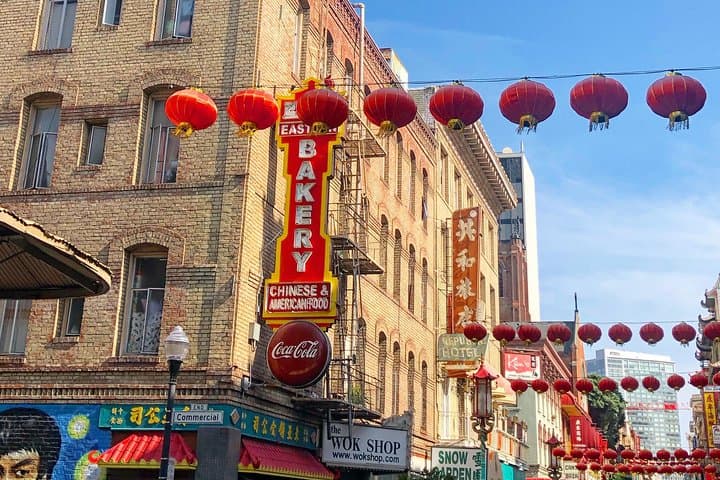

You step under the Dragon Gate and the city tightens around you: the chatter of markets, steam from dumpling windows, and bright paper lanterns swinging over narrow alleys. The route bends uphill from the Cable Car Museum, climbs Russian Hill’s steep streets and secret gardens, then rolls down into North Beach where espresso machines and trattoria patios hum.
You step under the Dragon Gate and the city tightens around you: the chatter of markets, steam from dumpling windows, and bright paper lanterns swinging over narrow alleys. The route bends uphill from the Cable Car Museum, climbs Russian Hill’s steep streets and secret gardens, then rolls down into North Beach where espresso machines and trattoria patios hum.
Chinatown is the largest Chinese enclave in the U.S., grown from mid-19th-century immigrant communities. The cable car system—on display at the museum—dates to the late 19th century and still powers a century-old transit ritual. Russian Hill’s geology is a compact ridge of uplifted bedrock and fill that forces streets into sharp pitches and stair-lined cut-throughs like Macondray Lane, a shaded lane that inspired Armistead Maupin’s Barbary Lane. North Beach reflects decades of Italian immigration: corner bakeries, independent bookstores like City Lights, and old-school bars with layered local history.
Expect a roughly four-mile loop on paved streets with stairways and intermittent steep sections—plan for 200–300 ft of cumulative elevation gain and 3–4 hours at a moderate pace. The terrain is urban but uneven: cobblestones, narrow sidewalks, and stairs. Bring comfortable shoes, a light jacket for fog, and a small daypack for purchases from the Golden Gate Fortune Cookie Factory or a slice at Golden Boy Pizza. Schedule morning or late afternoon to avoid peak tour buses; allow time for quick stops and photos. This walk stitches neighborhoods, food tastes, and city mechanics into one practical, sensory city hike.