THE ADVENTURE COLLECTIVE® · Independent discovery and booking for outdoor travel

Explore San Ángel on foot and taste the neighborhood’s layered history—colonial plazas, tiled fountains and family-run food stalls—on this three-hour guided food walk. Learn where to eat, what to try and how to comfort your feet between tastings.
Explore San Ángel on foot and taste the neighborhood’s layered history—colonial plazas, tiled fountains and family-run food stalls—on this three-hour guided food walk. Learn where to eat, what to try and how to comfort your feet between tastings.
You step off the tram of the city’s rush into a plaza that still remembers the 16th century—cobblestones tilting underfoot, vendors calling soft rhythms, and steam from comales rising like a small, persistent invitation.
Verified experiences and guided adventures in the surrounding area.
Operated by Mexican Food Tours · Mexico City, Mexico City
You step off the tram of the city’s rush into a plaza that still remembers the 16th century—cobblestones tilting underfoot, vendors calling soft rhythms, and steam from comales rising like a small, persistent invitation.
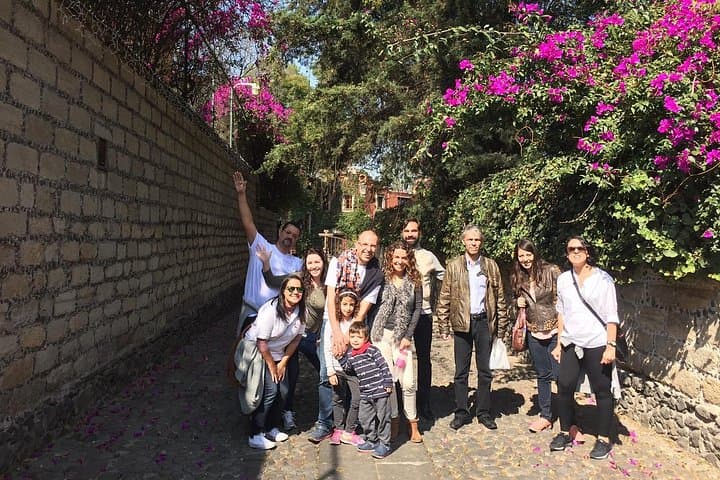
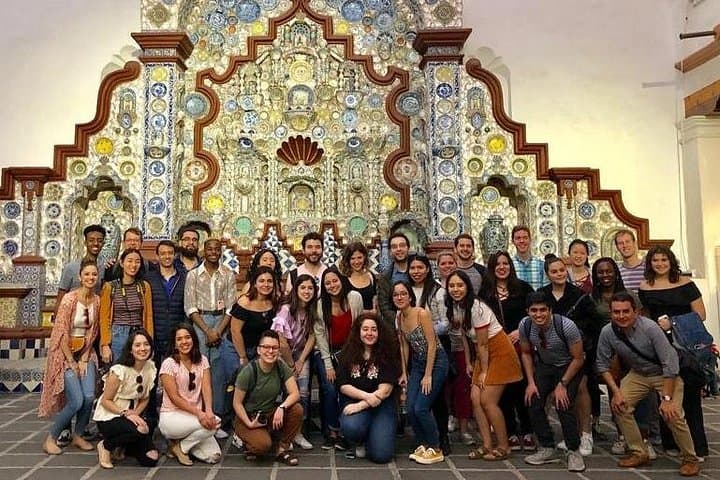
San Ángel was a rural village turned colonial neighborhood and today its streets hold colonial churches, tiled fountains and a weekend art market that hums with local life. The tour threads through a compact area where Spanish-era masonry meets modern ateliers; Casa del Risco and the small tiled fountain are local markers of a layered past. Geologically, the neighborhood sits on the old basin edge of the Valley of Mexico, so short rises and flat plazas replace long climbs—urban geology shaping how people moved and traded for centuries.
Culturally, this is a place of artists and food artisans: markets that grew from weekly trades, family stalls that pass recipes down generations, and a public square that still functions as a meeting place. Expect tastes that range from slow-cooked mole to fragrant tamales and fresh-squeezed aguas frescas—each bite tied to a story from the vendor.
Practical guidance: the route is a gentle, primarily walking loop of roughly 2–3 miles over uneven stone and sidewalks; comfortable shoes and a light jacket for evening are smart. Carry small bills for market purchases, tell the operator about allergies in advance, and time the tour to avoid midday heat or weekend crowds if you prefer a quieter pace. Stay hydrated, move at the group’s rhythm, and save room to try a couple of recommended stalls—you’ll leave with a sense of place as much as a full stomach.
easy.
3 hours.
Suitable for most fitness levels; involves continuous walking on uneven urban surfaces for several hours.
Yes—the tour includes multiple tastings at several locations; check the itinerary for the number and type of tastings provided.
Tours are commonly offered in English and Spanish, but language options can vary—confirm with the operator at booking.
Children can join but must be accompanied by an adult; infant seats are available on request per the provider’s notes.
The exact meeting location is provided on your booking voucher; plan to arrive 10–15 minutes early to check in and avoid delaying the group.
San Ángel grew from a pre-Hispanic settlement into a colonial-era village; its 16th-century church and historic plaza reflect centuries of continuous community life.
Support local vendors and reduce waste by using reusable bottles and bags; small purchases directly sustain artisan families and the neighborhood economy.
Mexican Food Tours operates guided outdoor trips and adventures with an emphasis on safety, stewardship, and memorable experiences.

You step off the tram of the city’s rush into a plaza that still remembers the 16th century—cobblestones tilting underfoot, vendors calling soft rhythms, and steam from comales rising like a small, persistent invitation.
You step off the tram of the city’s rush into a plaza that still remembers the 16th century—cobblestones tilting underfoot, vendors calling soft rhythms, and steam from comales rising like a small, persistent invitation.
San Ángel was a rural village turned colonial neighborhood and today its streets hold colonial churches, tiled fountains and a weekend art market that hums with local life. The tour threads through a compact area where Spanish-era masonry meets modern ateliers; Casa del Risco and the small tiled fountain are local markers of a layered past. Geologically, the neighborhood sits on the old basin edge of the Valley of Mexico, so short rises and flat plazas replace long climbs—urban geology shaping how people moved and traded for centuries.
Culturally, this is a place of artists and food artisans: markets that grew from weekly trades, family stalls that pass recipes down generations, and a public square that still functions as a meeting place. Expect tastes that range from slow-cooked mole to fragrant tamales and fresh-squeezed aguas frescas—each bite tied to a story from the vendor.
Practical guidance: the route is a gentle, primarily walking loop of roughly 2–3 miles over uneven stone and sidewalks; comfortable shoes and a light jacket for evening are smart. Carry small bills for market purchases, tell the operator about allergies in advance, and time the tour to avoid midday heat or weekend crowds if you prefer a quieter pace. Stay hydrated, move at the group’s rhythm, and save room to try a couple of recommended stalls—you’ll leave with a sense of place as much as a full stomach.