THE ADVENTURE COLLECTIVE® · Independent discovery and booking for outdoor travel

Step into a focused 90-minute samurai lesson steps from Osaka Castle: learn iai basics, try a supervised straw-roll cut with a real blade, and wear samurai armor for a commemorative photo. Practical instruction and strict safety make this a hands-on cultural experience.
Step into a focused 90-minute samurai lesson steps from Osaka Castle: learn iai basics, try a supervised straw-roll cut with a real blade, and wear samurai armor for a commemorative photo. Practical instruction and strict safety make this a hands-on cultural experience.
The air near Osaka Castle is brisk and purposeful: tourists flow along the park paths while, inside a low-doored dojo a minute from Osaka-jo Koen Station, students slip into hakama and don lacquered helmets.
Verified experiences and guided adventures in the surrounding area.
Operated by SAMURAI HONOR · Osaka, Osaka Prefecture
The air near Osaka Castle is brisk and purposeful: tourists flow along the park paths while, inside a low-doored dojo a minute from Osaka-jo Koen Station, students slip into hakama and don lacquered helmets.
The lesson begins with a formal bow and a short primer on Bushido—discipline, loyalty and the ritual language of the samurai—then moves into basics of iai: drawing, cutting and sheathing. Trainers use practice bokken (wood) and then supervised real blades for a controlled tameshigiri (straw roll cutting). The castle’s stone walls and wide moat remind you that this art evolved amid siegecraft and court politics: Osaka Castle, raised by Toyotomi Hideyoshi in the late 16th century, sits on massive quarried stone and watched over centuries of Japanese martial development.
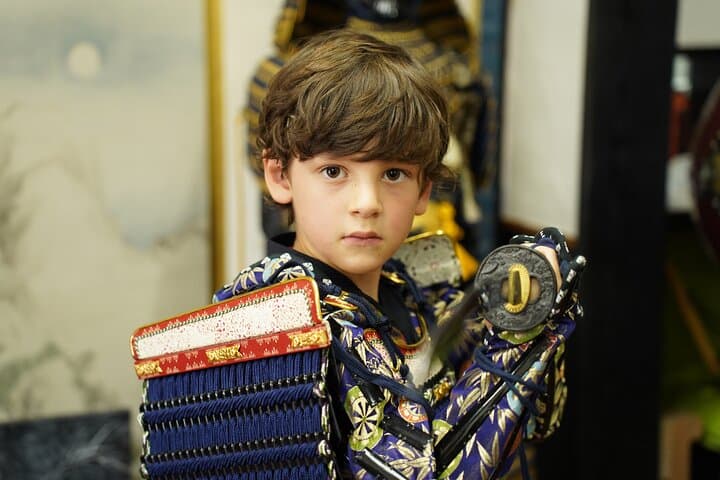
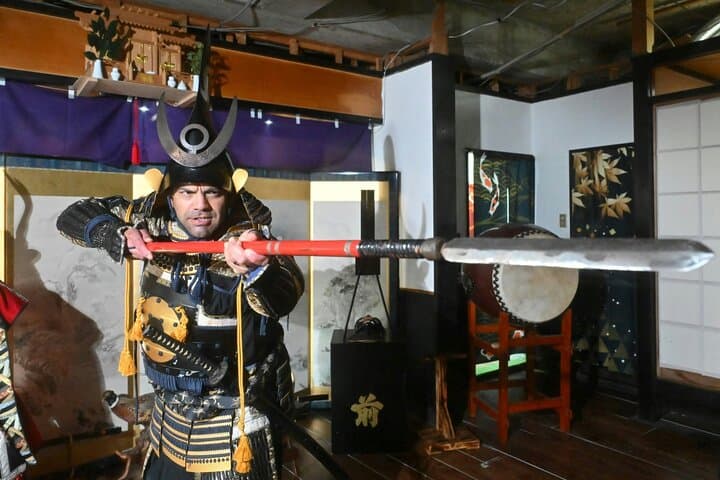
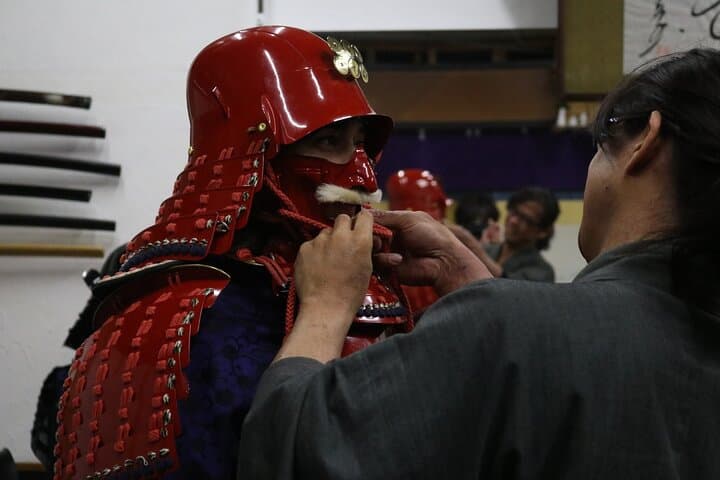
Expect measured instruction rather than spectacle: posture corrections, kata sequences, and safety briefings before any live cutting. Trying on cuirass, kabuto (helmet) and suneate (shin guards) connects you to battlefield attire—sizes vary, so not every suit fits every visitor.
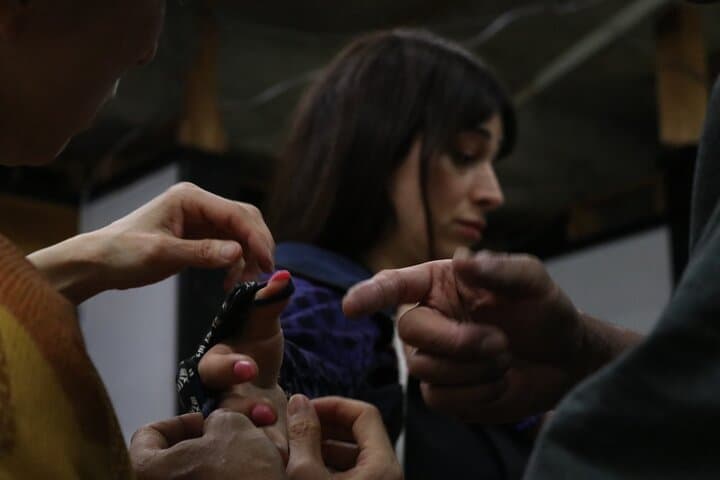
Practical guidance: arrive 10–15 minutes early to complete fittings and waivers; wear closed-toe shoes and clothing that allows torso movement; disclose height/weight so staff pick correctly sized armor. Photographs are taken and digital files are emailed; instructors prohibit unsanctioned sword drawing. The session is physically moderate—repeated shoulder and core engagement—so hydrate beforehand and plan a short walk around Nishinomaru Garden afterward to cool down and see the castle from the moat-side lawn.
moderate.
1–1.5 hours.
Moderate—suitable for people who can stand, twist, and perform light shoulder work; not for those with spinal or serious cardiovascular issues.
No—trainers teach basic stances and kata from the ground up; the session is designed for beginners with step-by-step guidance.
You will perform supervised tameshigiri with a real blade, but weapons are controlled by instructors and cannot be taken home.
Participants must provide age, height and weight; armor sizing and safety concerns may restrict participation—check with the operator if you fall outside average adult sizes.
Yes—staff take photos while you wear armor and after cutting; digital images are sent to the designated email address included in the booking.
Osaka Castle was substantially rebuilt by Toyotomi Hideyoshi in the late 1500s; the samurai techniques taught here trace to battlefield training and the formalized codes of the Warring States period.
Instructors emphasize careful handling of historical-style armor and blades; guests are asked to follow all safety rules to protect both people and cultural materials.
SAMURAI HONOR operates guided outdoor trips and adventures with an emphasis on safety, stewardship, and memorable experiences.
The air near Osaka Castle is brisk and purposeful: tourists flow along the park paths while, inside a low-doored dojo a minute from Osaka-jo Koen Station, students slip into hakama and don lacquered helmets.
The air near Osaka Castle is brisk and purposeful: tourists flow along the park paths while, inside a low-doored dojo a minute from Osaka-jo Koen Station, students slip into hakama and don lacquered helmets.
The lesson begins with a formal bow and a short primer on Bushido—discipline, loyalty and the ritual language of the samurai—then moves into basics of iai: drawing, cutting and sheathing. Trainers use practice bokken (wood) and then supervised real blades for a controlled tameshigiri (straw roll cutting). The castle’s stone walls and wide moat remind you that this art evolved amid siegecraft and court politics: Osaka Castle, raised by Toyotomi Hideyoshi in the late 16th century, sits on massive quarried stone and watched over centuries of Japanese martial development.
Expect measured instruction rather than spectacle: posture corrections, kata sequences, and safety briefings before any live cutting. Trying on cuirass, kabuto (helmet) and suneate (shin guards) connects you to battlefield attire—sizes vary, so not every suit fits every visitor.
Practical guidance: arrive 10–15 minutes early to complete fittings and waivers; wear closed-toe shoes and clothing that allows torso movement; disclose height/weight so staff pick correctly sized armor. Photographs are taken and digital files are emailed; instructors prohibit unsanctioned sword drawing. The session is physically moderate—repeated shoulder and core engagement—so hydrate beforehand and plan a short walk around Nishinomaru Garden afterward to cool down and see the castle from the moat-side lawn.