THE ADVENTURE COLLECTIVE® · Independent discovery and booking for outdoor travel

Don a samurai hakama or armor and walk the gates and emptied moats of Osaka Castle with an expert guide. This private, 2.5‑hour pilgrimage pairs hands-on costume ritual with battlefield history and local legends.
Don a samurai hakama or armor and walk the gates and emptied moats of Osaka Castle with an expert guide. This private, 2.5‑hour pilgrimage pairs hands-on costume ritual with battlefield history and local legends.
A late-afternoon light slants across Osaka Castle Park and the stone walls take on a hard, bronze edge. Participants step from the tiled path into the ritual of dressing: assistants tighten cords, helmets are settled, and the weight of plated armor becomes part costume, part instruction. Walking through gates and along the empty inner moat, the group moves like a living echo of the last great samurai battle.
Verified experiences and guided adventures in the surrounding area.
Operated by SAMURAI HONOR · Osaka, Osaka Prefecture
A late-afternoon light slants across Osaka Castle Park and the stone walls take on a hard, bronze edge. Participants step from the tiled path into the ritual of dressing: assistants tighten cords, helmets are settled, and the weight of plated armor becomes part costume, part instruction. Walking through gates and along the empty inner moat, the group moves like a living echo of the last great samurai battle.
The tour traces the final chapters of the Siege of Osaka, where Toyotomi Hideyoshi’s stronghold and the Toyotomi-Tokugawa conflict shaped early-modern Japan. Guides weave local urban legends—Yodo-dono’s grief, the unmapped loopholes attributed to Yukimura Sanada—into measured historical context, and stop at sites rarely highlighted on casual walks: memorial stones carved by feudal retainers, the Kishu Palace garden view toward the castle tower, and the so-called empty moat that was never filled.
Practical details matter here: the experience runs about 2.5 hours, is private and English-led by default, and includes authentic hakama, kimono, or men’s armor (sizes generally up to 185 cm and 100 kg). The tour intentionally omits castle tower entry to avoid long waits and restricted photography; instead it focuses on exterior architecture, battlefield strategy, and hands-on costume ritual. Expect moderate physical exertion—walking on uneven park paths and standing while donning armor—and clear guidance on restroom use and changing before dressing.
For travelers, evening slots deepen atmosphere; daytime tours pair best with plum- or cherry-season park visits. Respect for the site and following assistant instructions ensures safety and preserves the historical fabric for others.
moderate.
2–3 hours.
Moderate fitness: ability to walk 1–2 miles on paved and packed-earth paths and stand while being dressed in costume.
No—this tour focuses on exterior sites, legends, and costume ritual; you can visit the tower separately to avoid long waits and photography restrictions.
Children from age 6 can join using children’s costume sets, but all participants should be able to follow instructions and stand during dressing.
English is the default; other languages (Italian, Spanish, French, Chinese, Thai, Indonesian) may be available by request but are limited by staff availability.
Armor sizes generally accommodate heights up to 185 cm and weights up to 100 kg; advise the operator of your measurements when booking to confirm fit.
Osaka Castle was built by Toyotomi Hideyoshi and later became the focal point of the Siege of Osaka (1614–1615), marking a decisive moment in the Tokugawa consolidation of power and the end of large-scale samurai warfare.
Osaka Castle Park is a protected cultural landscape—follow signposted routes, avoid stepping on stonework, and pack out any trash to help preserve historic fabric and peak-season plantings.
SAMURAI HONOR operates guided outdoor trips and adventures with an emphasis on safety, stewardship, and memorable experiences.
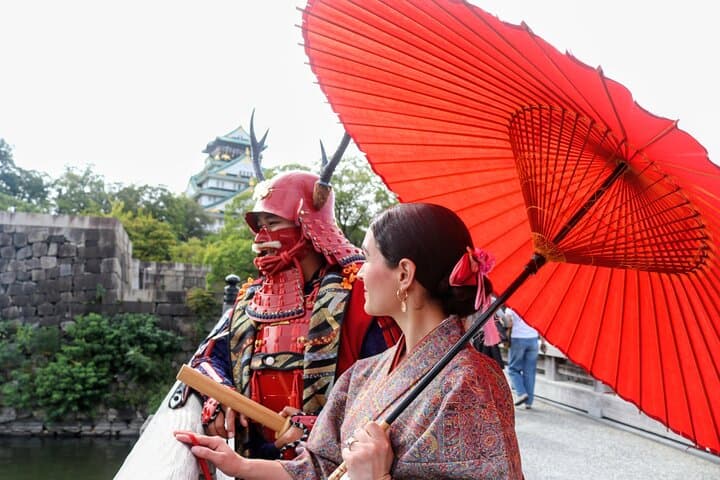
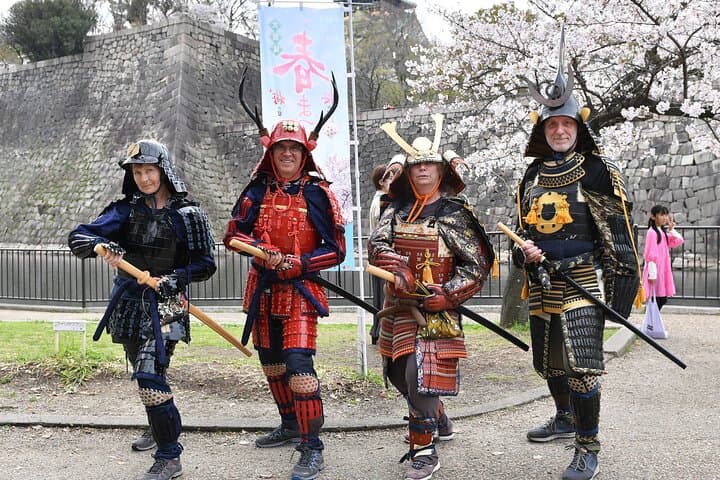

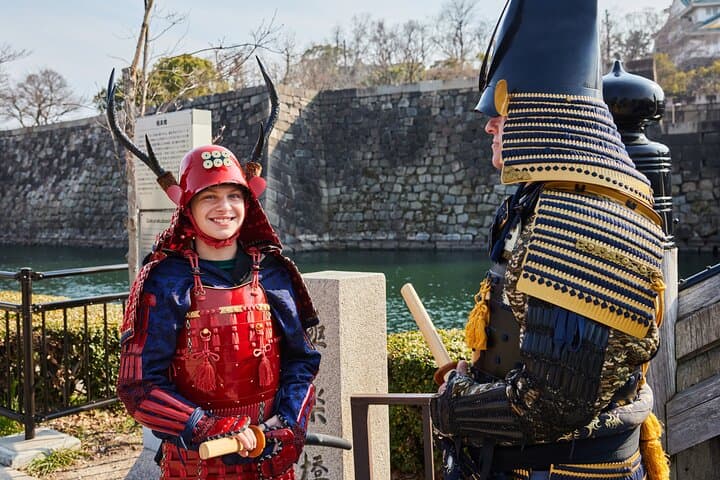
A late-afternoon light slants across Osaka Castle Park and the stone walls take on a hard, bronze edge. Participants step from the tiled path into the ritual of dressing: assistants tighten cords, helmets are settled, and the weight of plated armor becomes part costume, part instruction. Walking through gates and along the empty inner moat, the group moves like a living echo of the last great samurai battle.
A late-afternoon light slants across Osaka Castle Park and the stone walls take on a hard, bronze edge. Participants step from the tiled path into the ritual of dressing: assistants tighten cords, helmets are settled, and the weight of plated armor becomes part costume, part instruction. Walking through gates and along the empty inner moat, the group moves like a living echo of the last great samurai battle.
The tour traces the final chapters of the Siege of Osaka, where Toyotomi Hideyoshi’s stronghold and the Toyotomi-Tokugawa conflict shaped early-modern Japan. Guides weave local urban legends—Yodo-dono’s grief, the unmapped loopholes attributed to Yukimura Sanada—into measured historical context, and stop at sites rarely highlighted on casual walks: memorial stones carved by feudal retainers, the Kishu Palace garden view toward the castle tower, and the so-called empty moat that was never filled.
Practical details matter here: the experience runs about 2.5 hours, is private and English-led by default, and includes authentic hakama, kimono, or men’s armor (sizes generally up to 185 cm and 100 kg). The tour intentionally omits castle tower entry to avoid long waits and restricted photography; instead it focuses on exterior architecture, battlefield strategy, and hands-on costume ritual. Expect moderate physical exertion—walking on uneven park paths and standing while donning armor—and clear guidance on restroom use and changing before dressing.
For travelers, evening slots deepen atmosphere; daytime tours pair best with plum- or cherry-season park visits. Respect for the site and following assistant instructions ensures safety and preserves the historical fabric for others.