THE ADVENTURE COLLECTIVE® · Independent discovery and booking for outdoor travel

Put on hakama, hold a katana, and learn the measured rituals behind Kenbu—the samurai sword dance. This 90-minute Kyoto experience pairs hands-on training with an authentic performance and a commemorative costume photo.
Put on hakama, hold a katana, and learn the measured rituals behind Kenbu—the samurai sword dance. This 90-minute Kyoto experience pairs hands-on training with an authentic performance and a commemorative costume photo.
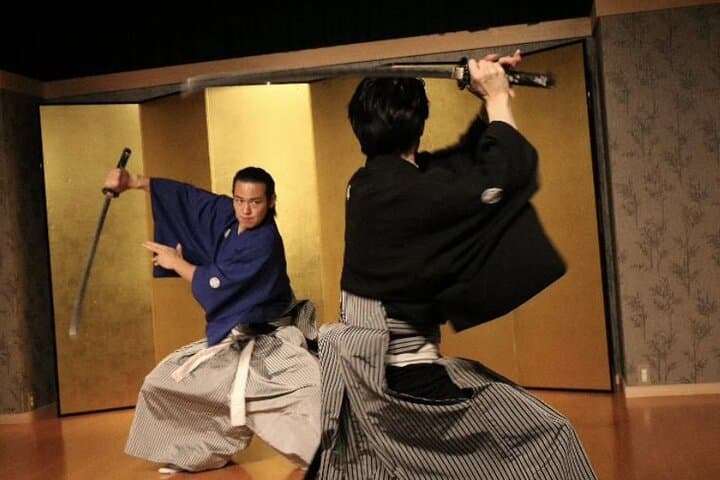
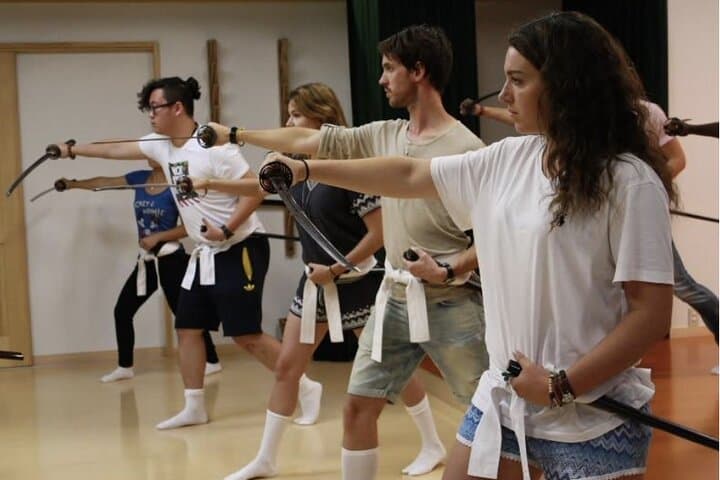
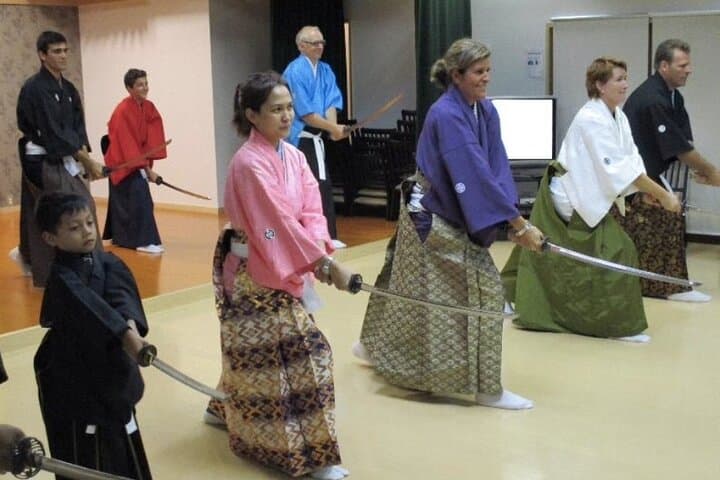
Step into a low-lit rehearsal room where the wooden floor answers every footfall and the air carries the soft rasp of breathing through tabi. You begin standing straighter—kimono tied, hakama falling into place—while an instructor demonstrates a measured cut as if time itself is being scored.
Verified experiences and guided adventures in the surrounding area.
Operated by Beauty of Japan · Kyoto, Kyoto Prefecture
Step into a low-lit rehearsal room where the wooden floor answers every footfall and the air carries the soft rasp of breathing through tabi. You begin standing straighter—kimono tied, hakama falling into place—while an instructor demonstrates a measured cut as if time itself is being scored.
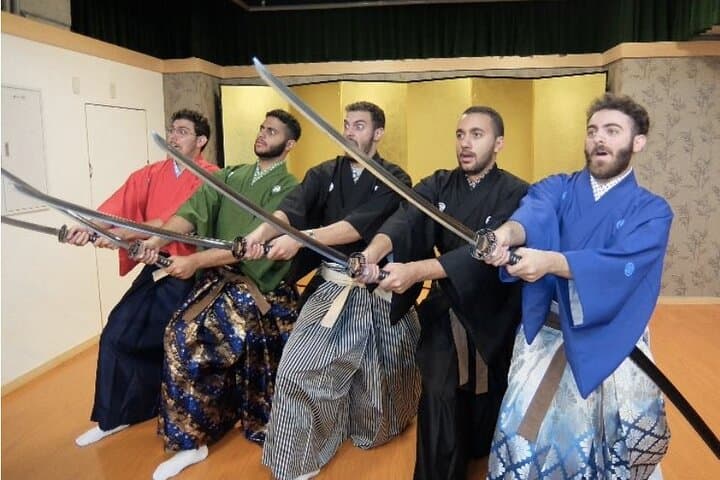
Kenbu, the sword dance, grew from samurai training drills and theatrical traditions; it translates martial precision into motion and poetry. The workshop pairs a concise history with hands-on ritual: etiquette of bows and stance, the feel and balance of a katana, and the surprising contrast of a sensu folding fan’s controlled flourish. After dressing and practice, guests pose for a commemorative photo in full regalia before settling to watch masters perform—choices range from a brief demonstration to a 40-minute multi-performer Kenbu that highlights tempo, breath, and theatrical timing.
What to expect practically: the session runs about 90 minutes, is wheelchair-accessible, and supplies costume and equipment. Space is intimate—book early during cherry blossom and fall foliage peaks. Wear comfortable clothes under the costume and arrive with a charged camera; you’ll be asked to stand and follow basic movement patterns. Note health guidance for those with cardiovascular issues: some repeated standing and controlled exertion is required.
This is an approachable cultural immersion that rewards curiosity—try to learn a phrase of bowing etiquette beforehand, and allow time afterward to explore nearby temples and alleys that shaped the samurai-era streetscape.
easy.
90 minutes.
Suitable for most fitness levels; requires light standing, simple footwork and brief holding of a practice katana.
Yes—kimono or hakama, tabi socks, and practice katana are included in the workshop fee.
Yes—facilities and the workshop are listed as wheelchair-accessible; contact the operator if you need assistance.
Children may participate but infants must sit on laps; check age restrictions and choose the appropriate performance length.
Full refund available if you cancel at least 24 hours before the scheduled start time per the standard policy.
Kenbu evolved from samurai sword-drill traditions and theatrical forms, blending martial discipline with staged movement to convey honor and narrative.
Respect historic sites by staying on marked paths, minimizing single-use plastics, and supporting local artisans and venues to sustain Kyoto’s cultural tourism.
Beauty of Japan operates guided outdoor trips and adventures with an emphasis on safety, stewardship, and memorable experiences.
Step into a low-lit rehearsal room where the wooden floor answers every footfall and the air carries the soft rasp of breathing through tabi. You begin standing straighter—kimono tied, hakama falling into place—while an instructor demonstrates a measured cut as if time itself is being scored.
Step into a low-lit rehearsal room where the wooden floor answers every footfall and the air carries the soft rasp of breathing through tabi. You begin standing straighter—kimono tied, hakama falling into place—while an instructor demonstrates a measured cut as if time itself is being scored.
Kenbu, the sword dance, grew from samurai training drills and theatrical traditions; it translates martial precision into motion and poetry. The workshop pairs a concise history with hands-on ritual: etiquette of bows and stance, the feel and balance of a katana, and the surprising contrast of a sensu folding fan’s controlled flourish. After dressing and practice, guests pose for a commemorative photo in full regalia before settling to watch masters perform—choices range from a brief demonstration to a 40-minute multi-performer Kenbu that highlights tempo, breath, and theatrical timing.
What to expect practically: the session runs about 90 minutes, is wheelchair-accessible, and supplies costume and equipment. Space is intimate—book early during cherry blossom and fall foliage peaks. Wear comfortable clothes under the costume and arrive with a charged camera; you’ll be asked to stand and follow basic movement patterns. Note health guidance for those with cardiovascular issues: some repeated standing and controlled exertion is required.
This is an approachable cultural immersion that rewards curiosity—try to learn a phrase of bowing etiquette beforehand, and allow time afterward to explore nearby temples and alleys that shaped the samurai-era streetscape.