THE ADVENTURE COLLECTIVE® · Independent discovery and booking for outdoor travel

Step into an intense 90-minute Shodo session in Osaka where you select a single kanji and paint it big — physically and emotionally — with an oversized brush to echo samurai resignation rituals. This workshop blends technical instruction with dramatic, full-body execution.
Step into an intense 90-minute Shodo session in Osaka where you select a single kanji and paint it big — physically and emotionally — with an oversized brush to echo samurai resignation rituals. This workshop blends technical instruction with dramatic, full-body execution.
The room opens with the low drum of a taiko and the scent of sumi ink; a 150 x 150 cm sheet lies flat on the floor like a blank battlefield. Participants gather around an oversized brush, instructed to choose a single kanji that will stand as a personal resignation — a practice that echoes samurai life-and-death reflection from Japan’s Warring States era.
Verified experiences and guided adventures in the surrounding area.
Operated by SAMURAI HONOR · Osaka, Osaka Prefecture
The room opens with the low drum of a taiko and the scent of sumi ink; a 150 x 150 cm sheet lies flat on the floor like a blank battlefield. Participants gather around an oversized brush, instructed to choose a single kanji that will stand as a personal resignation — a practice that echoes samurai life-and-death reflection from Japan’s Warring States era.
Shodo (Japanese calligraphy) has roots in Chinese script but evolved into a disciplined art form prized by samurai for its expression of character. The session pairs 60 minutes of classical brushwork with a 30-minute dramatic execution using an artist’s full-body technique. Osaka’s pragmatic civic culture and proximity to former samurai routes mean this class balances theatricality with strict technical teaching: stroke order, pressure control, and composition are all covered before the final, large-scale character is painted.
Participants can expect hands-on instruction, a professional photographer to document the moment, and the option to wear hakama or partial kimono supplied by the studio. The experience is brief but intentional — a guided meditation in ink that asks you to reflect and move deliberately.
Practical notes: arrive 10–15 minutes early, wear sturdy dark clothing you don’t mind staining, and plan for 90 minutes total. Public transit serves the area; the session is suitable for most fitness levels but is not recommended for people with serious spinal or cardiovascular conditions. Bring a camera, and leave room in your schedule to view the finished pieces — the bold, imperfect stroke is the point.
easy.
1.5 hours (90 minutes).
Minimal fitness required—participants should be able to stand and move with light exertion during the large-stroke section.
No — the workshop is designed for beginners and includes basic stroke order and brush technique before the final execution.
Yes — the finished sheet is yours to take; consider arranging transport or a flat portfolio for the 150 x 150 cm piece.
The activity is guided for adults and reflective in nature; check with the operator about age minimums and suitability for younger guests.
English or Chinese-speaking assistants are provided as noted in the inclusions; confirm language support when booking.
Shodo became a discipline among samurai as both a mental practice and a way to reveal character; the idea of writing a resignation (jisei) reflects a samurai’s facing of mortality.
Many studios emphasize traditional materials and careful ink disposal; support businesses that source paper and supplies sustainably and minimize chemical runoff.
SAMURAI HONOR operates guided outdoor trips and adventures with an emphasis on safety, stewardship, and memorable experiences.
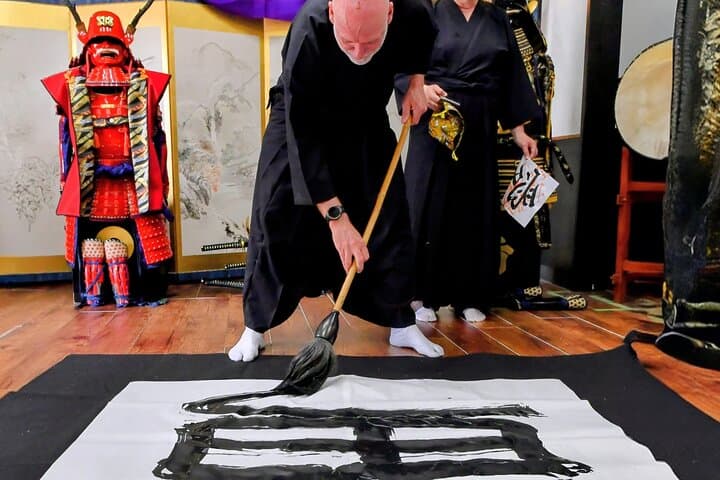
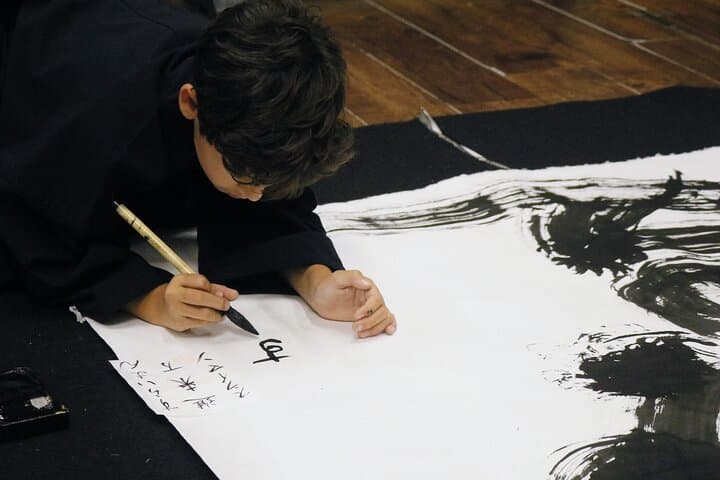
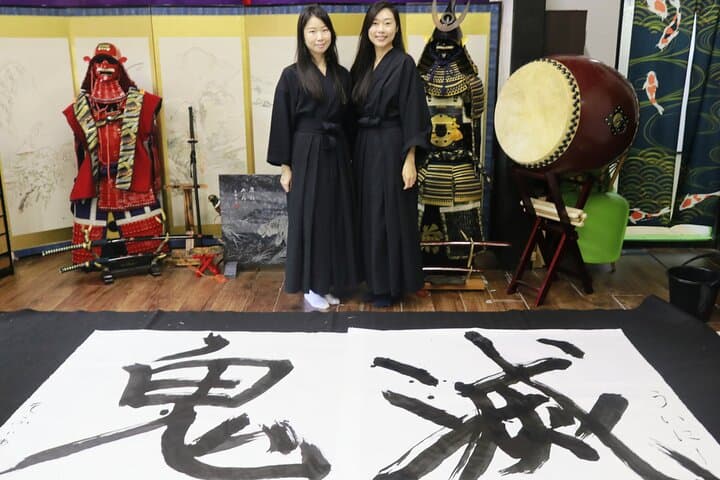
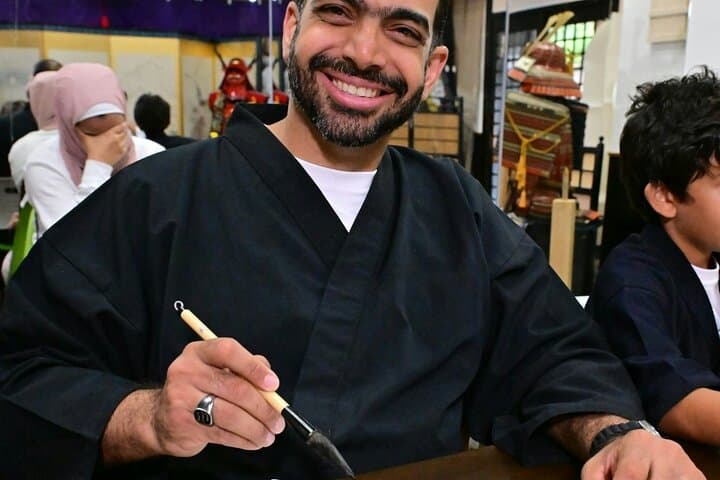
The room opens with the low drum of a taiko and the scent of sumi ink; a 150 x 150 cm sheet lies flat on the floor like a blank battlefield. Participants gather around an oversized brush, instructed to choose a single kanji that will stand as a personal resignation — a practice that echoes samurai life-and-death reflection from Japan’s Warring States era.
The room opens with the low drum of a taiko and the scent of sumi ink; a 150 x 150 cm sheet lies flat on the floor like a blank battlefield. Participants gather around an oversized brush, instructed to choose a single kanji that will stand as a personal resignation — a practice that echoes samurai life-and-death reflection from Japan’s Warring States era.
Shodo (Japanese calligraphy) has roots in Chinese script but evolved into a disciplined art form prized by samurai for its expression of character. The session pairs 60 minutes of classical brushwork with a 30-minute dramatic execution using an artist’s full-body technique. Osaka’s pragmatic civic culture and proximity to former samurai routes mean this class balances theatricality with strict technical teaching: stroke order, pressure control, and composition are all covered before the final, large-scale character is painted.
Participants can expect hands-on instruction, a professional photographer to document the moment, and the option to wear hakama or partial kimono supplied by the studio. The experience is brief but intentional — a guided meditation in ink that asks you to reflect and move deliberately.
Practical notes: arrive 10–15 minutes early, wear sturdy dark clothing you don’t mind staining, and plan for 90 minutes total. Public transit serves the area; the session is suitable for most fitness levels but is not recommended for people with serious spinal or cardiovascular conditions. Bring a camera, and leave room in your schedule to view the finished pieces — the bold, imperfect stroke is the point.