THE ADVENTURE COLLECTIVE® · Independent discovery and booking for outdoor travel

See Koh Samui’s pivotal sights in a single day: Big Buddha’s 73 steps, the mythic Hin Ta/Hin Yai rocks, Lad Koh’s coastal sweep and the cool pool at Namuang Waterfall. This five-hour tour pairs cultural context with easy walks and plenty of photo stops.
See Koh Samui’s pivotal sights in a single day: Big Buddha’s 73 steps, the mythic Hin Ta/Hin Yai rocks, Lad Koh’s coastal sweep and the cool pool at Namuang Waterfall. This five-hour tour pairs cultural context with easy walks and plenty of photo stops.
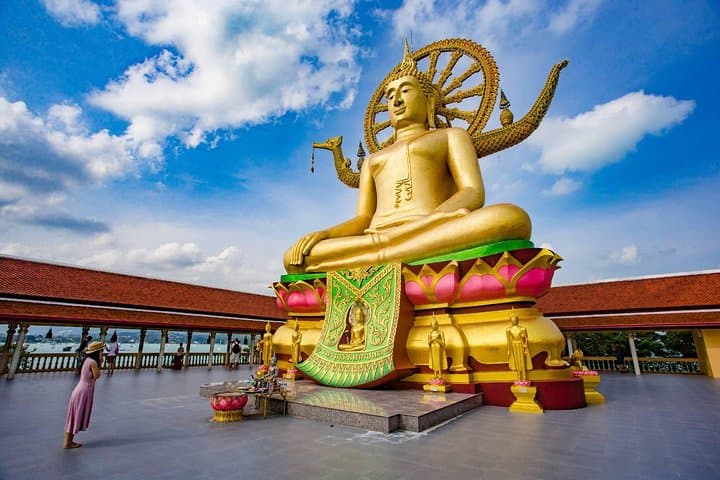
You step off the air-conditioned van onto a concrete plaza, the sea a thin line of blue beyond a cluster of palms. The Big Buddha, gilded and unblinking, watches over the northeast headland — 73 steps to its base and a view that opens like a map of the island. That first climb quickly sets the tone for a day that alternates between short walks and scenic drives: temple courtyards and bronze gods, granite sculptures shoved into the surf, and a jungle waterfall that cools skin and quiets conversation.
Verified experiences and guided adventures in the surrounding area.
Operated by Koh Samui Tour & Transportation · Koh Samui, Surat Thani
You step off the air-conditioned van onto a concrete plaza, the sea a thin line of blue beyond a cluster of palms. The Big Buddha, gilded and unblinking, watches over the northeast headland — 73 steps to its base and a view that opens like a map of the island. That first climb quickly sets the tone for a day that alternates between short walks and scenic drives: temple courtyards and bronze gods, granite sculptures shoved into the surf, and a jungle waterfall that cools skin and quiets conversation.
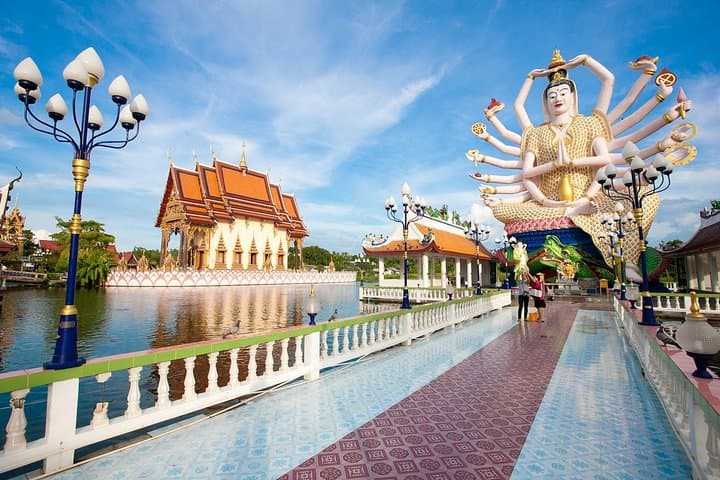
Koh Samui’s landscape is compact and readable. Granite outcrops pushed up during ancient tectonic shifts now form the raked shapes of Hin Ta and Hin Yai (Grandfather and Grandmother Rocks), landmarks that have fostered folklore as reliably as tides. The island’s cultural makeup reflects waves of settlement from southern Thai and Chinese-Hainan communities; Guan Yu’s recent 16-meter bronze shrine is a modern gesture of that heritage, while temples like the Chinese Lady Monk site evoke older devotional practices and fish ponds sustained by donations.
Geologically, Samui is more than beaches: its interior rises into low, forested ridges, where rainwater funnels into streams and Namuang’s twin falls carve polished pools into purple-hued rock. The foliage here acts with agency — leaves dripping, vines tugging at the path — and the waterfalls demand a pause.
Practicalities are straightforward. The shared tour runs about five hours and begins at Big Buddha; small, frequent walks replace long hikes, but expect steps, uneven temple platforms, and a short jungle path at Namuang. Bring swimwear for a dip in the waterfall’s natural pool and a sarong for temple visits; modest dress and removed shoes are required indoors. The operator provides hotel pickup from most zones but notes extra charges and limited service for remote mountain villas and some western beaches. Cruise passengers in small groups are advised the itinerary may not suit tight arrival windows.
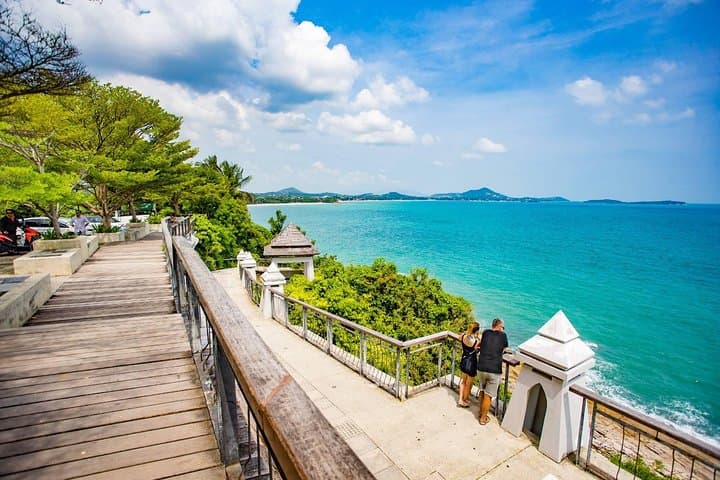
Timing matters: visit early to avoid mid-day heat and crowded viewpoints. Sunscreen and a hat are essential, as is insect repellent for the waterfall approach. Local guides will accept small donations for fish food at temples — an easy way to interact without disrupting wildlife. Cameras will be busy: the Big Buddha’s perspective, Lad Koh overlook, and Namuang’s cool green basin are the day’s photographic anchors.
This is an island primer — equal parts culture, geology, and a hands-on look at Samui’s living traditions. It won’t exhaust the map, but in five hours it offers a tidy orientation that leaves you ready for a longer stay or a return visit to one favorite sight.
easy.
5 hours.
Suitable for most fitness levels; expect short climbs, 73 steps to Big Buddha and uneven paths at the waterfall.
The shared tour lasts about five hours and typically starts at the Big Buddha temple meeting point; confirm exact pickup time with the operator.
Most temple visits are free or have a small donation; dress modestly (covered shoulders and knees) and remove shoes before entering indoor shrine areas.
The operator notes the program isn’t recommended for cruise ship customers traveling in groups under 10 due to timing constraints and pickup logistics.
Yes—there’s a naturally formed pool suitable for swimming, but check with guides for current conditions and watch for slippery rocks and currents after heavy rain.
This tour provides bottled water and transportation; meals are not included—plan to eat in town afterward or bring snacks.
Drone use is subject to Thai regulations and local site rules; most temple areas prohibit drones, so check with your guide before attempting to fly.
Samui’s island culture blends Thai and Chinese-Hainan influences; large community donations created the island’s Guan Yu shrine and many temple complexes reflect ongoing devotional practices.
Tour operators ask visitors to avoid single-use plastics at natural sites and to refrain from feeding wildlife; stick to marked paths at Namuang to protect fragile streamside vegetation.
Koh Samui Tour & Transportation operates guided outdoor trips and adventures with an emphasis on safety, stewardship, and memorable experiences.
You step off the air-conditioned van onto a concrete plaza, the sea a thin line of blue beyond a cluster of palms. The Big Buddha, gilded and unblinking, watches over the northeast headland — 73 steps to its base and a view that opens like a map of the island. That first climb quickly sets the tone for a day that alternates between short walks and scenic drives: temple courtyards and bronze gods, granite sculptures shoved into the surf, and a jungle waterfall that cools skin and quiets conversation.
You step off the air-conditioned van onto a concrete plaza, the sea a thin line of blue beyond a cluster of palms. The Big Buddha, gilded and unblinking, watches over the northeast headland — 73 steps to its base and a view that opens like a map of the island. That first climb quickly sets the tone for a day that alternates between short walks and scenic drives: temple courtyards and bronze gods, granite sculptures shoved into the surf, and a jungle waterfall that cools skin and quiets conversation.
Koh Samui’s landscape is compact and readable. Granite outcrops pushed up during ancient tectonic shifts now form the raked shapes of Hin Ta and Hin Yai (Grandfather and Grandmother Rocks), landmarks that have fostered folklore as reliably as tides. The island’s cultural makeup reflects waves of settlement from southern Thai and Chinese-Hainan communities; Guan Yu’s recent 16-meter bronze shrine is a modern gesture of that heritage, while temples like the Chinese Lady Monk site evoke older devotional practices and fish ponds sustained by donations.
Geologically, Samui is more than beaches: its interior rises into low, forested ridges, where rainwater funnels into streams and Namuang’s twin falls carve polished pools into purple-hued rock. The foliage here acts with agency — leaves dripping, vines tugging at the path — and the waterfalls demand a pause.
Practicalities are straightforward. The shared tour runs about five hours and begins at Big Buddha; small, frequent walks replace long hikes, but expect steps, uneven temple platforms, and a short jungle path at Namuang. Bring swimwear for a dip in the waterfall’s natural pool and a sarong for temple visits; modest dress and removed shoes are required indoors. The operator provides hotel pickup from most zones but notes extra charges and limited service for remote mountain villas and some western beaches. Cruise passengers in small groups are advised the itinerary may not suit tight arrival windows.
Timing matters: visit early to avoid mid-day heat and crowded viewpoints. Sunscreen and a hat are essential, as is insect repellent for the waterfall approach. Local guides will accept small donations for fish food at temples — an easy way to interact without disrupting wildlife. Cameras will be busy: the Big Buddha’s perspective, Lad Koh overlook, and Namuang’s cool green basin are the day’s photographic anchors.
This is an island primer — equal parts culture, geology, and a hands-on look at Samui’s living traditions. It won’t exhaust the map, but in five hours it offers a tidy orientation that leaves you ready for a longer stay or a return visit to one favorite sight.