THE ADVENTURE COLLECTIVE® · Independent discovery and booking for outdoor travel

Step into a hands-on Samoan fireknife workshop on Kauaʻi: learn the history, practice the moves with a training staff, and watch a live flame demo. Safe, guided, and culturally grounded, this one-hour experience is perfect for curious adventurers.
Step into a hands-on Samoan fireknife workshop on Kauaʻi: learn the history, practice the moves with a training staff, and watch a live flame demo. Safe, guided, and culturally grounded, this one-hour experience is perfect for curious adventurers.
You arrive to the hum of ukulele and the low, deliberate breath of a crowd; heat from the torchlight brushes your face as an instructor sets a practice stick into your palm. The lesson begins with story — the origins of the Samoan fireknife, the ailāo afi, explained as equal parts ceremony and martial skill — then moves into basics: footwork, spins, and safe handling. Flames take center stage in a short demonstration, and under close supervision you may step forward to try a heated blade.
Verified experiences and guided adventures in the surrounding area.
Operated by Legacy Ent. Productions · Lihue, Hawaii
You arrive to the hum of ukulele and the low, deliberate breath of a crowd; heat from the torchlight brushes your face as an instructor sets a practice stick into your palm. The lesson begins with story — the origins of the Samoan fireknife, the ailāo afi, explained as equal parts ceremony and martial skill — then moves into basics: footwork, spins, and safe handling. Flames take center stage in a short demonstration, and under close supervision you may step forward to try a heated blade.
Fireknife dancing grew from Samoan warrior traditions and was adapted into modern performance through Pacific Islander cultural exchange and luaus across Hawaiʻi. On Kauaʻi the practice sits beside coral shores and forested ridgelines; the island’s wind and humidity affect how the flames behave, so timing and technique matter. Expect a workshop that blends history, practical drill, and showmanship in an open, communal setting.
Practical guidance: wear closed-toe shoes and breathable, non-synthetic clothing; keep hair tied back and remove dangling jewelry. Sessions run about an hour, are accessible to most fitness levels, and instructors provide practice sticks before supervised exposure to a real knife. Hydrate in Hawaiʻi’s sun, arrive a few minutes early for orientation, and be prepared to follow strict safety briefings. This is a cultural workshop more than a spectacle — plan to listen as much as you move, and treat the blade with respect. Leave cameras on low light settings to avoid disrupting performers or singeing equipment.
easy.
1 hour.
Suitable for most people with basic mobility; requires coordination and the ability to stand and move for short intervals.
Yes — instructors use strict safety protocols: you’ll practice with a training stick first and only handle a real knife under direct supervision and with safety gear.
Workshops are generally family-friendly but may restrict youth from using a real fireknife; check with the operator for exact age policies.
Closed-toe shoes and non-synthetic, fitted clothing are recommended; remove loose jewelry and tie long hair back.
Full refunds are available if cancelled at least 24 hours before the session; operators may reschedule if minimum attendance isn’t met or due to weather.
The fireknife (ailāo afi) originates in Samoan warrior and ceremonial practices and evolved into a performance art featured across Polynesia and Hawaiian luaus.
Respect cultural property and local regulations; support instructors who prioritize safety and authentic cultural teaching to help preserve traditions.
Legacy Ent. Productions operates guided outdoor trips and adventures with an emphasis on safety, stewardship, and memorable experiences.
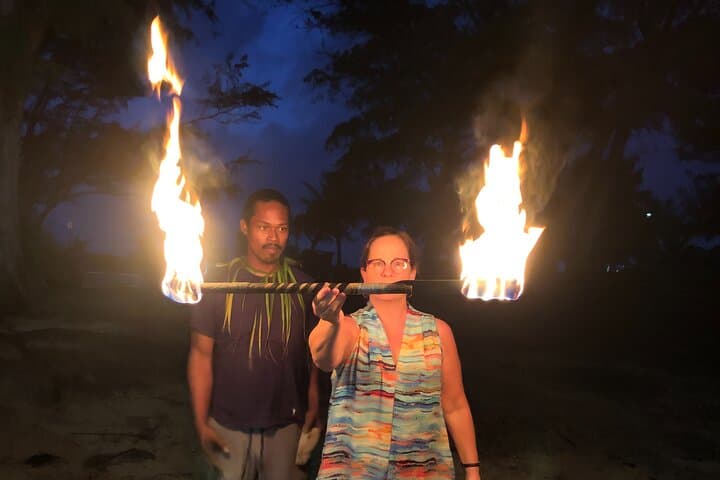


You arrive to the hum of ukulele and the low, deliberate breath of a crowd; heat from the torchlight brushes your face as an instructor sets a practice stick into your palm. The lesson begins with story — the origins of the Samoan fireknife, the ailāo afi, explained as equal parts ceremony and martial skill — then moves into basics: footwork, spins, and safe handling. Flames take center stage in a short demonstration, and under close supervision you may step forward to try a heated blade.
You arrive to the hum of ukulele and the low, deliberate breath of a crowd; heat from the torchlight brushes your face as an instructor sets a practice stick into your palm. The lesson begins with story — the origins of the Samoan fireknife, the ailāo afi, explained as equal parts ceremony and martial skill — then moves into basics: footwork, spins, and safe handling. Flames take center stage in a short demonstration, and under close supervision you may step forward to try a heated blade.
Fireknife dancing grew from Samoan warrior traditions and was adapted into modern performance through Pacific Islander cultural exchange and luaus across Hawaiʻi. On Kauaʻi the practice sits beside coral shores and forested ridgelines; the island’s wind and humidity affect how the flames behave, so timing and technique matter. Expect a workshop that blends history, practical drill, and showmanship in an open, communal setting.
Practical guidance: wear closed-toe shoes and breathable, non-synthetic clothing; keep hair tied back and remove dangling jewelry. Sessions run about an hour, are accessible to most fitness levels, and instructors provide practice sticks before supervised exposure to a real knife. Hydrate in Hawaiʻi’s sun, arrive a few minutes early for orientation, and be prepared to follow strict safety briefings. This is a cultural workshop more than a spectacle — plan to listen as much as you move, and treat the blade with respect. Leave cameras on low light settings to avoid disrupting performers or singeing equipment.