THE ADVENTURE COLLECTIVE® · Independent discovery and booking for outdoor travel

Make the Taj possible in a single day: travel by India’s fastest trains, skip long lines, and see the Taj Mahal, Agra Fort, and the Baby Taj with a local guide and private transport. This streamlined day trip balances efficient logistics with time at the monuments.
Make the Taj possible in a single day: travel by India’s fastest trains, skip long lines, and see the Taj Mahal, Agra Fort, and the Baby Taj with a local guide and private transport. This streamlined day trip balances efficient logistics with time at the monuments.
The day begins on a platform in New Delhi where the high‑speed train waits like a promise — gleaming coaches, efficient staff, and a schedule that turns a distant pilgrimage into a daylight possibility.
Verified experiences and guided adventures in the surrounding area.
Operated by Taj Beyond India · Agra, Uttar Pradesh
The day begins on a platform in New Delhi where the high‑speed train waits like a promise — gleaming coaches, efficient staff, and a schedule that turns a distant pilgrimage into a daylight possibility.
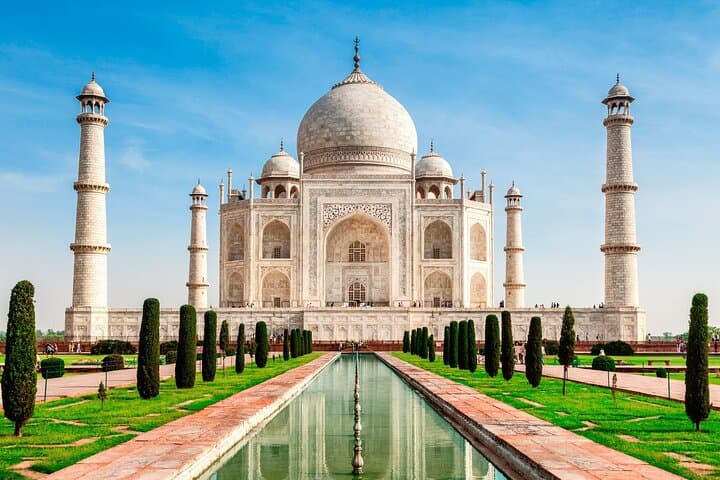
Arriving in Agra, the first glimpse of the Taj Mahal through the garden gate compresses centuries into a single breath: white marble catching the sun, pietra dura inlays catching the eye. The itinerary moves with purpose — a guided walk through the Taj’s central axis, a stroll across manicured Mughal gardens, and time at Mehtab Bagh to watch the monument reflect on the Yamuna.
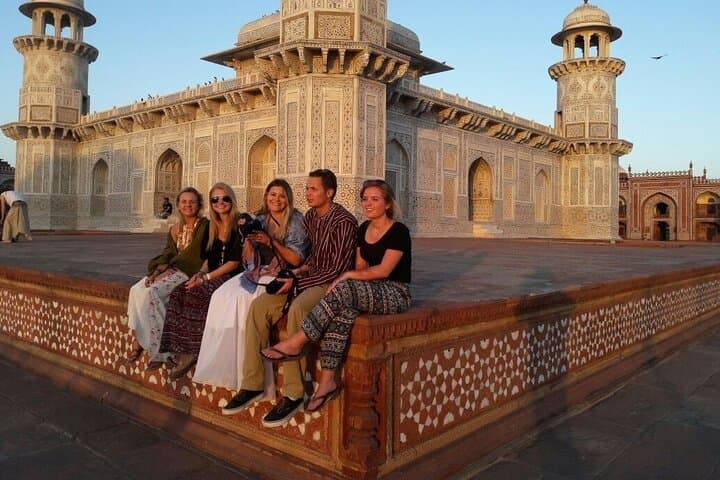
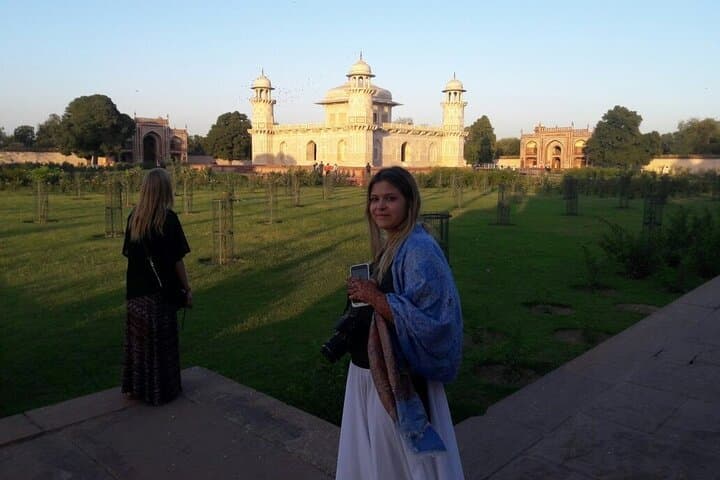
This route threads Mughal history and simple geology: marble quarried and polished into floral motifs, sandstone ramparts of Agra Fort that reveal imperial court life, and the smaller, jewel‑box Tomb of Itmad‑ud‑Daulah illustrating early marble craftsmanship. Local guides weave stories of Shah Jahan, Nur Jahan, and the labor that built these structures while pointing out inscriptions and inlay techniques.
Practically, the day is paced for comfort — VIP entry to avoid long lines, private transport in Agra, and a curated lunch to sample Mughlai flavors. Travelers should plan for security checks, modest clothing for mosque areas, and quick photo windows: lighting shifts fast and crowds grow by midday.
For visitors short on time, this is a tight but manageable cultural sprint: high-speed travel, concentrated history, and two or three unforgettable viewpoints of one of the world’s most photographed monuments.
easy.
12 hours.
Minimal fitness required — mostly walking on level paths and short stair sections; suitable for average travelers
Most same‑day departures leave from a central Delhi station specified at booking (examples: Hazrat Nizamuddin or New Delhi station) — confirm the exact pickup and platform in your reservation details.
The tour includes high‑speed train tickets subject to availability; operators typically confirm train allocations after booking, and a substitute service may be arranged if needed.
The Taj and several Agra sites have accessible routes and ramps in parts, but some areas have steps; the tour notes wheelchair accessibility so discuss needs at booking for tailored support.
Standard inclusions are return train tickets, local private transport in Agra, entrance fees to listed monuments, an English‑speaking guide, and an included lunch per the itinerary.
The Taj and Agra’s monuments date to the Mughal period (16th–17th centuries), reflecting Persian, Islamic, and Indian architectural influences under emperors like Shah Jahan and Akbar.
The Archaeological Survey of India manages the sites with visitor limits and anti‑pollution measures; guests should avoid littering, respect restricted areas, and follow bag and food policies to help preservation.
Taj Beyond India operates guided outdoor trips and adventures with an emphasis on safety, stewardship, and memorable experiences.

The day begins on a platform in New Delhi where the high‑speed train waits like a promise — gleaming coaches, efficient staff, and a schedule that turns a distant pilgrimage into a daylight possibility.
The day begins on a platform in New Delhi where the high‑speed train waits like a promise — gleaming coaches, efficient staff, and a schedule that turns a distant pilgrimage into a daylight possibility.
Arriving in Agra, the first glimpse of the Taj Mahal through the garden gate compresses centuries into a single breath: white marble catching the sun, pietra dura inlays catching the eye. The itinerary moves with purpose — a guided walk through the Taj’s central axis, a stroll across manicured Mughal gardens, and time at Mehtab Bagh to watch the monument reflect on the Yamuna.
This route threads Mughal history and simple geology: marble quarried and polished into floral motifs, sandstone ramparts of Agra Fort that reveal imperial court life, and the smaller, jewel‑box Tomb of Itmad‑ud‑Daulah illustrating early marble craftsmanship. Local guides weave stories of Shah Jahan, Nur Jahan, and the labor that built these structures while pointing out inscriptions and inlay techniques.
Practically, the day is paced for comfort — VIP entry to avoid long lines, private transport in Agra, and a curated lunch to sample Mughlai flavors. Travelers should plan for security checks, modest clothing for mosque areas, and quick photo windows: lighting shifts fast and crowds grow by midday.
For visitors short on time, this is a tight but manageable cultural sprint: high-speed travel, concentrated history, and two or three unforgettable viewpoints of one of the world’s most photographed monuments.